Gardeners Guide · Grow your own
Cabbage might not be the most glamorous vegetable in the garden, but it’s one of the most satisfying crops to grow yourself.
It’s hardy, productive and incredibly versatile in the kitchen. Depending on the varieties you choose, it’s possible to harvest home-grown cabbage through much of the year — from tender summer cabbages to enormous autumn heads and hardy winter varieties.
The biggest challenge isn’t usually getting cabbage to grow.
It’s stopping everything else from eating it first.
Caterpillars, pigeons, slugs and cabbage root fly can all cause trouble, but with good soil preparation and some simple protection, cabbage is perfectly achievable for a beginner.
In this guide, we’ll cover when to sow cabbage in the UK, how to plant it, spacing, watering, feeding, pest protection and how to know when your cabbages are ready to harvest.
Cabbage at a Glance
| Plant outside | Spring–autumn |
| Harvest | Potentially year-round |
| Position | Full sun to light shade |
| Difficulty | Moderate |
| Spacing | Around 30–60cm |
| Containers | Yes, with suitable varieties |
| Watering | Regularly during dry periods |
| Soil | Fertile, firm and moisture-retentive |
| Protection | Strongly recommended |
Why Grow Cabbage?
One of the biggest advantages of cabbage is the sheer variety available.
You’re not limited to the hard white cabbage wrapped in plastic at the supermarket.
You can grow:
- Spring cabbage
- Summer cabbage
- Autumn cabbage
- Winter cabbage
- Savoy cabbage
- Red cabbage
- Pointed cabbage
Choose your varieties carefully and you can potentially have cabbages ready at very different times of the year.
Home-grown cabbage is also useful in the kitchen.
Use it for:
Coleslaw
Soups
Stews
Stir-fries
Steamed vegetables
Slaws
Fermentation and sauerkraut
It’s also a good crop for gardeners who want to keep their vegetable patch productive beyond summer.
Understanding the Different Types of Cabbage
Before buying seeds, check when the variety is designed to crop.
This is one of the most important things beginners need to understand about cabbage.
Spring Cabbage
Spring cabbage is generally sown during summer and planted out in autumn to overwinter.
It’s then harvested the following spring.
These varieties are useful because they provide fresh vegetables when relatively little else is coming from the garden.
Summer Cabbage
Usually sown earlier in the year for harvesting during summer.
They tend to mature relatively quickly.
Autumn Cabbage
These mature later and often produce substantial heads suitable for harvesting towards the end of the main growing season.
Winter Cabbage
Hardier varieties are grown specifically for harvesting during colder months.
Savoy Cabbage
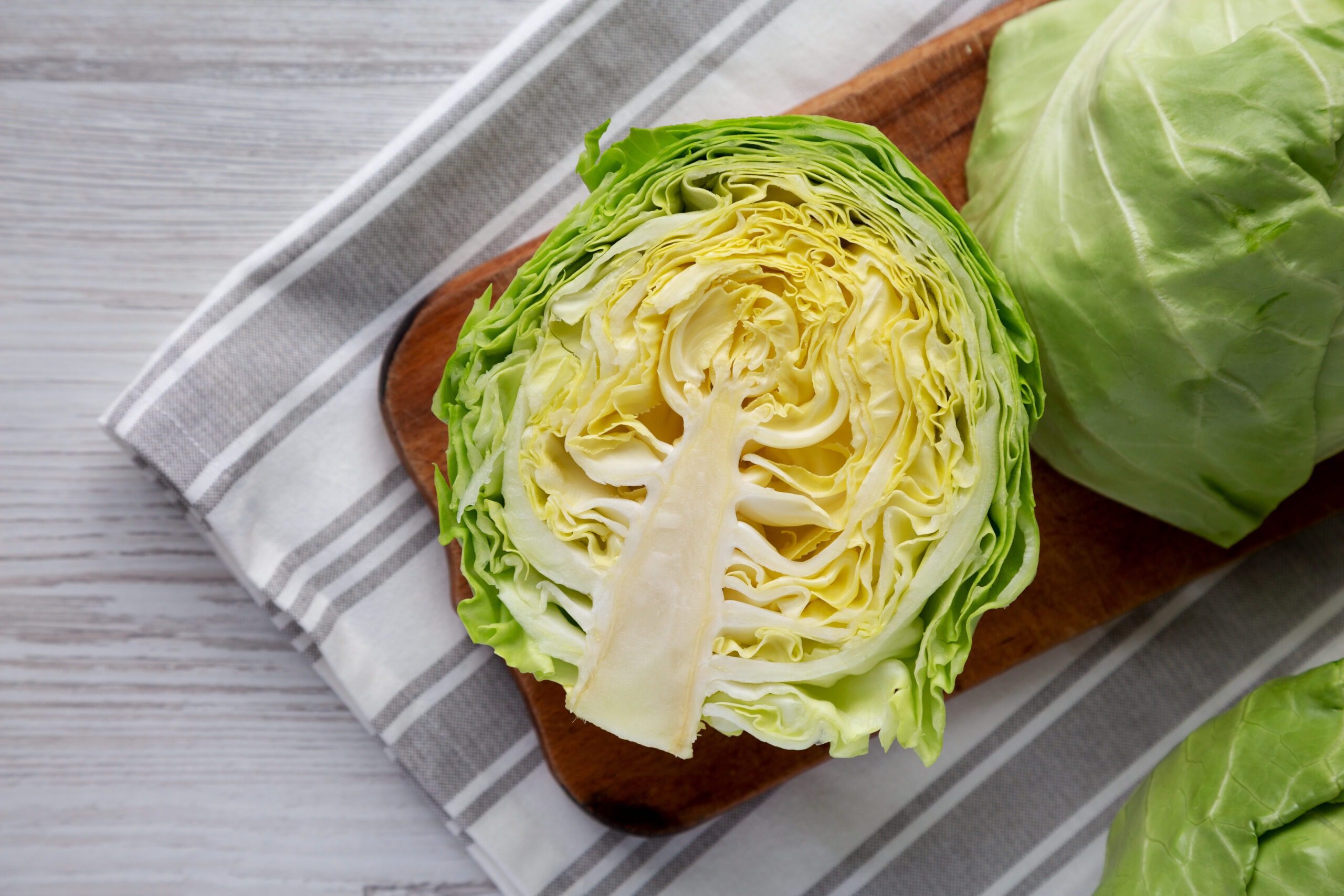
Easy to recognise because of its deeply crinkled leaves.
Savoy cabbages are particularly associated with autumn and winter cooking and often have good cold tolerance.
Red Cabbage
Red cabbage produces those beautiful purple-red heads often used in salads, braised dishes and pickles.
They also look fantastic growing in the vegetable garden.
When to Sow Cabbage in the UK
There’s no single cabbage sowing date because different varieties are intended for different seasons.
As a general guide:
Spring cabbage
Sow: July–August
Plant out: September–October
Harvest: Following spring
Summer cabbage
Sow: February–April
Plant out: Spring
Harvest: Summer
Autumn/winter cabbage
Sow: April–May
Plant out: Late spring/early summer
Harvest: Autumn through winter
Always check the seed packet.
A variety bred for winter cropping will behave very differently from a fast-growing summer cabbage.
Where Should You Grow Cabbage?
Cabbage prefers a sunny position, although it will tolerate some light shade.
More importantly, it likes:
- Fertile soil
- Consistent moisture
- Firm ground
- Good drainage
- Plenty of space
Like broccoli, cabbage belongs to the brassica family.
Brassicas generally prefer firm soil because they develop substantial top growth.
A large cabbage rocking backwards and forwards in loose soil during strong winds can damage its roots.
So unlike carrots, where beautifully loose soil is desirable, cabbage likes to feel securely anchored.
Preparing the Soil for Cabbage
If possible, prepare your cabbage bed before planting.
Remove weeds and incorporate well-rotted organic matter into poorer soil.
Cabbages are hungry plants and appreciate fertile ground.
If your soil is very acidic, brassicas may also benefit from appropriate liming — but don’t simply add lime without knowing your soil conditions.
A soil pH test can tell you what you’re actually dealing with.
Before planting, rake the surface level and firm the soil.
You should be able to walk over a prepared brassica bed without sinking deeply into it.
How to Sow Cabbage Seeds
You can sow cabbage in:
- Seed trays
- Modules
- Small pots
- Outdoor seedbeds
For beginners, modules are particularly convenient.
Fill them with seed compost and sow the seeds approximately 1–2cm deep.
Cover lightly and water.
Keep the compost moist but don’t leave it saturated.
Once seedlings emerge, provide plenty of light.
As they develop, they’ll eventually be transplanted into their final positions.
Hardening Off Cabbage Plants
If your cabbage seedlings have been raised indoors or in a greenhouse, don’t move them directly outside permanently.
They need time to adjust.
This process is called hardening off.
Over roughly a week or two, gradually expose the plants to outdoor conditions for longer periods.
Start with a sheltered position during the day.
Gradually increase the amount of time they spend outside.
Once they’re acclimatised, they can be planted into the vegetable bed.
How Far Apart Should Cabbages Be?
Spacing depends on the variety and the size of cabbage you want.
As a general guide:
Compact/small cabbages
Around 30–40cm apart
Medium cabbages
Around 40–50cm apart
Large cabbages
Around 50–60cm or more
Check your seed packet for specific recommendations.
Here’s something useful to know:
Closer spacing generally produces smaller heads.
Wider spacing gives individual plants more room to develop larger cabbages.
Don’t automatically assume bigger is better.
For a small household, several compact cabbages can actually be more useful than producing one enormous cabbage that takes over the fridge.
How to Plant Cabbage
Dig a hole large enough for the root ball.
Place the young cabbage into the hole at approximately the same depth it was previously growing.
Fill around the roots.
Then:
Firm it in properly.
Press the soil around the plant so it’s securely anchored.
Give it a good drink of water.
If the plant wobbles excessively when gently touched, firm the soil a little more.
Growing Cabbage in Containers
Yes, cabbage can be grown in pots.
But choose your variety carefully.
Compact cabbages are much better suited to containers than enormous varieties.
For an individual cabbage, use a substantial container — ideally around 30–40cm wide or larger, depending on the variety.
Make sure it has drainage holes.
Fill it with good-quality compost and usually grow one cabbage per large container.
Container-grown cabbages require closer attention to watering because pots dry out much faster than garden soil.
They may also require additional feeding.
How Often Should You Water Cabbage?
Cabbages appreciate consistent moisture.
This becomes particularly important while the head is developing.
During normal British weather, established plants may receive plenty of natural rainfall.
During prolonged dry periods, however, water thoroughly.
Avoid giving tiny amounts every day that only wet the soil surface.
A proper soak encourages moisture to penetrate deeper into the root zone.
Mulching around established plants can also help conserve moisture.
Does Cabbage Need Feeding?
Cabbages are relatively hungry plants.
Starting with fertile soil containing well-rotted organic matter gives them a good foundation.
As they establish and begin producing substantial leafy growth, additional feeding may be beneficial depending on your soil.
A nitrogen-rich feed can support leafy growth earlier in development, while a balanced vegetable fertiliser may also be suitable.
Always follow the manufacturer’s instructions.
More fertiliser doesn’t automatically mean a better cabbage.
Keep Cabbages Weed-Free
Weeds compete with young cabbage plants for water and nutrients.
Keep the area around your plants relatively clear.
Hoe carefully between established plants, taking care not to damage their roots.
Hand weed immediately around the cabbage itself.
A layer of mulch can help reduce weeds while also conserving soil moisture.
Protecting Cabbages from Pests
If you’re growing cabbage for the first time, I’d recommend putting protection in place before you see damage.
Brassicas are extremely popular with garden pests.
A simple framework covered with appropriate mesh or netting can save you a lot of frustration.
Cabbage White Butterflies
One of the most common cabbage problems is conveniently named after the vegetable.
Cabbage white butterflies lay eggs on brassica leaves.
The resulting caterpillars can eat astonishing amounts of foliage.
You’ll often find the eggs or caterpillars on the undersides of leaves.
How to protect your cabbage
Use fine insect mesh to prevent butterflies reaching the plants.
Make sure the edges are properly secured.
Regularly inspect the leaves and remove any eggs or caterpillars you find.
Don’t wait until your cabbage looks like green lace.
Pigeons
Pigeons can absolutely demolish young brassica plants.
They can be particularly troublesome during winter when other food becomes less abundant.
Protect plants using properly supported netting.
The netting should be held above the plants rather than draped directly over the leaves.
Secure it around the edges.
Slugs and Snails
Young cabbage plants are vulnerable to slugs and snails.
Check around plants regularly, particularly during damp weather.
Keep the growing area reasonably tidy and protect young seedlings while they’re establishing.
Once plants become larger, minor leaf damage is generally less serious.
Cabbage Root Fly
Cabbage root fly lays eggs near the base of brassica plants.
The larvae then attack the roots.
One preventative method is to place brassica collars tightly around the stem at soil level.
These make it more difficult for the adult fly to lay eggs immediately beside the plant.
Clubroot
Clubroot is one of the more serious problems affecting brassicas.
The disease causes roots to become swollen and distorted.
Above ground, plants may:
- Grow poorly
- Wilt
- Become stunted
- Fail to form properly
Unfortunately, clubroot can persist in contaminated soil for years.
This is one reason crop rotation is so important.
Avoid repeatedly planting cabbage, broccoli and other brassicas in exactly the same ground.
Why Is My Cabbage Not Forming a Head?
Don’t panic immediately.
Young cabbage plants spend considerable time producing outer leaves before forming their central head.
If mature plants still aren’t heading properly, possible causes include:
- Overcrowding
- Poor soil
- Insufficient nutrients
- Drought
- Heat stress
- Wrong growing season
- Pest damage
The first thing I’d check is the variety.
You might simply be expecting it to mature at the wrong time of year.
Why Are My Cabbages Splitting?
Mature cabbage heads can sometimes split.
One common cause is rapid growth following a sudden increase in water after a dry period.
Keeping soil moisture reasonably consistent can reduce the risk.
Don’t leave mature cabbages sitting indefinitely in the ground either.
Once they’re ready, harvest them.
Best Cabbage Varieties for Beginners
There’s an enormous range available, but here are a few types worth looking for.
Greyhound
A popular pointed summer cabbage with relatively compact heads.
Good for: Smaller gardens and summer harvests.
Hispi
Another well-known pointed cabbage producing sweet, compact heads.
Good for: Beginners and smaller households.
January King
A traditional winter cabbage with attractive coloured leaves.
Good for: Winter cropping.
Savoy King
Produces the distinctive crinkled leaves associated with Savoy cabbage.
Good for: Autumn and winter cooking.
Red Drumhead
A traditional red cabbage producing dense purple-red heads.
Good for: Pickling, salads and winter dishes.
Availability and exact sowing times vary, so always check the seed packet.
Crop Rotation for Cabbage
Cabbage belongs to the brassica family.
That means you should avoid repeatedly growing it in the same patch.
Other brassicas include:
Broccoli
Kale
Brussels sprouts
Cauliflower
Kohlrabi
A simple rotation might look like:
Year 1: Legumes
↓
Year 2: Brassicas
↓
Year 3: Roots and onions
↓
Year 4: Other vegetables
You don’t have to obsess over creating a perfect rotation in a small garden.
The main goal is to avoid growing the same family in exactly the same place every year.
When Is Cabbage Ready to Harvest?
A cabbage is generally ready when the central head feels firm and has reached a useful size.
Gently squeeze it.
If the head feels dense and solid rather than loose and leafy, it’s probably approaching harvest time.
Different varieties mature at different sizes.
Don’t wait for a small variety to become enormous.
How to Harvest Cabbage
Use a sharp knife to cut through the stem underneath the head.
Remove the cabbage and trim away damaged outer leaves.
Here’s a useful trick:
Don’t necessarily dig the stump out immediately.
If you cut a cross into the top of the remaining stem, some cabbage plants may produce several smaller leafy heads.
They won’t replace the original cabbage, but they can give you an additional harvest.
Can You Eat the Outer Cabbage Leaves?
Absolutely.
Don’t assume only the perfectly formed central head is edible.
Healthy outer leaves can be used in cooking.
They’re often tougher than the inner leaves, so they’re particularly suitable for:
- Soups
- Stews
- Stir-fries
- Slow cooking
Remove leaves that are badly damaged, diseased or heavily infested.
How to Store Cabbage
Fresh cabbage can be kept in the refrigerator after harvesting.
Some dense winter varieties store considerably better than tender summer cabbages.
Cabbage can also be:
Pickled
Fermented
Frozen after preparation/blanching
Turned into coleslaw
Made into sauerkraut
If you’re growing specifically for storage, choose a variety bred for that purpose.
Can You Grow Cabbage All Year Round?
Potentially, yes — although that doesn’t mean planting the same variety every month.
The trick is growing different types for different seasons.
With careful planning, cabbage can become one of the most productive year-round crops in a UK vegetable garden.
Growing Cabbage Month by Month
| Month | What to do |
|---|---|
| January | Harvest hardy winter varieties |
| February | Begin early sowings under protection |
| March | Sow summer cabbage |
| April | Sow and transplant seedlings |
| May | Plant out and protect from pests |
| June | Water, feed and inspect leaves |
| July | Harvest early crops and sow spring cabbage |
| August | Harvest and continue spring cabbage sowing |
| September | Plant spring cabbage |
| October | Harvest autumn varieties |
| November | Harvest winter cabbage |
| December | Continue harvesting hardy varieties |
Exact timings depend on the variety and your local climate.
What You’ll Need to Grow Cabbage
Cabbage doesn’t require specialist equipment, but I’d recommend:
🌱 Cabbage seeds
🪴 Seed trays or modules
🌿 Seed compost
🖐️ Hand trowel
💧 Watering can
🕸️ Fine insect mesh
🏗️ Netting supports
⭕ Brassica collars
🏷️ Plant labels
If you’re planning to grow cabbage, broccoli, kale or cauliflower regularly, a proper brassica cage covered with insect mesh can be a very worthwhile investment.
Essential Equipment Every Gardener Needs
Cabbage FAQs
Is cabbage easy to grow?
Cabbage itself is relatively straightforward, but pest protection makes it slightly more involved than easy crops such as beetroot.
I’d rate it moderately easy for beginners.
How long does cabbage take to grow?
It varies considerably by variety. Some fast-growing summer cabbages mature within a few months, while spring cabbage is grown over winter for harvesting the following year.
How many cabbages do you get from one plant?
Usually one main cabbage head per plant, although the remaining stem can sometimes produce smaller secondary heads after harvesting.
Can cabbage grow in pots?
Yes. Choose compact varieties and use a large container with sufficient depth and width for one plant.
Does cabbage need full sun?
Full sun is preferable, although cabbage can tolerate some light shade.
Should I cover cabbage with netting?
Yes. Protecting cabbage from butterflies and pigeons can make growing it considerably easier.
Why does my cabbage have holes in the leaves?
Caterpillars, slugs and snails are common causes. Inspect the plant carefully, including underneath the leaves.
Can cabbage survive frost?
Many winter cabbage varieties tolerate frost well. Always choose a variety appropriate for winter growing rather than assuming every cabbage has the same hardiness.
Can I grow cabbage next to broccoli?
You can, but remember they’re both brassicas and attract many of the same pests and diseases. Growing them together under the same protective mesh can actually be convenient.
Final Thoughts
Cabbage is a brilliant crop for anyone who wants to move beyond quick-growing salads and start producing substantial vegetables at home.
It’s not completely maintenance-free.
You’ll need to give the plants plenty of space, keep them watered and — most importantly — protect them from pests.
But get those basics right and cabbage is surprisingly dependable.
For your first attempt, I’d choose a compact summer variety such as a pointed cabbage, grow perhaps four to six plants rather than an enormous row, and cover them with fine insect mesh as soon as they’re planted out.
Once you’ve mastered that, start experimenting.
Grow red cabbage for winter.
Try a crinkled Savoy.
Plant spring cabbage for harvesting during the following year’s hungry gap.
That’s when cabbage becomes particularly interesting.
With the right varieties, it isn’t simply a vegetable you harvest once during summer.
It can become a crop for almost every season.
Continue Your Grow Your Own Journey
A Beginner’s Guide to Growing Broccoli
A Beginner’s Guide to Growing Beetroot
A Beginner’s Guide to Growing Carrots
A Beginner’s Guide to Growing Potatoes
A Beginner’s Guide to Growing Tomatoes
A Beginner’s Guide to Growing Onions
A Beginner’s Guide to Growing Strawberries