Gardeners Guide · Grow your own
Few things beat picking a ripe strawberry straight from the garden on a warm summer day.
Strawberries are sweet, productive and surprisingly easy to grow. Better still, you don’t need a large garden. They’ll happily grow in beds, raised planters, pots, hanging baskets and containers, making them a brilliant choice for beginners.
Once established, a healthy strawberry plant can also produce runners that can be turned into new plants—so a handful of plants can eventually become an entire strawberry patch.
If you’ve never grown strawberries before, this guide will take you through everything you need to know, from choosing plants and finding the right location to feeding, harvesting and preparing them for winter.
Why Grow Your Own Strawberries?
You can buy strawberries almost year-round, so why bother growing them?
Taste is probably the biggest reason.
A strawberry allowed to ripen fully on the plant before being picked can be wonderfully sweet and aromatic. There’s also something satisfying about walking into the garden and picking your own fruit.
Strawberries have several other advantages for new gardeners:
- They’re relatively easy to grow
- They don’t require much space
- They grow well in containers
- Plants can produce fruit for several years
- Runners can provide additional plants
- Children often enjoy growing and picking them
Even a sunny patio can potentially produce a worthwhile crop.
Choosing Strawberry Plants
You’ll find plenty of strawberry varieties available in UK garden centres and online.
One important difference is when they produce fruit.
Summer-Fruiting Strawberries
These produce their main crop over a relatively concentrated period during summer.
Growing early, mid-season and late varieties can help extend your strawberry harvest.
Perpetual or Everbearing Strawberries
These varieties tend to produce smaller flushes of fruit over a longer period, often continuing into late summer or early autumn when conditions are suitable.
For beginners, either type is perfectly suitable.
Gardeners Guide tip: If you have enough space, grow more than one variety. As well as discovering which strawberry you prefer, choosing varieties that fruit at different times can extend your harvest.
When Should You Plant Strawberries?
Strawberries can be planted at several points during the year depending on whether you’re buying potted plants or bare-root runners.
Potted strawberry plants are widely available during spring and can usually be planted once conditions are suitable.
Bare-root plants are commonly planted during the dormant season.
Whenever you plant, avoid frozen or waterlogged soil.
And remember that UK growing conditions vary considerably. Gardeners in warmer southern areas may be several weeks ahead of those growing strawberries in Scotland.
Where Is the Best Place to Grow Strawberries?
Strawberries generally perform best in a sunny, sheltered position.
More sunshine usually means better fruit development and sweeter strawberries.
Choose fertile, well-drained soil and avoid areas that remain permanently wet.
Before planting, remove perennial weeds and incorporate some well-rotted organic matter if the soil needs improving.
Good drainage is particularly important. Strawberry plants need moisture, but their roots don’t appreciate sitting in waterlogged soil.
How to Plant Strawberries
Planting depth is important with strawberries.
You’ll notice a central point where the leaves emerge from the plant. This is known as the crown.
The crown should sit roughly level with the soil surface.
Planting too deeply can encourage the crown to rot, while planting too shallowly can leave roots exposed.
Space plants approximately 30–45cm apart, depending on the variety and growing system.
Once planted, gently firm the soil around the roots and water thoroughly.
Growing Strawberries in Pots
No vegetable patch? Strawberries are excellent container plants.
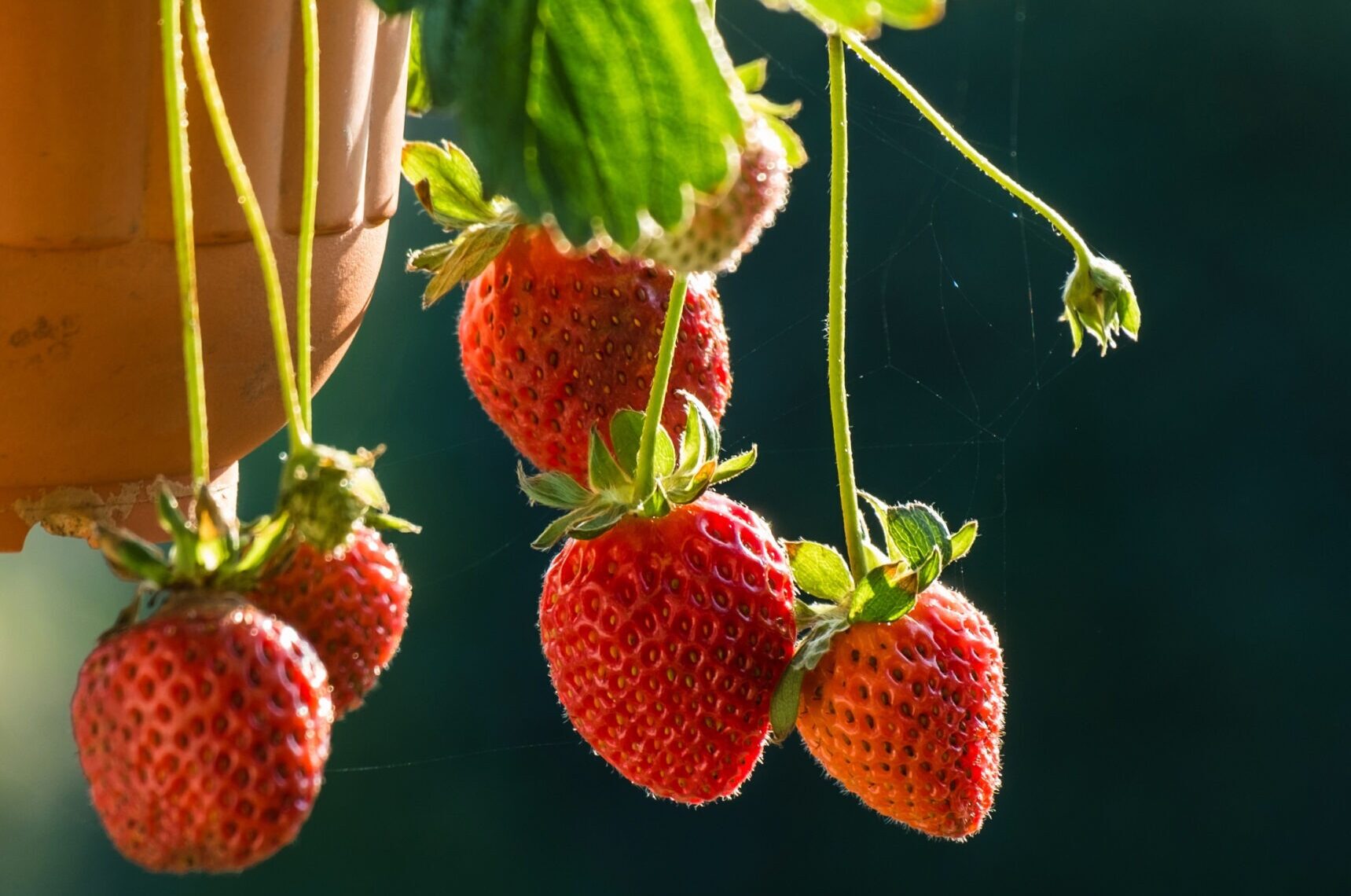
A large pot, trough, hanging basket or purpose-made strawberry planter can all work.
Make sure your container has good drainage holes and use a suitable quality compost.
Containers have one major disadvantage compared with garden soil: they dry out much faster.
During warm summer weather, strawberries growing in pots may need checking every day.
Avoid squeezing too many plants into one container. Good spacing encourages healthier growth and improves airflow around the foliage.
Growing Strawberries in Hanging Baskets
Hanging baskets can be surprisingly effective for strawberries.
The fruit hangs over the sides rather than resting on the soil, which can help keep berries clean and may reduce some slug damage.
They’re also ideal if patio space is limited.
The downside is watering.
Hanging baskets can dry exceptionally quickly during warm or windy weather, so check them frequently.
Watering Strawberry Plants
Consistent watering becomes particularly important when strawberries are flowering and developing fruit.
Water thoroughly during dry periods, but try to direct water towards the soil rather than constantly soaking the leaves and fruit.
Plants growing in containers require more frequent attention than established plants growing in the ground.
Try to avoid allowing plants to become extremely dry before flooding them with water.
Consistent moisture is the aim.
Should You Feed Strawberries?
Strawberries growing in fertile garden soil may need less supplementary feeding than plants confined to containers.
Container-grown strawberries have only a limited amount of compost available, so nutrients eventually become depleted.
An appropriate high-potassium feed can support flowering and fruit production. Always follow the manufacturer’s instructions for whichever fertiliser you’re using.
More fertiliser isn’t automatically better.
Overfeeding can encourage lots of leafy growth without necessarily producing the bumper strawberry harvest you’re hoping for.
Why Do Gardeners Put Straw Under Strawberries?
There’s a clue in the name.
Traditionally, gardeners place straw underneath developing strawberry plants as the fruits begin forming.
This helps keep berries away from damp soil, reducing dirt and potentially lowering the risk of fruit rotting.
Strawberry mats can provide a similar solution.
Whatever you use, the idea is simple: keep developing fruit clean and off wet soil.
Protecting Strawberries From Birds
Unfortunately, humans aren’t the only creatures that enjoy ripe strawberries.
Birds can discover a strawberry patch remarkably quickly.
Netting can protect your crop, but it needs to be installed carefully.
Keep the netting supported above the plants rather than loosely draping it across them, and ensure wildlife cannot easily become trapped.
A proper fruit cage is an excellent option if you’re growing larger quantities of soft fruit.
Watch Out for Slugs and Snails
Strawberries sitting close to the ground can be easy targets for slugs and snails.
Keeping fruit off the soil helps, as does regularly checking plants and removing hiding places nearby.
Containers and hanging baskets may reduce the problem but don’t assume that putting strawberries in a pot makes them completely slug-proof.
Slugs are surprisingly determined climbers.
Other Strawberry Problems
Keep an eye on your plants throughout the growing season.
Grey mould can become a problem around fruit, particularly during damp conditions with poor airflow.
Remove badly affected fruit and dead plant material rather than allowing it to accumulate around healthy plants.
Also watch for discoloured or damaged leaves.
Not every mark indicates a serious disease, but checking your plants regularly makes genuine problems much easier to spot early.
What Are Strawberry Runners?
Once your strawberry plants become established, you’ll probably notice long stems growing away from the main plant.
These are called runners.
Along each runner, small new strawberry plants can develop.
Left alone, they may root themselves into nearby soil.
Alternatively, you can deliberately root them to produce new strawberry plants.
How to Make New Strawberry Plants for Free
This is one of the best things about growing strawberries.
Place a small pot filled with compost beneath one of the young plants growing from a runner.
Gently pin the little plant against the compost while leaving it attached to the parent.
Once it has developed a healthy root system of its own, the connecting runner can be cut.
Congratulations—you’ve made another strawberry plant.
If you don’t want additional plants, remove unwanted runners so the parent plant can concentrate its energy elsewhere.
When Are Strawberries Ready to Pick?
This part isn’t complicated.
Wait until the strawberry has developed the mature colour expected for the variety and looks fully ripe.
Then pick it.
Strawberries generally won’t improve much after they’re harvested, so there’s little benefit in picking them excessively early.
During peak production, check plants regularly.
A berry that’s nearly ready today might be perfectly ripe tomorrow—and bird food the day after.
How to Harvest Strawberries
Rather than pulling directly on the fruit, pinch or snip through the stalk just above the strawberry.
Handle ripe berries gently because they bruise easily.
If possible, harvest during dry conditions.
And don’t feel guilty about eating the occasional strawberry before you make it back to the kitchen.
That’s one of the advantages of growing them.
What Should You Do After Fruiting?
Once summer-fruiting strawberries have finished producing their main crop, tidy the plants.
Remove unwanted runners unless you’re using them to propagate new plants.
You can also remove damaged and tired foliage, taking care not to damage the crown.
Clear away old straw and rotting fruit from around plants to improve hygiene.
Healthy plants will then begin preparing for the following year.
Do Strawberry Plants Come Back Every Year?
Yes.
Strawberries are perennial plants, which means they can survive winter and produce again the following year.
However, plants don’t remain at peak productivity forever.
After several years, yields can decline and older plants may become more susceptible to problems.
Fortunately, those runners make replacing ageing plants relatively straightforward.
Rather than keeping the same strawberry bed indefinitely, gradually replace older plants with younger, healthy ones.
Looking After Strawberries Over Winter
Strawberries are generally hardy, but containers can be more vulnerable to prolonged freezing conditions because their roots have less insulation than plants growing in the ground.
Move pots somewhere reasonably sheltered during severe weather if necessary.
Don’t bring hardy strawberries into a heated house for winter—they benefit from their natural dormant period.
Remove dead or diseased material, but don’t worry when plants look less impressive during the colder months.
They should burst back into growth when temperatures rise.
Five Beginner Strawberry-Growing Mistakes to Avoid
If you’re growing strawberries for the first time, remember these five things:
- Don’t bury the crown. Keep it roughly level with the soil.
- Don’t let containers completely dry out. Strawberries need consistent moisture when fruiting.
- Don’t overcrowd plants. Good airflow helps keep plants healthy.
- Don’t let every runner take over. Keep the ones you need and remove the rest.
- Don’t forget about birds. Once your strawberries start turning red, you’re not the only one watching them.
Can You Grow Strawberries in a Small Garden?
Absolutely.
In fact, strawberries are one of the best edible crops for gardeners with limited space.
You could grow them in a window box, hanging basket, patio container or vertical planter.
If you only have room for a few plants, choose your location carefully and give them as much sunshine as possible.
Even a small crop of freshly picked strawberries makes growing them worthwhile.
Are Strawberries Worth Growing?
Definitely.
Strawberries don’t require specialist equipment, acres of space or years of gardening experience.
Start with a few healthy plants in a sunny location, keep them watered, protect the developing fruit and you could be picking your own strawberries this summer.
Then, once those first runners appear, you can start creating next year’s plants for free.
Before long, the biggest problem might not be growing enough strawberries.
It’ll be getting to them before the birds do.
Gardeners Guide — Grow Better. Garden Smarter.