Gardeners Guide · Grow your own
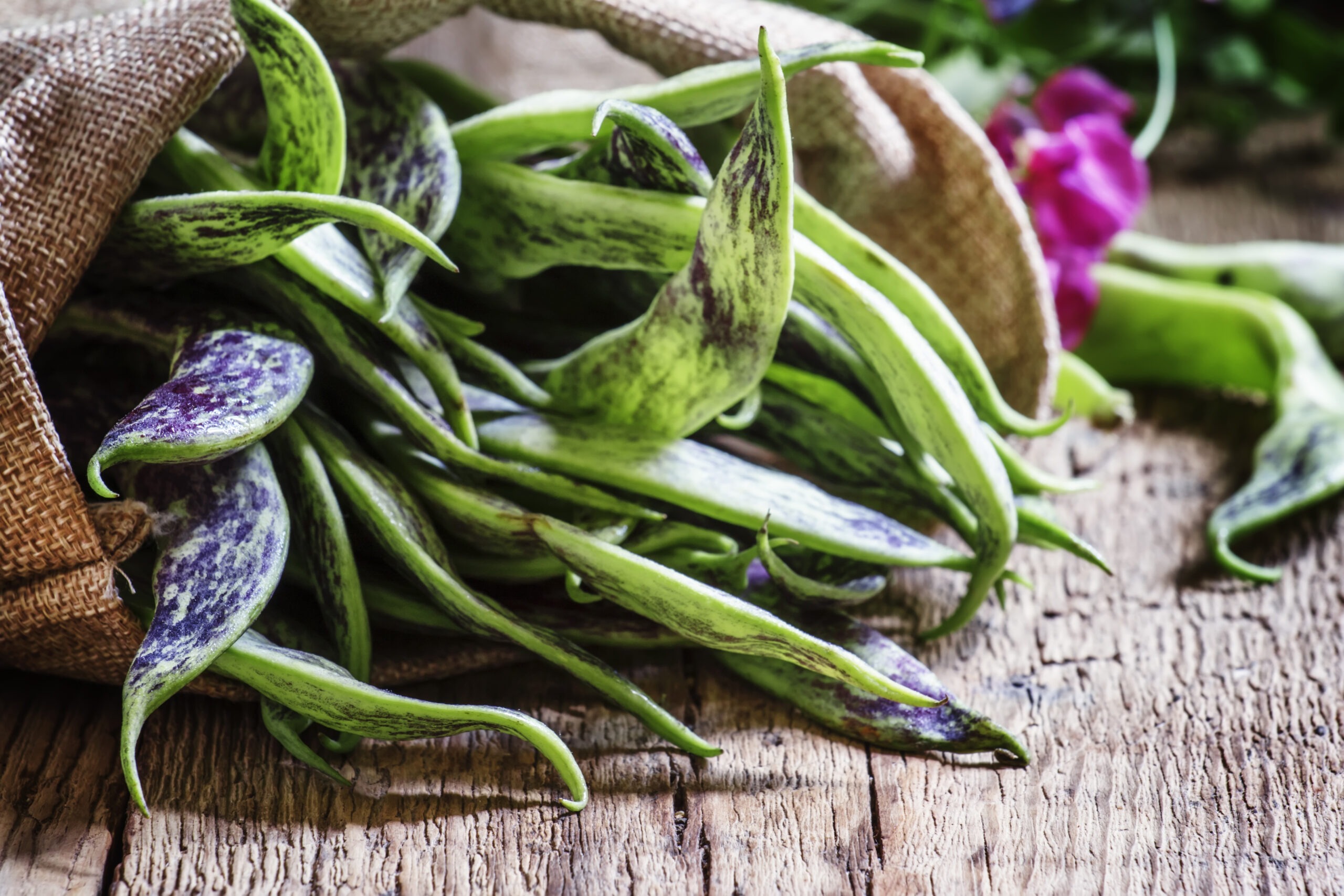
Runner beans are one of the most productive vegetables you can grow in a UK garden.
Give them a sunny position, something tall to climb and plenty of water, and just a handful of plants can produce an impressive supply of beans throughout summer.
They’re particularly good for smaller gardens because most of the growth goes upwards rather than outwards. A row of runner beans can easily reach 2 metres or more while occupying relatively little ground space.
They’re also a great crop for beginners.
The seeds are large and easy to sow, the plants grow quickly once the weather warms, and regular picking encourages them to keep producing.
In this beginner’s guide, we’ll cover when to sow runner beans in the UK, how to plant them, building supports, growing runner beans in containers, watering, feeding, pollination, harvesting and the common problems to watch for.
Runner Beans at a Glance
| Sow indoors | April–May |
| Sow outdoors | May–June |
| Plant outside | Late May–June |
| Harvest | July–October |
| Position | Sunny and sheltered |
| Difficulty | Easy |
| Spacing | Around 15–25cm |
| Height | Often 2–3m |
| Containers | Yes, with large containers |
| Soil | Fertile and moisture-retentive |
| Watering | Regular, especially when flowering |
| Support | Essential for climbing varieties |
| Frost hardy | No |
Why Grow Runner Beans?
Runner beans are a classic British vegetable-garden crop for good reason.
They’re:
- Productive
- Easy to grow
- Excellent for vertical growing
- Attractive when flowering
- Suitable for raised beds
- Suitable for large containers
- Harvested over a long period
- Excellent for freezing
The plants can produce beans for weeks if you keep harvesting them.
Runner bean flowers are attractive too, with many varieties producing bright red, white or bi-coloured flowers that are visited by pollinating insects.
A well-grown row of runner beans can be both productive and ornamental.
Runner Beans vs French Beans
Runner beans and French beans are related, but they’re not exactly the same crop.
Runner beans generally:
- Grow vigorously
- Prefer slightly cooler conditions
- Produce larger pods
- Need substantial support
- Have rougher-textured leaves
- Produce very attractive flowers
Climbing French beans can look similar, but their pods are usually somewhat different in texture and flavour.
Both are worth growing.
If you have enough room, try a row of each.
When to Sow Runner Beans in the UK
Runner beans are tender plants and don’t tolerate frost.
For most UK gardeners, there are two main options.
Sow Indoors
Start seeds indoors during:
April to May.
This gives the plants a useful head start.
Sow Directly Outside
Sow outdoors from:
mid-May into June
once the soil has warmed and frost risk has passed.
In colder parts of the UK, starting indoors is usually more reliable.
When to Sow Runner Beans in Scotland
In Scotland, I’d generally favour starting runner beans indoors.
Sow around:
late April to early May
and plant outside around:
late May or early June
depending on local conditions.
Don’t rush them outdoors.
Runner beans grow quickly once conditions improve, so a healthy plant set out in warm soil can soon catch up with one that has spent several weeks struggling in cold weather.
How to Sow Runner Beans Indoors
Runner bean seeds are large and easy to handle.
Use individual pots around:
7–9cm wide.
Fill them with multipurpose compost.
Plant one seed approximately:
5cm deep.
Cover with compost and water gently.
Keep the pots somewhere warm and bright.
Once the seedlings emerge, give them plenty of light.
How Long Do Runner Beans Take to Germinate?
Under suitable conditions, runner beans usually germinate within roughly:
7–14 days.
Cool compost can slow germination.
Avoid keeping the compost soaking wet.
Cold, saturated compost can cause the large seeds to rot before they germinate.
Sowing Runner Beans Directly Outside
Once the soil is warm enough, runner beans can be sown directly where they’re going to grow.
Sow each bean around:
5cm deep.
Space plants approximately:
15–25cm apart
depending on the variety and support system.
I often prefer sowing a few spare plants in pots at the same time.
If a slug eats one of your outdoor seedlings, you’ve got a replacement ready.
Hardening Off Runner Beans
Runner beans started indoors need hardening off before permanent planting.
Over around:
7–10 days
gradually introduce them to outdoor conditions.
Start by putting the plants outside during the day in a sheltered position.
Bring them back under protection overnight.
Gradually extend the time outside.
Plant them permanently once:
- Frost risk has passed
- Nights are reasonably mild
- Plants are hardened off
Where Should You Grow Runner Beans?
Choose a position that is:
sunny and reasonably sheltered.
Runner beans can grow very tall, so exposed sites can become problematic.
Strong winds may:
- Damage leaves
- Rock the support
- Snap stems
- Dry plants out
A sunny position beside a fence can work particularly well, provided the beans still receive enough light.
Preparing the Soil
Runner beans perform best in fertile soil that holds moisture without becoming waterlogged.
Before planting, add plenty of:
well-rotted compost or manure.
This is particularly useful because runner beans need reliable moisture once they begin flowering and producing pods.
You don’t need to dig an enormous traditional bean trench.
Improving the soil with plenty of organic matter is normally sufficient.
Do Runner Beans Need Support?
Yes.
Most traditional runner beans are vigorous climbers.
They can easily reach:
2–3 metres tall.
Build the support before planting if possible.
Trying to construct a bean frame around rapidly growing plants is unnecessarily difficult.
How to Build a Runner Bean Support
There are several good options.
Bamboo Cane A-Frame
This is the traditional approach.
Push two rows of bamboo canes firmly into the soil.
Angle them towards each other.
Tie the tops together around a horizontal cane.
This creates a strong A-shaped frame.
Runner Bean Wigwam
For smaller gardens, a wigwam works extremely well.
Arrange around:
6–8 long bamboo canes
in a circle.
Push them firmly into the ground.
Tie them together securely at the top.
Plant one or two beans near the base of each cane.
This creates a compact tower of beans.
Trellis or Wire
Runner beans can also climb:
- Trellis
- Strong mesh
- Wire supports
- Garden arches
Whatever you use needs to be sturdy.
A mature runner bean plant covered in foliage and wet after heavy rain can become surprisingly heavy.
How Tall Should Runner Bean Canes Be?
Canes around:
2–2.5 metres
are suitable for many varieties.
Runner beans can grow higher, but making the structure excessively tall makes harvesting difficult.
Once plants reach the top, you can pinch out the growing tips.
How Do Runner Beans Climb?
Runner beans naturally twine around their supports.
They generally climb anticlockwise when viewed from above.
Young plants may need a little guidance initially.
Gently place the shoot against the cane.
Once it starts wrapping around the support, the plant usually manages by itself.
Don’t tie stems tightly.
Should You Pinch Out Runner Beans?
Yes, once the plant reaches the top of its support.
Pinching out the growing tip helps:
- Restrict excessive height
- Encourage side shoots
- Make harvesting easier
- Prevent plants becoming tangled above the frame
Don’t worry if the plant keeps trying to produce more growth.
Runner beans are vigorous.
Growing Runner Beans in Raised Beds
Runner beans are excellent for raised beds.
They benefit from:
- Fertile soil
- Good drainage
- Easy watering
- Easy access
Position them carefully.
Because the plants grow tall and create substantial foliage, they can shade nearby crops.
Growing them along the north side of a raised bed can help reduce shading of shorter vegetables.
Growing Runner Beans in Containers
Runner beans can grow very successfully in containers.
Use a large container of at least:
30–40 litres
for a small group of plants.
Larger containers are better because runner beans need plenty of water.
Make sure there are drainage holes.
You’ll also need a sturdy support.
A large pot containing several tall bean plants can become top-heavy, so make sure it won’t easily blow over.
Can You Grow Runner Beans on a Balcony?
Potentially, yes.
You need:
- A large container
- Strong support
- Plenty of sunlight
- Protection from strong wind
- Reliable watering
A compact or shorter-growing variety is preferable.
Remember that a 2.5-metre wall of foliage can catch a lot of wind.
How Often Should You Water Runner Beans?
Watering becomes particularly important when runner beans start:
flowering and producing pods.
Dry soil during this period can reduce your harvest.
During prolonged dry weather, give the plants a thorough watering rather than frequent tiny amounts.
Container-grown beans may require watering every day during hot weather.
Mulching Runner Beans
Runner beans benefit greatly from mulch.
Once plants are established, spread organic material such as:
well-rotted compost
around the base.
This helps:
- Retain moisture
- Suppress weeds
- Protect the soil
- Add organic matter
Keep the mulch slightly away from the stems.
Do Runner Beans Need Feeding?
If you’ve prepared the soil well, plants may need relatively little additional feeding initially.
Once flowering and cropping begin, a feed containing plenty of potassium can help support pod production, particularly for container-grown plants.
A tomato-type liquid feed is commonly used.
Follow the manufacturer’s instructions rather than assuming more fertiliser means more beans.
Runner Bean Flowers
Runner beans produce attractive flowers before the pods develop.
Depending on the variety, flowers can be:
- Red
- White
- Pink
- Bi-coloured
The flowers are visited by bees and other pollinating insects.
After successful pollination, small bean pods begin developing.
Why Are My Runner Bean Flowers Falling Off?
This is one of the most common runner bean questions.
Flowers can fall without producing beans because of:
- Hot, dry weather
- Dry soil
- Poor pollination
- Strong winds
- Plant stress
- Very high temperatures
The most important thing is to keep the plants consistently watered.
As weather conditions change, pod production often improves.
Do Runner Beans Need Pollinating?
Runner beans benefit greatly from insect pollination.
Bees are particularly important visitors.
Growing flowers nearby can help attract pollinating insects.
Good options include:
- Lavender
- Borage
- Nasturtiums
- Marigolds
- Cosmos
Avoid unnecessary insecticide use around flowering crops.
How Long After Flowering Do Runner Beans Appear?
Once a flower is successfully pollinated, a tiny pod develops behind it.
During warm summer weather, beans can grow remarkably quickly.
Check plants regularly.
A small pod can become harvestable surprisingly fast.
When Are Runner Beans Ready to Harvest?
Runner beans are usually ready from:
July onwards
depending on when they were planted.
Harvest while the pods are:
- Young
- Tender
- Smooth
- Before the beans inside become large and obvious
Don’t aim for the biggest possible pod.
Young runner beans usually have the best texture.
How Big Should Runner Beans Be Before Picking?
Exact size depends on variety.
Many are harvested around:
15–20cm long
although some varieties naturally produce longer pods.
Rather than relying entirely on length, look at the pod itself.
If the beans inside are beginning to bulge significantly, you’ve probably left it a little too long.
How to Harvest Runner Beans
Use scissors or gently hold the stem while removing the pod.
Avoid pulling hard.
Runner bean vines can be damaged surprisingly easily.
During peak summer production, check plants every:
2–3 days.
You may be surprised by how quickly new beans appear.
The Secret to Producing More Runner Beans
Keep picking them.
This is one of the most important rules of runner bean growing.
If mature pods remain on the plant, the plant starts putting energy into producing mature seeds.
Regular harvesting encourages continued flowering and pod production.
Even if you temporarily have more beans than you can eat:
pick them anyway.
Give them away or freeze them.
What Happens If Runner Beans Get Too Big?
Oversized runner beans can become:
- Tough
- Stringy
- Fibrous
- Less pleasant to eat
The beans inside also become increasingly prominent.
If you find a huge forgotten pod hiding among the leaves, you can remove it even if you don’t plan to eat it.
Leaving old pods on the plant can reduce further production.
Can You Freeze Runner Beans?
Yes.
Runner beans freeze well.
A common method is:
- Wash the beans.
- Remove the ends.
- Slice them.
- Blanch briefly in boiling water.
- Cool rapidly in ice-cold water.
- Drain thoroughly.
- Freeze.
This makes runner beans particularly useful because productive plants can easily produce more than you can eat fresh.
Common Runner Bean Problems
Runner beans are generally reliable, but there are a few common problems.
Slugs and Snails
Young runner bean plants are extremely vulnerable to slugs and snails.
A healthy seedling can disappear overnight.
Protect young plants particularly carefully after planting outside.
Once the beans have climbed well above ground level, slug damage becomes less serious.
Black Bean Aphids
Black aphids can gather on:
- Young shoots
- Stems
- Leaves
Small populations may cause little serious damage.
Large infestations can weaken plants.
Encouraging natural predators such as:
- Ladybirds
- Lacewings
- Hoverflies
can help.
You can also remove small infestations by hand or wash them from plants with water.
Why Are My Runner Bean Leaves Turning Yellow?
Possible causes include:
Overwatering
Waterlogged soil can damage roots.
Underwatering
Runner beans need reliable moisture.
Nutrient deficiency
More likely in containers.
Natural ageing
Older lower leaves eventually yellow.
Poor root health
Check drainage and general plant condition.
One or two yellow lower leaves usually aren’t a major concern.
Why Aren’t My Runner Beans Climbing?
Young plants occasionally need help finding their support.
Gently guide the growing shoot onto the cane.
Don’t wrap it forcefully.
Once the stem begins twining naturally, it should continue upwards.
Why Are My Runner Beans Tough and Stringy?
Usually because they were harvested too late.
Pick pods:
younger and more frequently.
Some older varieties are naturally stringier than modern stringless varieties.
Choosing the right variety can make a substantial difference.
Best Runner Bean Varieties for Beginners
There are many excellent UK varieties.
Scarlet Emperor
One of the classic runner beans.
Produces red flowers and good crops of traditional beans.
Good for: Reliable traditional growing.
Enorma
Known for producing long, straight pods.
Popular with gardeners and exhibitors.
Good for: Long beans and heavy crops.
Polestar
A popular stringless variety producing smooth pods.
Good for: Tender beans and regular harvesting.
Lady Di
Produces long, stringless pods and red flowers.
Good for: Quality eating.
Moonlight
A self-fertile runner bean with white flowers.
It can set pods more reliably in conditions where pollinator activity is poor.
Good for: Reliable pod setting.
Firestorm
A self-fertile red-flowered variety combining ornamental flowers with productive cropping.
Good for: Gardens where reliable setting is important.
Can Runner Beans Grow in Partial Shade?
They can tolerate some shade, but they’ll generally crop best in:
good sunlight.
In a lightly shaded garden, you can still get a useful crop.
Avoid very dark areas.
The plants need plenty of energy to support rapid vertical growth and pod production.
Can You Grow Runner Beans in Scotland?
Absolutely.
Runner beans can grow very well in Scotland.
The main challenges are:
- Late spring frosts
- Cool soil
- Strong winds
- Shorter growing season
Starting plants indoors gives you a useful advantage.
Choose the warmest, sunniest and most sheltered part of the garden.
A south-facing wall or fence can create an excellent microclimate.
Can You Grow Runner Beans in a Greenhouse?
Yes, although they usually don’t need greenhouse conditions.
Runner beans can become enormous and occupy valuable greenhouse space.
A greenhouse may also become excessively hot during summer.
For most UK gardeners, outdoor growing is preferable.
If your garden is particularly cold or exposed, greenhouse growing is possible with adequate ventilation and pollinator access.
Growing Runner Beans as an Ornamental Plant
Runner beans aren’t only productive.
They’re attractive climbers.
A row can produce:
- Dense green foliage
- Bright flowers
- Tall vertical growth
You can grow them over:
- Arches
- Pergolas
- Trellis
- Decorative frames
This makes them useful in gardens where you don’t want the vegetable-growing area to look purely functional.
Can You Save Runner Bean Seeds?
Yes.
Runner beans are relatively easy to save seed from.
Choose healthy plants and allow some pods to remain on the plant until they’re:
large, dry and papery.
Harvest the pods and remove the mature beans.
Allow the seeds to dry thoroughly before storing.
Keep them somewhere:
- Cool
- Dry
- Dark
Be aware that runner bean varieties can cross-pollinate, so saved seed may not always produce plants identical to the original variety if different varieties are growing nearby.
Are Raw Runner Beans Safe to Eat?
Runner beans should generally be cooked before eating.
Like several other beans, raw runner beans contain naturally occurring lectins that can cause digestive illness.
Normal cooking makes them safe to eat.
Don’t treat raw runner beans like sugar snap peas and snack on them straight from the plant.
Should You Leave Runner Bean Roots in the Ground?
At the end of the season, you can cut the plants off near soil level and leave healthy roots to decompose naturally.
Runner beans are legumes and form associations with nitrogen-fixing bacteria.
Leaving the roots behind contributes organic matter to the soil.
However, don’t assume this means the bed is fully fertilised for the next crop.
If plants have suffered from significant root disease, remove affected material instead.
What Can You Grow After Runner Beans?
Runner beans may continue cropping until autumn.
Once they’re finished, possibilities include:
- Garlic
- Autumn onions
- Winter salads
- Spinach
- Green manure
Alternatively, add compost and prepare the bed for the following spring.
Growing Runner Beans Month by Month
| Month | What to do |
|---|---|
| January | Choose varieties and plan supports |
| February | Prepare the growing area |
| March | Add compost or well-rotted manure |
| April | Start early seeds indoors |
| May | Sow indoors or outdoors as conditions allow |
| June | Plant out, tie in young plants and mulch |
| July | Water, feed and begin harvesting |
| August | Harvest regularly and keep plants watered |
| September | Continue harvesting |
| October | Harvest final beans before frost |
| November | Clear plants and improve the soil |
| December | Plan next year’s crop |
What You’ll Need to Grow Runner Beans
Runner beans don’t require expensive equipment.
I’d recommend:
Runner bean seeds
Small pots if starting indoors
Multipurpose compost
Long bamboo canes
Garden twine
Well-rotted compost or manure
Watering can or garden hose
Large container if container growing
Liquid feed
Secateurs or harvesting scissors
The one thing I wouldn’t compromise on is the support.
A strong frame built before planting makes growing and harvesting runner beans much easier.
[See Our Recommended Bamboo Canes →]
[See Our Recommended Raised Beds →]
[See Our Recommended Garden Hoses →]
[Essential Equipment Every Gardener Needs →]
Runner Bean Growing FAQs
Are runner beans easy to grow?
Yes. Runner beans are excellent for beginners and can be extremely productive once established.
When should I sow runner beans in the UK?
Sow indoors from around April to May or directly outdoors from May into June once conditions are warm enough.
When can runner beans be planted outside?
Usually from late May or early June once frost risk has passed.
How deep should runner bean seeds be planted?
Around 5cm deep is a useful general guide.
How far apart should runner beans be?
Around 15–25cm apart works for many varieties, although always check the seed packet.
How tall do runner beans grow?
Many climbing varieties reach around 2–3 metres.
Do runner beans need support?
Yes. Traditional climbing runner beans require sturdy supports such as bamboo canes, trellis or a wigwam.
Can runner beans grow in pots?
Yes. Use a large container with strong support and keep it well watered.
Do runner beans need full sun?
A sunny, sheltered position usually produces the best crop, although some light shade can be tolerated.
Why are my runner bean flowers falling off?
Dry soil, hot weather, poor pollination and other plant stresses can all cause flowers to drop.
How often should runner beans be watered?
Keep the soil consistently moist, particularly while the plants are flowering and producing pods.
When should runner beans be picked?
Harvest pods while they’re young and tender, before the beans inside become large.
Does picking runner beans encourage more beans?
Yes. Regular harvesting encourages the plant to continue flowering and producing pods.
Can runner beans be grown in Scotland?
Yes. Start them indoors and grow them in a sunny, sheltered position for the best chance of a long harvest.
Can you eat runner beans raw?
It’s best to cook runner beans thoroughly before eating them.
Final Thoughts
Runner beans deserve their place as one of the classic vegetables of the British garden.
They’re straightforward to grow, produce enormous amounts of food from a relatively small area and can keep cropping for weeks.
For a beginner, I’d start with:
six to eight plants.
Build a strong bamboo wigwam or A-frame before planting them.
Prepare the soil with plenty of well-rotted organic matter.
Plant outside only after frost risk has passed.
Then concentrate on two things:
watering and picking.
Don’t let the soil dry out badly when the plants are flowering.
And once beans start appearing, check the plants every few days.
The more consistently you harvest young beans, the longer the plants are likely to continue producing.
If you only have a small garden, don’t dismiss runner beans because they’re large plants.
Their ability to grow vertically is actually one of their biggest advantages.
A narrow strip of ground and a few tall canes can produce an impressive amount of food throughout summer.
And when you’re standing there in August wondering what to do with another carrier bag full of beans, you’ll know you’ve grown them properly.