Gardeners Guide · Grow your own
Sweet peppers are one of the most rewarding crops to grow at home, but they do ask for one thing that the British climate doesn’t always provide generously: warmth.
Given a sunny greenhouse, polytunnel, conservatory or sheltered patio, however, pepper plants can produce an excellent crop of crisp green, red, yellow or orange fruits throughout summer and early autumn.
They’re also ideal for containers.
You don’t need a large vegetable garden, and a few healthy pepper plants growing in pots can provide a surprisingly useful harvest.
The secret is to start them early, keep them warm and give the fruits enough time to ripen.
In this beginner’s guide, we’ll cover when to sow peppers in the UK, germination, potting on, greenhouse and outdoor growing, watering, feeding, pollination, harvesting and common problems.
Peppers at a Glance
| Sow | February–March |
| Plant outside | Late May–June, once reliably warm |
| Harvest | July–October |
| Position | Warm, sunny and sheltered |
| Difficulty | Easy–moderate |
| Spacing | Around 45cm |
| Containers | Excellent |
| Greenhouse | Highly recommended |
| Soil | Fertile and well drained |
| Watering | Regular and consistent |
| Time to harvest | Around 16–24 weeks from sowing |
What Are Sweet Peppers?
Sweet peppers belong to the same general group of plants as chillies.
In fact, many common sweet peppers and chillies belong to the species Capsicum annuum.
The main difference from a gardener’s point of view is what we want from the fruit.
Sweet peppers have little or no chilli heat and are grown for their:
- Sweet flavour
- Crisp texture
- Thick flesh
- Colour
You may also see them called:
bell peppers
or simply:
peppers.
They can be eaten raw or cooked and are excellent in salads, stir-fries, pasta dishes, curries, soups and roasted vegetable dishes.
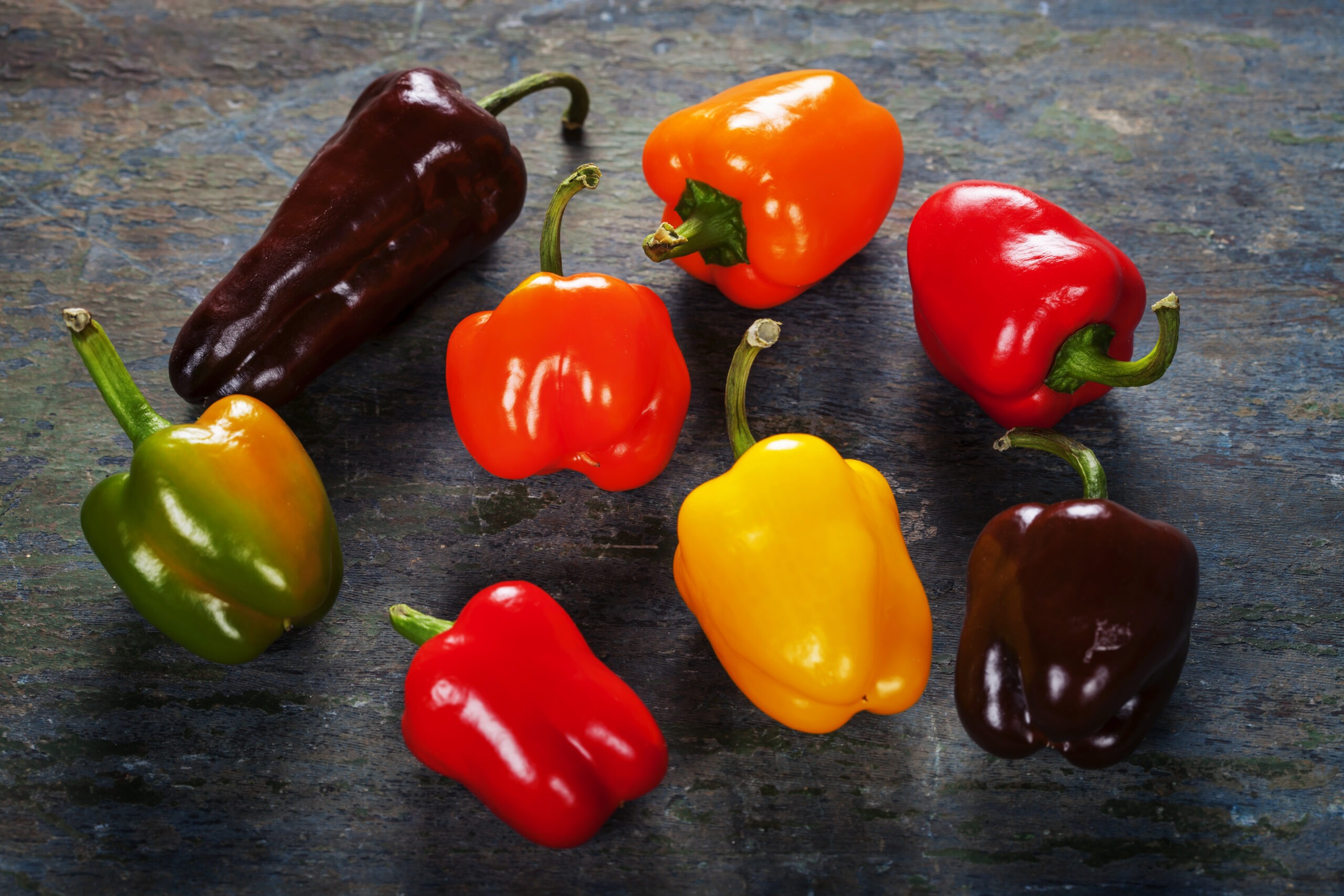
Green, Red, Yellow and Orange Peppers
One of the first things beginners often wonder is whether different coloured peppers come from completely different plants.
Sometimes they do — varieties are bred to ripen to particular colours.
But a green pepper is frequently simply:
an unripe pepper.
Many varieties begin green before ripening to:
- Red
- Yellow
- Orange
- Purple
- Chocolate brown
depending on the variety.
As peppers mature, their flavour usually becomes sweeter.
So you can often harvest the same plant at different stages.
When to Sow Peppers in the UK
Peppers need a long growing season.
For most UK gardeners, the best sowing period is:
February to March.
You can sow in January if you have:
- A heated propagator
- Good grow lights
- Plenty of warm indoor space
But for the average beginner, February is an excellent time to start.
If you sow too late, the plants may still grow perfectly well but run out of warm weather before the fruits have time to ripen.
Why Peppers Need an Early Start
Pepper plants grow considerably more slowly than vegetables such as lettuce or French beans.
First the seed must germinate.
Then the plant has to develop.
Then it flowers.
Then fruit forms.
Finally, those fruits may need several more weeks to ripen.
In a country with a relatively short warm season, every week matters.
That’s why peppers are usually started indoors rather than sown directly outside.
How to Sow Pepper Seeds
Use small pots or seed modules filled with good-quality seed compost.
Sow seeds approximately:
5mm deep.
You can put one or two seeds in each small pot or module.
Cover lightly with compost and water gently.
Place the seeds somewhere warm.
A propagator with a clear lid can help retain warmth and humidity.
What Temperature Do Pepper Seeds Need?
Warmth is important for germination.
Aim for approximately:
21–27°C.
A heated propagator can make germination considerably more reliable, particularly during February.
Without one, you can place pots somewhere consistently warm in the house.
A cold windowsill overnight may significantly slow germination.
Once seedlings appear, however, light becomes just as important as heat.
How Long Do Pepper Seeds Take to Germinate?
Under good conditions, pepper seeds often germinate within:
7–21 days.
Some varieties may take longer.
Don’t give up after a week.
Keep the compost:
warm and lightly moist
and allow plenty of time.
Avoid repeatedly soaking the pots.
Seeds need moisture, but permanently saturated compost can encourage rot.
Looking After Pepper Seedlings
Once seedlings emerge, move them into a bright position.
A sunny windowsill can work well.
Turn pots regularly so seedlings don’t lean heavily towards the light.
Without enough light, young peppers can become:
- Tall
- Thin
- Weak
- Leggy
If you’re starting seeds very early, a grow light can help produce stronger plants.
Potting On Pepper Plants
As the seedlings grow and their roots begin filling the original container, move them into slightly larger pots.
A sensible progression might be:
Seed module
then
7–9cm pot
then
1–2 litre pot
then
Final container
Avoid moving a tiny seedling straight into a huge pot.
Large volumes of wet compost around a small root system can make overwatering much easier.
Gradual potting on gives you better control.
What Size Pot Do Pepper Plants Need?
For many compact sweet pepper varieties, a final container of around:
5–10 litres
can produce a good plant.
Larger varieties may benefit from:
10–15 litres or more.
The larger the root system, the larger the plant can potentially become.
However, enormous pots aren’t automatically necessary.
A moderately sized pot also encourages the compost to warm quickly.
Make sure every container has good drainage holes.
Where Should You Grow Peppers?
Peppers need the warmest, sunniest position you can give them.
Ideal locations include:
- Greenhouses
- Polytunnels
- Conservatories
- Sunny patios
- South-facing walls
- Very bright sheltered balconies
In many parts of the UK, a greenhouse gives the most reliable crop.
Outdoor peppers can still perform well during warm summers, particularly in southern areas and sheltered gardens.
Growing Peppers in a Greenhouse
If you have a greenhouse, peppers deserve some space in it.
The extra warmth helps with:
- Growth
- Flowering
- Fruit set
- Ripening
Plants can be grown:
- In pots
- In grow bags
- Directly in greenhouse borders
Good ventilation is still important.
On very hot summer days, greenhouse temperatures can become excessive.
Open doors and vents as necessary.
Pepper plants like warmth.
They don’t need to be cooked.
Can Peppers Grow Outside in the UK?
Yes.
But results depend heavily on:
- Where you live
- The summer weather
- The variety
- How sheltered your garden is
Choose a warm, sunny location protected from cold winds.
A position against a south-facing wall is excellent because the wall absorbs heat during the day and can create a warmer microclimate.
In cooler areas, greenhouse growing is generally more dependable.
When Can Pepper Plants Go Outside?
Peppers are frost-tender.
Don’t plant them outside permanently until:
all realistic risk of frost has passed.
For much of the UK, this means:
late May into June.
In colder areas, wait longer if necessary.
Night temperatures are particularly important.
A warm afternoon doesn’t mean summer has arrived permanently.
Hardening Off Pepper Plants
Plants raised indoors need to adjust gradually to outdoor conditions.
Over roughly:
7–14 days
start putting plants outside somewhere sheltered during the day.
Bring them back indoors initially.
Gradually increase their exposure to:
- Sun
- Wind
- Cooler temperatures
Eventually, once conditions are suitable, leave them outside permanently.
This process is called hardening off.
Preparing Soil for Peppers
Peppers like fertile, free-draining soil.
If growing in the ground, improve poorer soil with:
well-rotted compost or organic matter.
The ideal growing medium holds moisture without becoming waterlogged.
Peppers have relatively fine roots and dislike sitting permanently in saturated ground.
For containers, use good-quality multipurpose compost.
How Far Apart Should Pepper Plants Be?
For plants growing in greenhouse borders or outdoor beds, allow approximately:
45cm between plants.
Larger varieties may benefit from additional space.
Good spacing helps:
- Air circulation
- Light penetration
- Plant health
- Access for harvesting
Don’t cram plants tightly together simply to fit one more into the greenhouse.
Four healthy plants with enough room often outperform six overcrowded ones.
Growing Peppers in Containers
Containers are one of the easiest ways to grow peppers.
They allow you to:
- Position plants in maximum sunlight
- Move them into shelter
- Control compost quality
- Move plants indoors if autumn turns cold
Use a pot with good drainage.
Because peppers can become top-heavy once covered in fruit, make sure the container is reasonably stable.
Do Pepper Plants Need Support?
Often, yes.
A young pepper plant looks sturdy.
Then it produces several heavy fruits.
Branches can bend or snap under the weight.
Push a bamboo cane or other support into the pot early in the season.
Loosely tie the main stem using soft plant ties.
Heavy side branches can also be supported if necessary.
Don’t wait until the plant is collapsing before adding support.
Should You Pinch Out Pepper Plants?
Pinching out means removing the growing tip to encourage branching.
It can help some pepper plants become bushier.
However:
it isn’t always necessary.
Many modern varieties naturally branch well.
For beginners, I wouldn’t automatically pinch every plant.
If a plant is becoming tall with very little branching, you can pinch the growing tip once it has developed several sets of true leaves.
Otherwise, leave it alone and concentrate on warmth, light and watering.
Should You Remove the First Pepper Flower?
You’ll sometimes see gardeners recommend removing the first flower or first tiny fruit.
The theory is that this encourages a young plant to put more energy into developing roots and branches before carrying fruit.
It can be useful if a very small plant begins flowering early.
But it isn’t essential.
A healthy, well-established plant can usually be allowed to flower naturally.
How Often Should You Water Peppers?
Peppers prefer relatively consistent moisture.
The compost should be:
moist but not waterlogged.
Allow the upper surface to begin drying slightly before watering again.
Then water thoroughly and allow excess water to drain.
During warm summer weather, container plants can require frequent watering.
During cooler periods, they’ll need much less.
Avoid Overwatering Pepper Plants
Overwatering is a very common beginner mistake.
Possible symptoms include:
- Yellow leaves
- Drooping despite wet compost
- Slow growth
- Root problems
Don’t water purely because:
“it’s watering day.”
Check the compost.
If it’s still wet, wait.
Avoid Letting Peppers Dry Out Completely
The opposite extreme isn’t good either.
Repeatedly allowing plants to wilt severely can cause:
- Flower drop
- Poor fruit development
- Blossom end rot
- Plant stress
Consistency is the goal.
A little dry-down between waterings is fine.
Severe drought followed by flooding is not.
Do Peppers Need Feeding?
Yes, particularly once flowering and fruiting begin.
Plants growing in fresh compost won’t need immediate feeding.
Once flowers appear and fruits start developing, use a:
high-potassium liquid fertiliser
such as a tomato feed.
Follow the manufacturer’s instructions.
A regular feeding routine during fruit development can help plants maintain production.
Don’t Overfeed Peppers with Nitrogen
Nitrogen encourages leafy growth.
That’s useful early in the plant’s development.
But excessive nitrogen later can result in:
an enormous green plant with surprisingly few peppers.
Once fruiting begins, a higher-potassium feed is more appropriate.
Pepper Flowers and Pollination
Pepper flowers are generally self-fertile.
That means each flower contains both male and female reproductive parts.
Outdoors, wind and insects usually provide enough movement for pollination.
In a greenhouse or indoors, you can help.
Simply:
- Gently shake the plant
- Tap the stems
- Brush flowers lightly with a soft paintbrush
You don’t need complicated hand-pollination techniques.
Why Are My Pepper Flowers Falling Off?
A few fallen flowers are normal.
If lots are dropping, possible causes include:
Temperature extremes
Very hot or cold conditions can disrupt fruit set.
Underwatering
Dry plants may shed flowers.
Overwatering
Waterlogged roots also cause stress.
Excess nitrogen
This can encourage leaves instead of fruit.
Poor pollination
More relevant to indoor plants.
Try to maintain steady growing conditions.
When Do Peppers Start Growing?
Once a flower has been successfully pollinated, a tiny pepper develops behind it.
Fruit can grow surprisingly quickly at first.
Then comes the slower part:
ripening.
Green peppers may sit on the plant for several weeks before changing colour.
Patience matters.
When Are Peppers Ready to Harvest?
You can generally harvest peppers:
green or fully ripe.
If the fruit has reached a good size and feels firm, it can usually be eaten.
Leave it on the plant longer and, depending on the variety, it may turn:
- Red
- Yellow
- Orange
- Purple
- Brown
Fully ripened peppers are usually sweeter.
Green Peppers vs Red Peppers
Green and red peppers aren’t necessarily different varieties.
A green fruit may simply be a red pepper that hasn’t ripened yet.
Green peppers tend to taste:
fresher, sharper and slightly more bitter.
Fully ripened red peppers are usually:
sweeter and fruitier.
Both are perfectly usable.
Does Picking Peppers Encourage More Fruit?
Yes.
Regular harvesting can encourage the plant to continue producing.
If you have plenty of developing fruits, harvest some green rather than waiting for every one to reach full colour.
This can be particularly useful late in the British growing season.
How to Harvest Peppers
Don’t pull the fruit aggressively.
Pepper branches can be surprisingly brittle.
Use:
scissors or secateurs
to cut through the small fruit stem.
Leave a short stalk attached to the pepper.
Support the branch with your other hand if the fruit is heavy.
Why Aren’t My Peppers Turning Red?
This is extremely common.
Usually, they simply need:
more time and warmth.
Ripening slows significantly as autumn approaches.
To encourage ripening:
- Give plants maximum sunlight
- Keep greenhouse temperatures warm
- Harvest mature fruits regularly
- Avoid excessive nitrogen feeding
- Remove very late flowers
- Reduce the number of tiny fruits late in the season
This helps direct the plant’s remaining energy into existing peppers.
What Should You Do with Green Peppers at the End of the Season?
Green peppers are completely edible.
If cold weather is approaching, harvest them rather than risk losing the crop.
Mature peppers may continue changing colour after harvesting, although they generally develop best flavour when allowed to ripen on the plant.
Container plants can also be moved into a greenhouse or bright indoor position to extend the season.
Blossom End Rot
Blossom end rot appears as a:
dark, sunken patch on the bottom of the pepper.
It’s linked to insufficient calcium reaching the developing fruit.
That doesn’t always mean the soil lacks calcium.
Irregular watering can prevent the plant from taking it up effectively.
The best prevention is:
consistent watering.
Remove badly affected fruits and improve watering consistency.
Sunscald
Pepper fruits can sometimes develop pale or damaged patches after being exposed to extremely strong direct sunshine.
This is called:
sunscald.
It’s more likely when a fruit suddenly becomes exposed after leaves are removed.
Avoid excessive pruning.
Pepper leaves provide useful natural shade.
Why Are My Pepper Leaves Turning Yellow?
There are several possibilities.
Overwatering
Very common in container plants.
Nutrient deficiency
More likely in old compost.
Cold temperatures
Peppers dislike cold nights.
Natural ageing
Older lower leaves eventually yellow.
Pest problems
Inspect underneath the leaves.
Look at the entire plant before diagnosing the problem.
Why Are My Pepper Leaves Curling?
Leaf curl can result from:
- Watering problems
- Excessive heat
- Cold
- Aphids
- Mites
- Environmental stress
If the plant otherwise looks healthy, a little curling isn’t necessarily serious.
Check for pests first.
Aphids on Pepper Plants
Aphids are one of the most common pepper pests.
They often cluster around:
- Growing tips
- Flower buds
- Young leaves
- Leaf undersides
Small infestations can often be removed by hand or washed away with water.
Inspect regularly.
The earlier you find them, the easier they are to control.
Red Spider Mite
Red spider mites thrive in:
warm, dry greenhouse conditions.
Signs include:
- Fine speckling on leaves
- Yellowing
- Weak growth
- Fine webbing in severe cases
Regularly inspect greenhouse plants.
Maintaining appropriate humidity can make conditions less favourable for mites.
Whitefly
Whitefly can also attack greenhouse peppers.
Disturb an infested plant and tiny white insects may fly from underneath the leaves.
Inspect foliage regularly and deal with infestations before they become established.
Slugs and Snails
Outdoor pepper plants can suffer slug and snail damage.
Young plants are most vulnerable.
Protect seedlings while they’re establishing.
Once plants become larger and woody, minor damage is less serious.
Best Pepper Varieties for Beginners
There are many varieties suited to container and greenhouse growing.
California Wonder
A classic sweet bell pepper.
Produces blocky green fruits that ripen red.
Good for: Beginners and traditional bell peppers.
King of the North
An early sweet pepper bred for cooler growing conditions.
It can be particularly interesting for gardeners with shorter summers.
Good for: Cooler areas.
Marconi Rosso
Produces long red sweet peppers.
The fruits have excellent flavour when fully ripe.
Good for: Roasting and Mediterranean cooking.
Corno di Toro Rosso
Produces long, pointed red peppers.
The name means:
red bull’s horn.
Good for: Sweet, elongated fruits.
Mini Bell Peppers
Compact varieties producing smaller sweet peppers are excellent for containers.
They often ripen more quickly than very large-fruited types.
Good for: Patios and smaller spaces.
Which Peppers Are Best for Growing in Scotland?
In cooler areas, prioritise:
early-maturing varieties.
The challenge isn’t necessarily getting the plant to grow.
It’s getting enough warm weather for the fruits to fully ripen.
For Scottish gardens, I’d strongly favour:
- Greenhouse growing
- A polytunnel
- A south-facing sheltered position
- Compact early varieties
You can still grow peppers successfully outdoors during good summers, but protected growing gives a much more reliable crop.
Can Peppers Grow on a Windowsill?
Yes.
Compact peppers can grow successfully on a bright windowsill.
A south-facing window is best.
However, indoor plants may struggle with:
- Insufficient light
- Poor pollination
- Dry air
- Aphids
- Limited space
Choose a compact variety rather than one designed to become a large greenhouse plant.
Can You Grow Peppers in Grow Bags?
Yes.
Peppers perform well in grow bags.
You can generally grow:
two or three plants
in a standard large grow bag, depending on size.
Avoid overcrowding.
Give each plant enough room for light and airflow.
Provide support as fruits develop.
Should You Remove Leaves from Pepper Plants?
Usually, very little pruning is necessary.
Remove:
- Dead leaves
- Badly damaged foliage
- Leaves touching wet soil
- Diseased material
Avoid stripping lots of healthy leaves.
The plant needs them for photosynthesis, and the foliage also protects fruits from excessive sunshine.
Can Pepper Plants Be Overwintered?
Yes.
Like chillies, pepper plants are technically perennial in suitable climates.
They’re usually grown as annuals in the UK because they can’t tolerate frost.
However, you can experiment with overwintering healthy plants.
Move them somewhere:
- Frost-free
- Bright
- Sheltered
Reduce watering during winter.
You can also prune them back.
Survival isn’t guaranteed, but a successfully overwintered plant can get a head start the following spring.
Can You Save Pepper Seeds?
Yes, with some limitations.
For reliable seed saving, choose:
open-pollinated varieties.
Seeds saved from F1 hybrids may not produce plants identical to the parent.
To save seeds:
- Allow a pepper to ripen fully.
- Cut it open.
- Remove the seeds.
- Spread them somewhere dry.
- Allow them to dry thoroughly.
- Store in a labelled packet somewhere cool and dry.
Be aware that different pepper and chilli varieties can cross-pollinate if grown close together.
How Many Pepper Plants Do You Need?
This depends on how often you eat peppers.
For a beginner, I’d suggest around:
3–4 plants.
That gives you a useful crop without filling an entire greenhouse.
Growing several plants also lets you experiment with different varieties.
For example:
one traditional bell pepper
one early variety
one long sweet pepper
That’s far more interesting than growing six identical plants.
Growing Peppers Month by Month
| Month | What to do |
|---|---|
| January | Choose varieties and prepare propagator |
| February | Main sowing period begins |
| March | Continue sowing and care for seedlings |
| April | Pot plants on and provide maximum light |
| May | Pot on again and begin hardening off |
| June | Move outdoor plants outside once warm |
| July | Feed, water and support developing fruits |
| August | Harvest and continue regular feeding |
| September | Main ripening period |
| October | Harvest remaining peppers before cold weather |
| November | Overwinter selected plants if desired |
| December | Keep overwintering plants frost-free |
What You’ll Need to Grow Peppers
Peppers don’t require lots of specialist equipment, but a few items make growing much easier.
I’d recommend:
Pepper seeds
Seed modules or small pots
Seed compost
Heated propagator
Larger pots
Multipurpose compost
Bamboo canes
Soft plant ties
High-potassium tomato feed
Watering can
Plant labels
For UK growers, a heated propagator is particularly useful because it lets you start plants early enough to make the most of our relatively short warm season.
[See Our Recommended Heated Propagators →]
[See Our Recommended Garden Planters →]
[See Our Recommended Tomato and Pepper Feeds →]
[Essential Equipment Every Gardener Needs →]
Pepper Growing FAQs
Are peppers easy to grow?
Yes, provided you can give them plenty of warmth and light. I’d rate sweet peppers easy to moderate for UK beginners.
When should I sow peppers in the UK?
February and March are ideal for most growers.
Do pepper seeds need heat to germinate?
Yes. Germination is usually best at around 21–27°C.
Can sweet peppers grow outside in the UK?
Yes, particularly in warm, sheltered gardens. However, greenhouse or polytunnel growing usually produces a more reliable crop.
Do peppers need full sun?
Yes. Give them as much good-quality sunlight as possible.
Can peppers grow in pots?
Absolutely. Peppers are excellent container plants.
What size pot should I use?
Around 5–10 litres works for many varieties, although larger plants may benefit from more root space.
How often should pepper plants be watered?
Water when the surface compost begins to dry. Keep moisture relatively consistent without leaving the roots permanently wet.
What should I feed peppers?
Once flowering and fruiting begin, a high-potassium tomato-type feed is commonly used.
Why are my peppers staying green?
They may simply need more time and warmth. Many peppers remain green for several weeks before changing to their mature colour.
Can you eat green peppers?
Yes. Green peppers are completely edible and are simply harvested earlier than fully ripened fruits in many varieties.
Why are the bottoms of my peppers turning black?
A dark sunken patch at the blossom end is likely blossom end rot, often associated with irregular watering affecting calcium uptake.
Can pepper plants survive winter?
Not outdoors in typical UK conditions. Healthy plants can sometimes be overwintered somewhere frost-free.
Final Thoughts
Peppers take more patience than quick-growing crops such as lettuce or peas, but they’re well worth the wait.
The most important thing is to give them a long enough growing season.
Start early.
Keep the seeds warm.
Give seedlings plenty of light.
Gradually pot them on.
Then put the plants in the warmest, sunniest place available.
Once they begin flowering, maintain consistent watering and start feeding regularly.
For your first season, I’d grow perhaps three plants.
Try a classic variety such as California Wonder, an earlier variety suited to cooler conditions, and one long sweet pepper such as Marconi Rosso.
You can harvest some fruits while they’re still green and leave others to reach their mature colour.
That way, you’ll discover the difference yourself.
The biggest test of patience usually comes towards the end of summer.
You’ll have a plant covered in large green peppers.
You’ll look at them every day.
Nothing seems to happen.
Then one begins changing colour.
A few days later, another follows.
And suddenly the plant that spent months making you wonder whether growing peppers in Britain was worth the effort is covered in bright red fruit.
That’s the point when you’ll probably decide to grow even more next year.