Gardeners Guide · Grow your own
Garlic is one of the easiest and most satisfying crops you can grow at home.
Plant a single clove in autumn or early spring and, several months later, that one clove can have developed into an entire bulb containing multiple new cloves.
It doesn’t need a greenhouse, it takes up relatively little space, and it requires surprisingly little attention once established.
Better still, garlic actually benefits from a period of cold weather, which makes it particularly well suited to the UK climate.
The biggest mistake beginners make is often simply planting the wrong garlic. A bulb from the supermarket might grow, but garlic specifically sold for planting is usually a much better choice because you can select varieties suited to British growing conditions.
In this beginner’s guide, we’ll cover when to plant garlic in the UK, how to plant individual cloves, growing garlic in containers, watering and feeding, common problems, and how to know when your bulbs are ready to harvest.
Garlic at a Glance
| Plant | October – -February |
| Harvest | June–August |
| Position | Full sun |
| Difficulty | Easy |
| Spacing | Around 15cm |
| Row Spacing | Around 30cm |
| Containers | Excellent |
| Soil | Fertile and well drained |
| Watering | Moderate, more important in spring |
| Cold Weather | Beneficial for bulb development |
| Growing Period | Around 6-9 months |
Why Grow Your Own Garlic?
Garlic is incredibly useful in the kitchen.
For many households, it’s something that gets used every week — if not every day.
Home growing also gives you access to garlic varieties you don’t normally find in supermarkets.
Freshly harvested garlic can also be used before it’s fully dried, giving it a milder, fresher character than stored supermarket bulbs.
And from a gardener’s point of view, garlic has another major advantage:
it grows through winter when much of the vegetable garden would otherwise be sitting empty.
Plant it in autumn, leave it largely alone through the colder months and it bursts into growth as temperatures rise in spring.
When Should You Plant Garlic in the UK?
The traditional planting period is:
October to February.
For many UK gardens, October and November are excellent months to plant.
Why autumn?
Because garlic benefits from a period of cold weather.
Exposure to low temperatures helps trigger the process that causes the planted clove to divide and form a proper bulb containing multiple cloves.
This cold period is known as vernalisation.
That means a British winter isn’t something garlic merely tolerates.
It can actually be useful.
Can You Plant Garlic in Spring?
Yes.
Garlic can also be planted during:
January, February and into early spring, depending on the variety and conditions.
Spring-planted garlic has less growing time, however, and may produce smaller bulbs than autumn-planted crops.
If you’ve forgotten to plant in autumn, don’t abandon the idea.
Plant suitable garlic as soon as conditions allow.
For future years, I’d aim for autumn.
What Type of Garlic Should You Grow?
Garlic is broadly divided into two groups:
Softneck Garlic
Softneck varieties usually:
- Produce more cloves
- Store particularly well
- Have flexible stems
- Don’t normally produce a central flower stalk
This is generally the type you’ll recognise from supermarkets.
Softneck garlic is an excellent choice if you want bulbs that will store for months.
Hardneck Garlic
Hardneck varieties usually:
- Produce fewer but larger cloves
- Develop a hard central stem
- Can produce flower stalks known as scapes
- Often have particularly distinctive flavours
Hardneck varieties generally appreciate cold winters.
They’re an excellent choice for many UK gardens, particularly cooler locations.
Their storage life is often shorter than softneck varieties.
Hardneck vs Softneck Garlic
| Hardneck | Softneck | |
|---|---|---|
| Cloves | Fewer, larger | More, often smaller |
| Central stem | Hard | Soft |
| Scapes | Usually yes | Usually no |
| Cold tolerance | Excellent | Good |
| Storage | Moderate | Excellent |
| Braiding | Difficult | Excellent |
| Flavour | Often strong/distinctive | Often milder |
There’s no reason you can’t grow both.
That gives you interesting flavours from hardneck varieties while keeping softneck bulbs for longer-term storage.
Should You Plant Supermarket Garlic?
You can.
But I generally wouldn’t recommend it.
Supermarket garlic may:
- Have been grown in a completely different climate
- Be a variety poorly suited to UK conditions
- Have been stored or treated in ways that affect growth
- Potentially introduce disease into your garden
Instead, buy certified garlic bulbs intended specifically for planting from a reputable supplier.
This gives you known varieties selected for growing rather than simply eating.
[See Garlic Bulbs for Planting →]
How to Prepare the Soil for Garlic
Garlic prefers:
☀️ Full sun
🌱 Fertile soil
💧 Good drainage
It particularly dislikes sitting in waterlogged ground through winter.
Before planting, remove weeds and incorporate well-rotted compost or organic matter if your soil needs improvement.
Avoid very fresh manure immediately before planting.
Heavy clay soil can be improved with organic matter, but if your ground remains extremely wet throughout winter, consider:
- Raised beds
- Containers
- Planting modules initially
The aim is fertile soil that retains enough moisture while still allowing excess water to drain.
How to Plant Garlic
This is wonderfully simple.
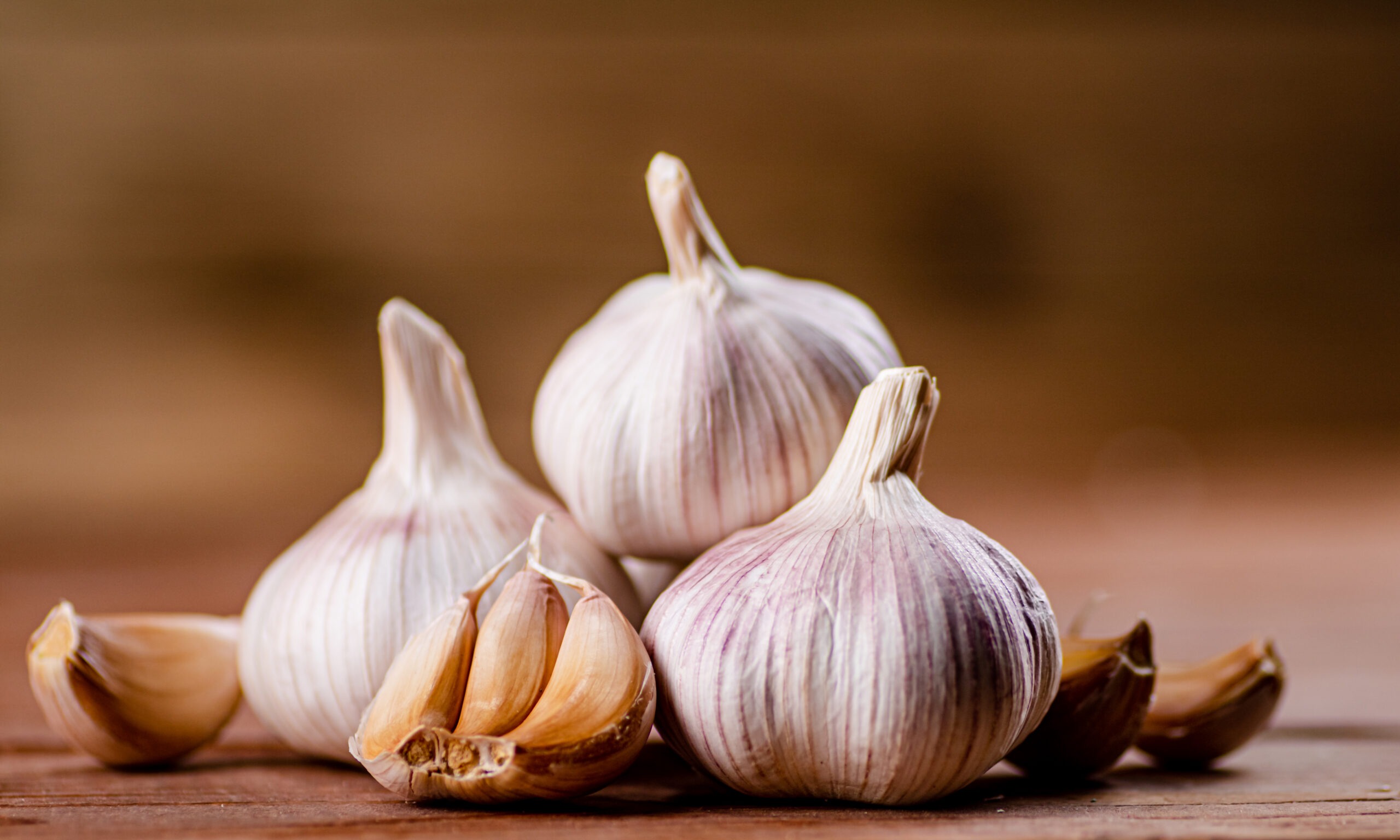
Take your garlic bulb and carefully separate it into individual cloves.
Don’t peel them.
Leave the papery skin around each clove intact.
Choose healthy, substantial cloves.
Each individual clove becomes one new garlic plant.
Which Way Up Do You Plant Garlic?
This matters.
Look at the clove.
You’ll see:
A pointed end
This goes up.
A flatter root plate
This goes down.
Planting the correct way helps the emerging shoot reach the surface efficiently.
Garlic planted upside down may still grow, but you’re making the plant work unnecessarily hard.
How Deep Should You Plant Garlic?
Plant each clove so its tip sits roughly:
2–3cm below the soil surface.
In particularly cold areas, planting slightly deeper can provide additional protection.
The exact recommendation varies somewhat by soil and variety, so follow the supplier’s instructions where available.
Don’t simply leave the clove sitting exposed on top of the soil.
How Far Apart Should Garlic Be?
A useful general spacing is:
15cm between cloves
and:
around 30cm between rows.
This gives each plant enough room to develop a decent bulb.
You can plant slightly closer if space is limited, but very crowded garlic can produce smaller bulbs.
Remember:
One clove = one eventual bulb.
So if you plant 20 cloves successfully, you could potentially harvest around 20 bulbs.
Growing Garlic in Raised Beds
Raised beds are excellent for garlic.
They tend to offer:
- Good drainage
- Easy soil improvement
- Simple weed control
- Warmer spring soil
Because garlic doesn’t occupy huge amounts of space, you can fit a surprisingly useful crop into one raised bed.
Plant in neat rows so weeding between the plants remains easy.
Growing Garlic in Containers
Garlic grows extremely well in pots and planters.
That makes it a fantastic option if you have:
- A patio
- Balcony
- Courtyard
- Small garden
- Poorly drained soil
Choose a container at least around:
20–25cm deep.
Make sure there are plenty of drainage holes.
Fill it with a good-quality multipurpose compost, ideally with some added loam or soil-based compost for structure.
Space the cloves roughly:
10–15cm apart.
A wide rectangular planter can produce a useful crop without occupying much space.
Can You Grow Garlic in Pots Over Winter?
Absolutely.
In fact, this is one of the easiest ways to grow garlic.
Garlic is hardy and can remain outside over winter.
The main concern isn’t usually cold.
It’s waterlogging.
Make sure containers drain freely and aren’t sitting permanently in trays of water.
You can raise pots slightly on feet if necessary to improve drainage.
When Will Garlic Shoots Appear?
Don’t panic if nothing happens immediately.
Autumn-planted garlic may begin producing green shoots before winter or wait until conditions become more favourable.
Once spring arrives, growth becomes much more obvious.
You’ll see upright green leaves that resemble:
very robust grass.
By late spring, the plants should be growing strongly.
Meanwhile, the bulb is developing underground.
How Often Should You Water Garlic?
Garlic planted in autumn usually requires little additional watering during winter because British weather supplies more than enough.
Watering becomes more important during:
spring and early summer
as the bulbs actively swell.
During prolonged dry periods, water thoroughly.
Try to maintain fairly consistent moisture rather than allowing the plants to become severely dry.
Stop Watering Before Harvest
As the crop approaches maturity, reduce watering.
Once the leaves begin naturally yellowing and the bulbs are close to harvest, relatively dry conditions are preferable.
This helps the outer skins mature and makes curing easier.
Constantly soaking nearly mature garlic can increase the risk of rotting.
Does Garlic Need Feeding?
Garlic appreciates fertile soil.
If you’ve prepared the ground with well-rotted compost, it already has a good foundation.
During spring, when leafy growth is strong, a suitable general-purpose or nitrogen-rich feed can help plants develop.
Once bulb formation is well underway, avoid excessive nitrogen.
Too much nitrogen late in the season can encourage lush leaves when you want the plant concentrating on its bulbs.
Container-grown garlic may need more feeding because available nutrients are limited.
Keep Garlic Weed-Free
This is more important than it sounds.
Garlic has relatively narrow leaves and doesn’t create a dense canopy that suppresses weeds.
That means weeds can easily compete for:
- Light
- Water
- Nutrients
Keep the bed clear, particularly during spring.
Hand weeding is safest close to plants.
Be careful with hoes because garlic bulbs and roots sit fairly close to the surface.
Should You Mulch Garlic?
A light mulch can be helpful.
It can:
- Suppress weeds
- Retain moisture
- Protect soil
- Moderate temperature
Well-rotted compost or another suitable organic mulch works well.
Don’t bury the young plants under a huge layer.
And in extremely wet gardens, avoid creating conditions that keep the bulbs permanently saturated.
Garlic Scapes: What Are They?
If you’re growing hardneck garlic, you may see something unusual appear in late spring or early summer.
A thick flower stalk emerges from the centre and starts curling.
This is called a:
garlic scape.
It’s completely normal.
And it’s edible.
Should You Remove Garlic Scapes?
Generally, yes.
Removing the scape can encourage the plant to put more energy into bulb development rather than flower production.
Cut it while it’s still young and tender.
Don’t throw it away.
Garlic scapes have a wonderful mild garlic flavour and can be used in:
- Stir-fries
- Pesto
- Salads
- Pasta
- Soups
It’s essentially a bonus harvest before your main garlic crop is ready.
Common Garlic Problems
Garlic is relatively trouble-free, but a few issues are worth knowing about.
Garlic Rust
Garlic rust is one of the most common problems.
It appears as:
orange or yellow pustules on the leaves.
A mild infection late in the season may not ruin your crop.
Severe early infection can weaken plants and reduce bulb size.
Reduce the risk by:
- Avoiding overcrowding
- Maintaining good airflow
- Rotating crops
- Removing badly infected foliage
- Not growing alliums repeatedly in the same spot
Don’t compost heavily infected leaves if you’re concerned about spreading disease.
White Rot
White rot is a much more serious problem affecting alliums.
Symptoms may include:
- Yellowing foliage
- Wilting
- White fungal growth around bulbs
- Small black structures around affected roots
The disease can persist in soil for many years.
If you suspect white rot, avoid moving contaminated soil around the garden and don’t continue planting onions or garlic into affected ground.
Container growing with fresh compost may become a useful alternative.
Birds Pulling Up Garlic
Birds sometimes pull freshly planted cloves or young shoots from the soil.
They’re not necessarily trying to eat the garlic.
Often they’re simply investigating disturbed soil.
If this becomes a problem, cover newly planted areas with:
- Netting
- Mesh
- Horticultural fleece
Remove or raise the protection once plants are well established.
Why Is My Garlic Turning Yellow?
Some yellowing is completely normal as harvest approaches.
But yellow leaves earlier in the season may indicate:
- Waterlogging
- Drought
- Nutrient deficiency
- Disease
- Cold damage
Look at the timing and overall condition of the plant.
Garlic naturally dies back as the bulb matures.
That’s actually one of the signs that harvest is getting close.
Can Garlic Grow in Partial Shade?
Garlic prefers:
full sun.
A little shade won’t necessarily prevent a crop, but plants grown in good sunlight usually produce stronger growth and larger bulbs.
If you’ve only got one sunny patch in the vegetable garden, garlic deserves consideration for it.
Companion Planting with Garlic
Garlic is often suggested as a companion plant because of its strong smell.
You’ll sometimes see claims that it magically repels every pest in the garden.
Be cautious with exaggerated companion-planting claims.
Garlic can certainly be grown successfully alongside many vegetables, but don’t rely on it as your only pest-control strategy.
Good neighbours can include:
- Beetroot
- Lettuce
- Strawberries
- Tomatoes
The more important consideration is giving garlic enough sun and avoiding overcrowding.
Crop Rotation for Garlic
Garlic belongs to the allium family, alongside:
🧅 Onions
🌿 Leeks
🌱 Shallots
🌱 Chives
Try not to repeatedly grow alliums in the same location year after year.
Crop rotation helps reduce the build-up of soil-borne pests and diseases.
This becomes particularly important with problems such as white rot.
What Can You Plant After Garlic?
Garlic is usually harvested in early to midsummer.
That means the space can potentially produce another crop during the same year.
Good possibilities include:
🥬 Lettuce
🌱 Spinach
🥗 Salad leaves
🌱 Radishes
🥕 Fast-growing carrots
🌿 Herbs
You could also use the cleared bed for autumn-planted crops later in the year.
This makes garlic an excellent crop for efficient vegetable-garden planning.
When Is Garlic Ready to Harvest?
Garlic is generally harvested from around:
June to August
depending on planting time and variety.
The plant tells you when it’s getting close.
Watch the leaves.
When the lower leaves begin:
yellowing and dying back
while several upper leaves remain green, the bulbs are approaching maturity.
Don’t wait until every leaf is completely dead.
The outer leaves correspond with protective layers around the bulb.
Leaving garlic too long can cause bulbs to split open underground, reducing their storage life.
How to Check If Garlic Is Ready
If you’re unsure, carefully lift one test bulb.
Don’t judge the crop by pulling on the leaves.
Use a hand fork and gently loosen the soil around the bulb.
A mature bulb should:
- Be a good size for the variety
- Have clearly defined cloves
- Still have intact outer papery skin
If it looks underdeveloped, give the remaining plants a little longer.
How to Harvest Garlic
Choose a reasonably dry day if possible.
Use a garden fork or hand fork to carefully loosen the soil beside each plant.
Lift the bulb gently.
Don’t simply pull hard on the leaves.
The stem can break, leaving the bulb in the soil.
Also avoid stabbing the bulb with your fork.
Freshly harvested garlic bruises more easily than you might expect.
Don’t Wash Garlic After Harvesting
If you’re planning to store your garlic, don’t wash the bulbs.
Brush off loose soil gently.
The bulbs now need to be:
cured.
Curing dries the outer layers and prepares the garlic for storage.
How to Cure Garlic
Place harvested garlic somewhere:
- Dry
- Warm
- Well ventilated
- Protected from rain
- Out of intense direct sunlight
You can:
- Lay bulbs on racks
- Hang them in bunches
- Spread them on trays
Allow good airflow around them.
Curing generally takes:
around 2–4 weeks
depending on conditions.
You’ll know they’re ready when the outer skins and neck are thoroughly dry.
How to Store Garlic
Once cured:
- Brush away remaining dry soil.
- Trim the roots.
- Cut stems back — unless you’re braiding softneck garlic.
- Remove only the dirtiest loose outer skin.
- Store somewhere cool, dry and well ventilated.
Good storage options include:
🧺 Mesh baskets
🕸️ Net bags
🧄 Garlic braids
📦 Ventilated crates
Avoid sealed plastic bags.
Garlic needs airflow.
How Long Does Home-Grown Garlic Keep?
Storage life depends heavily on variety and growing conditions.
Softneck garlic
Can potentially store for many months under good conditions.
Hardneck garlic
Usually has a shorter storage life.
Use hardneck varieties first and keep your best-storing softneck bulbs for later in the year.
Check stored garlic occasionally and remove any bulbs beginning to rot.
Can You Save Your Own Garlic for Planting?
Yes.
And it’s wonderfully simple.
When harvesting, choose some of your:
healthiest and best-developed bulbs.
Store them carefully.
When planting time arrives in autumn, separate those bulbs into cloves and replant the largest healthy cloves.
Over several years, you can effectively maintain your own garlic crop.
However, if disease is present, don’t save affected bulbs for planting.
Best Garlic Varieties for Beginners
There are plenty of varieties suited to UK conditions.
Solent Wight
A popular softneck variety with excellent storage qualities.
Good for: Long-term storage and southern UK conditions.
Provence Wight
A large-bulbed softneck garlic with good flavour.
Good for: General-purpose growing.
Early Purple Wight
As the name suggests, this is an early-cropping garlic.
Often ready ahead of many traditional varieties.
Good for: Earlier harvests.
Germidour
A reliable autumn-planted variety producing attractive purple-striped bulbs.
Good for: Beginners and autumn planting.
Carcassonne Wight
A hardneck variety known for good flavour and substantial cloves.
Good for: Cooler gardens and stronger-flavoured garlic.
Elephant Garlic: Is It Actually Garlic?
Here’s an interesting one.
Despite its appearance and name:
elephant garlic isn’t actually true garlic.
It’s more closely related to leeks.
It produces enormous bulbs and very large cloves with a milder flavour.
It’s still grown in a similar way and can be great fun if you want something unusual.
Just don’t expect the intense flavour of traditional garlic.
Growing Garlic Month by Month
| Month | What to do |
|---|---|
| January | Plant where conditions allow |
| February | Final main winter planting period |
| March | Weed and watch spring growth |
| April | Water during prolonged dry periods |
| May | Feed if necessary and remove weeds |
| June | Remove hardneck scapes and check early varieties |
| July | Main harvesting period for many varieties |
| August | Harvest later garlic and cure bulbs |
| September | Choose varieties and prepare beds |
| October | Excellent autumn planting month |
| November | Continue planting |
| December | Garlic remains outside over winter |
What You’ll Need to Grow Garlic
Garlic requires very little specialist equipment.
I’d recommend:
🧄 Garlic bulbs specifically sold for planting
🖐️ Hand trowel
🌱 Well-rotted compost
💧 Watering can
🏷️ Plant labels
🪴 Container or raised bed if drainage is poor
🌱 Suitable general-purpose feed
A planter can be particularly useful for anyone with heavy or poorly drained garden soil.
[See Garlic Bulbs for Planting →]
[See Our Recommended Raised Beds →]
[See Our Recommended Garden Planters →]
[Essential Equipment Every Gardener Needs →]
Garlic Growing FAQs
Is garlic easy to grow?
Yes. Garlic is one of the easiest vegetables for beginners because it requires relatively little maintenance once planted.
When should I plant garlic in the UK?
Autumn is ideal for many varieties, particularly October and November, although suitable garlic can also be planted during winter and early spring.
Does garlic need full sun?
Yes. A sunny position generally produces the strongest plants and best-developed bulbs.
How deep should garlic be planted?
As a general guide, plant cloves with their tips around 2–3cm below the soil surface, although specific varieties and conditions can vary.
Which way up do you plant garlic?
Pointed end up and flat root plate down.
How far apart should garlic cloves be?
Around 15cm apart is a useful general spacing, with approximately 30cm between rows.
Can garlic be grown in pots?
Absolutely. Garlic grows extremely well in sufficiently deep, free-draining containers.
Should you water garlic during winter?
Usually very little additional water is required outdoors in typical UK winter conditions. Avoid waterlogged soil.
How do you know when garlic is ready?
The lower leaves begin yellowing and dying back during summer while several upper leaves remain green.
How many bulbs grow from one garlic clove?
Each planted clove usually produces one new bulb, which then contains multiple cloves.
Can I grow garlic from a supermarket bulb?
It’s possible, but purpose-sold planting garlic is preferable because varieties can be selected for UK conditions and reputable planting stock reduces disease risk.
Does garlic come back every year?
Garlic is normally grown as an annual crop. Plant cloves in autumn or winter and harvest the resulting bulbs the following summer.
Final Thoughts
If you’re looking for one of the easiest ways to start growing your own vegetables, garlic deserves a place near the top of the list.
There’s very little complicated about it.
Buy good planting garlic.
Break the bulb into cloves.
Plant them:
pointy end up.
Give each clove some space.
Keep the bed weed-free.
Water during prolonged dry spells in spring.
Then let the plant do what garlic has been doing for thousands of years.
For beginners, I’d strongly recommend autumn planting.
There’s something particularly satisfying about putting cloves into cold soil in October or November when most of the garden is beginning to shut down.
For months, very little seems to happen.
Then spring arrives.
The plants suddenly accelerate.
And by summer, you dig beneath the soil and discover that every little clove you planted has transformed into an entire bulb.
Better still, save a few of your best bulbs.
Plant them again in autumn.
Then you’re no longer simply growing garlic.
You’re growing next year’s garlic from this year’s harvest.
And that’s exactly the sort of simple cycle that makes growing your own food so rewarding.