Gardeners Guide · Grow your own
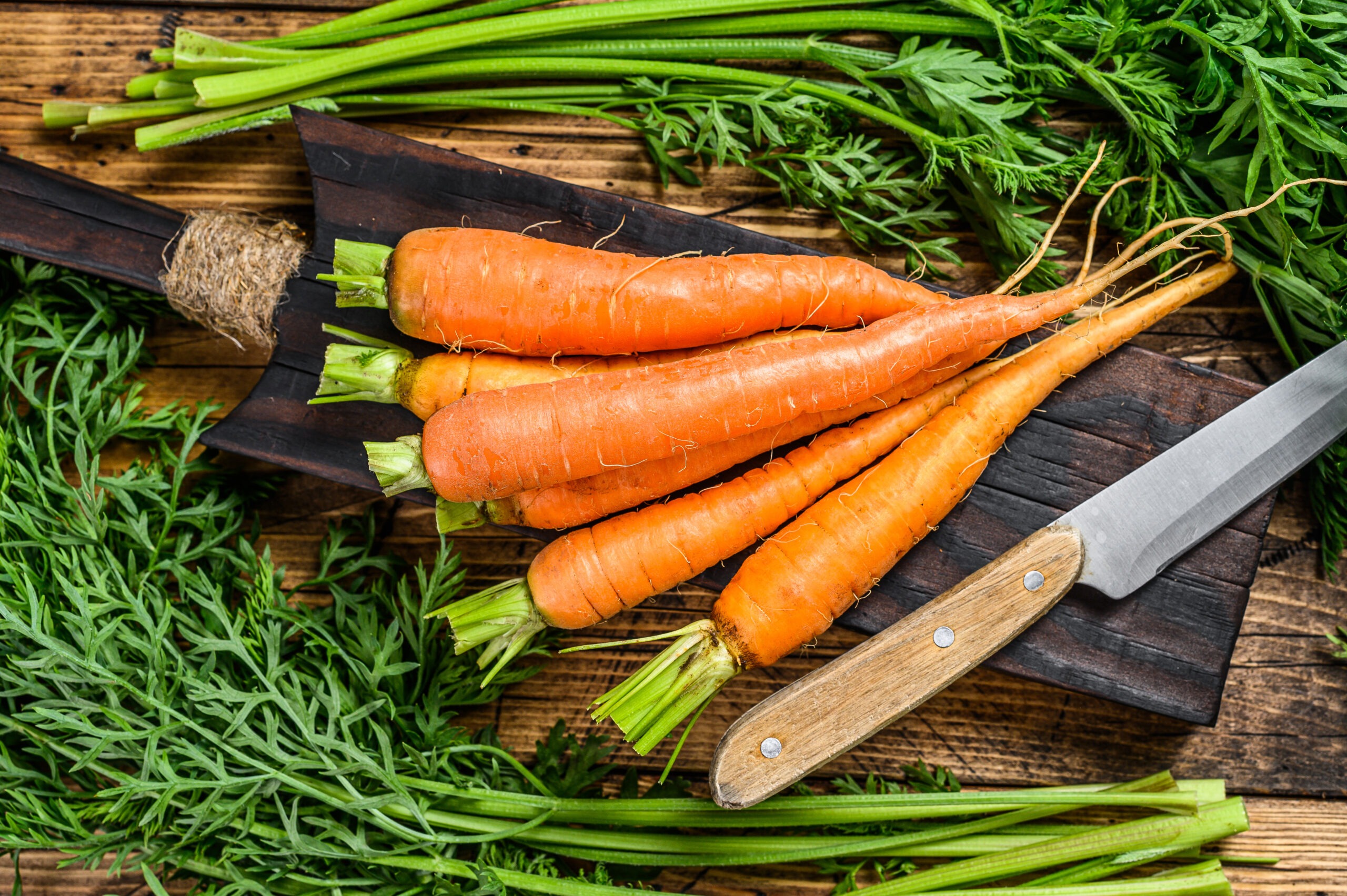
Carrots are one of the most useful vegetables to grow at home, and with a little planning you can harvest them for much more of the year than you might expect.
The secret isn’t planting one enormous row of carrots.
Instead, make small, regular sowings from late winter through summer, choose varieties suited to different seasons and use simple protection such as fleece, cloches or a greenhouse for your earliest and latest crops.
You can then store your maincrop carrots or leave suitable crops in the ground during winter.
Here’s how to grow carrots throughout the year in the UK.
Carrots at a Glance
| Carrots | |
|---|---|
| Early sowing | February–March under protection |
| Main sowing season | April–July |
| Late sowing | July–August |
| Harvest | Late spring–winter |
| Difficulty | Easy–moderate |
| Position | Full sun |
| Sowing depth | Around 1cm |
| Spacing | Around 5–8cm |
| Containers | Excellent |
| Main pest | Carrot fly |
| Best soil | Deep, loose and stone-free |
Can You Really Grow Carrots All Year Round?
Almost.
Don’t expect carrots sown outdoors in December to start growing normally during the middle of a British winter.
The key to year-round carrots is combining:
successional sowing, seasonal varieties, winter protection and storage.
A typical growing year might look something like this:
- Sow early carrots under protection in February or March
- Sow regularly outdoors through spring
- Grow maincrop carrots through summer
- Make late sowings for autumn
- Protect late crops for winter
- Store your maincrop harvest for use during the coldest months
With good planning, you can have home-grown carrots available during virtually every season.
The Year-Round Carrot Growing Calendar
| Month | What to Do |
|---|---|
| January | Use stored or protected carrots |
| February | Make early sowings under cover |
| March | Sow early varieties under fleece or cloches |
| April | Main outdoor sowing begins |
| May | Sow regularly and harvest earliest crops |
| June | Continue sowing and harvesting |
| July | Sow maincrop and late carrots |
| August | Make final suitable sowings |
| September | Harvest summer crops |
| October | Harvest or protect autumn crops |
| November | Lift maincrop carrots for storage |
| December | Harvest protected crops or use stored carrots |
Exact timings will vary according to your location, weather and variety.
Choosing the Right Carrot Varieties
If you want carrots throughout the year, don’t rely on one variety.
Different carrots are suited to different purposes.
Early Carrots
Fast-growing varieties are useful for early sowings and smaller harvests.
Look for varieties such as:
Amsterdam Forcing
These are ideal for producing smaller, tender carrots relatively quickly.
Nantes Types
Nantes carrots are excellent all-rounders.
They produce smooth, cylindrical roots and are particularly good for eating fresh.
They’re a great choice for regular spring and summer sowings.
Chantenay Types
Chantenay carrots produce shorter, broader roots.
They’re particularly useful if your soil isn’t very deep.
They’re also excellent for:
containers and raised beds.
Maincrop Carrots
Maincrop varieties take longer to mature but generally produce larger roots suitable for storage.
These are the carrots to grow if you want a substantial winter supply.
Growing Early Carrots
If you want the earliest possible harvest, begin sowing from around:
February or March
under protection.
Useful options include:
- Greenhouses
- Polytunnels
- Cold frames
- Cloches
- Horticultural fleece
Don’t expect rapid growth.
Cold soil means germination and development will be considerably slower than during spring.
Warming the Soil Before Sowing
One useful trick is to cover the soil with:
a cloche or horticultural fleece
for a couple of weeks before sowing.
This can help warm the soil slightly and protect it from excessive winter rain.
Then sow an early variety underneath the protection.
Growing Carrots During Spring
April and May are excellent months for sowing carrots outdoors.
Once the soil begins warming, germination becomes much more reliable.
Rather than sowing your entire crop at once, make:
small sowings every 2–4 weeks.
This gives you a steady supply instead of fifty carrots becoming ready simultaneously.
Growing Carrots During Summer
Continue sowing through early and midsummer.
Keep the soil consistently moist during dry weather, particularly while seeds are germinating.
Summer sowings can provide carrots through:
- Late summer
- Autumn
- Early winter
This is also when carrot fly protection becomes particularly important.
Growing Carrots for Autumn
Make further sowings during:
June and July.
These can provide excellent autumn harvests.
Fast-growing varieties can also be sown later, depending on your location and weather.
As daylight decreases, growth slows considerably.
So don’t leave your final sowing too late.
Growing Carrots for Winter
For winter carrots, sow suitable varieties during summer and allow them to mature before the coldest weather arrives.
You then have two main choices:
leave them in the ground or lift them for storage.
In well-drained soil and milder locations, carrots can often remain outside and be harvested when needed.
A layer of straw or other suitable mulch can help insulate the soil.
However, very wet soil, severe frost, slugs and rodents can make outdoor winter storage unreliable.
For a dependable winter supply, lift your maincrop carrots and store them.
Growing Carrots in a Greenhouse
A greenhouse is useful for extending the carrot season.
You can sow early crops before outdoor conditions are suitable and grow later crops under protection.
Containers are particularly useful.
Once summer greenhouse crops begin finishing, you can use available space for late carrot sowings.
Remember that an unheated greenhouse still gets very cold.
Its main advantages are protection from:
- Heavy rain
- Wind
- Some frost
- Saturated soil
Growing Carrots in Containers
Carrots are one of the best vegetables for containers.
And if your garden has heavy or stony soil, containers may actually produce better carrots than your vegetable bed.
Choose a container that’s deep enough for your variety.
Short varieties are particularly suitable.
Fill it with:
fine, free-draining compost.
Avoid compost containing large stones or lumps.
Sow directly into the container.
Why Carrots Don’t Like Being Transplanted
Carrots are best:
sown directly where they’re going to grow.
Transplanting seedlings can disturb the developing root and cause:
- Forking
- Twisting
- Distorted carrots
For this reason, I wouldn’t normally start carrots in conventional seed trays and transplant them later.
Preparing the Soil
Good soil preparation makes an enormous difference.
Carrots prefer soil that’s:
- Loose
- Deep
- Free draining
- Relatively fine
- Free from large stones
Remove rocks and break up large clumps.
If you have heavy clay, consider growing carrots in:
raised beds or containers.
Don’t Add Fresh Manure
Avoid adding fresh manure immediately before growing carrots.
Very rich or freshly manured ground can encourage roots to:
fork and become distorted.
Carrots don’t need heavily fertilised soil.
If your soil needs improvement, well-rotted organic matter is better incorporated well before sowing.
How to Sow Carrots
Create a shallow drill approximately:
1cm deep.
Sow the seeds thinly.
Cover gently with fine soil and water carefully.
Carrot seed is tiny, so don’t bury it deeply.
Keep the soil moist while waiting for germination.
Carrots Can Be Slow to Germinate
Don’t panic if nothing appears immediately.
Depending on temperature, carrots can take:
several weeks to germinate.
Keep the seed bed moist but not waterlogged.
One of the most common mistakes is assuming the seeds have failed and digging up the row too soon.
How Far Apart Should Carrots Be?
Once seedlings are established, aim for approximately:
5–8cm between plants
for larger carrots.
Baby carrots can be grown closer together.
If you’ve sown too densely, thin the seedlings carefully.
Thinning Carrots
Carrot fly can be attracted by the smell released when carrot foliage is disturbed.
If thinning is necessary:
- Do it carefully
- Remove thinnings from the area
- Avoid leaving crushed foliage around the bed
Better still, sow thinly enough that extensive thinning isn’t required.
Carrot Fly
Carrot fly is probably the most notorious carrot pest in the UK.
The larvae tunnel into the roots, creating dark channels and making carrots unpleasant to eat.
One of the best methods of protection is:
fine insect mesh.
Cover the crop and secure the edges properly.
Carrot flies tend to stay relatively close to the ground, so physical barriers around the bed can also help, although full mesh protection is generally more dependable.
Growing Carrots in Raised Beds
Raised beds are excellent for carrots because you have more control over the soil.
Fill them with a loose growing medium and remove stones.
Raised beds can also make it easier to install:
insect mesh protection.
Place hoops over the bed and secure mesh around the entire crop.
Watering Carrots
Carrots need reliable moisture, particularly during germination.
Once established, water during prolonged dry weather.
Try to avoid allowing the soil to become extremely dry and then suddenly soaking it.
Large fluctuations in moisture can cause roots to:
split.
Deep, less frequent watering is generally better than constantly wetting only the soil surface.
Feeding Carrots
Carrots don’t require excessive fertiliser.
Too much nitrogen can encourage lots of leafy growth rather than good roots.
If your soil is reasonably fertile, additional feeding may not be necessary.
If feeding is required, choose something appropriate for root vegetables rather than a high-nitrogen fertiliser.
Why Are My Carrots Forked?
Forked carrots are usually perfectly edible.
Common causes include:
- Stones
- Compacted soil
- Fresh manure
- Root disturbance
Improve soil preparation for your next crop.
Why Are My Carrots Tiny?
Possible reasons include:
Overcrowding
Give roots enough space.
Poor soil
Compacted ground restricts development.
Drought
Prolonged dry conditions can slow growth.
Harvested too early
Some varieties simply need more time.
Wrong variety
Baby and early carrots naturally remain smaller than large maincrop types.
Why Have My Carrots Split?
Splitting often occurs when dry soil suddenly becomes very wet.
The root rapidly absorbs water and expands.
Try to maintain more consistent moisture during dry weather.
Why Do My Carrots Have Lots of Leaves but Small Roots?
Excessive nitrogen can encourage foliage at the expense of root development.
Avoid heavily fertilising carrot beds with high-nitrogen feeds.
Give the plants time as well.
Healthy foliage doesn’t necessarily mean the root should already be mature.
Harvesting Carrots
You can begin harvesting carrots whenever they’re large enough for your needs.
Gently check the top of the root.
If it looks ready, pull it.
In heavier soil, loosen the ground beside the carrot with a garden fork before lifting.
This reduces the chance of snapping the root.
Harvest Baby Carrots
You don’t have to wait for every carrot to reach full size.
Young carrots are tender and sweet.
Harvesting selected smaller roots also creates more space for neighbouring carrots to develop.
Storing Carrots Through Winter
Maincrop carrots can be stored for winter.
Lift them carefully during autumn.
Choose healthy, undamaged roots.
Remove the foliage, leaving a small amount of stem.
Don’t store damaged or diseased carrots with healthy ones.
Traditionally, carrots can be stored in boxes containing:
slightly damp sand.
Keep them somewhere:
- Cool
- Dark
- Frost-free
- Well ventilated
Check them occasionally and remove any roots showing signs of rot.
Leaving Carrots in the Ground
You can also leave carrots where they’re growing and harvest them when needed.
This works particularly well in:
free-draining soil.
Mulching the surface can make harvesting easier during cold weather.
The disadvantage is that carrots left outside remain vulnerable to:
- Slugs
- Rodents
- Waterlogging
- Severe frost
For a large crop, I’d usually harvest and store at least some of it rather than relying entirely on leaving everything outside.
Successional Sowing Is the Secret
If there’s one technique that transforms carrot growing, it’s:
successional sowing.
Don’t plant everything on one day.
From spring onwards, sow a short row or container every few weeks.
As one crop is being harvested, another is developing behind it.
Combine that with early protected sowings and stored winter carrots and you’ve created a much longer season.
A Simple Year-Round Carrot Plan
If you’re a beginner, don’t make it complicated.
Try this:
February–March: Sow a small early crop under a cloche or in a greenhouse.
April: Make your first main outdoor sowing.
May–June: Sow another small batch every few weeks.
July: Sow carrots for autumn and winter harvesting.
August: Make a final sowing of a suitable fast-growing variety if conditions allow.
Autumn: Harvest regularly and lift maincrop carrots for storage.
Winter: Eat stored carrots and harvest protected crops where available.
Then begin again with your early sowing.
What You’ll Need
Carrots don’t require lots of specialist equipment.
I’d recommend:
Carrot seeds
Hand trowel
Garden fork
Watering can with a fine rose
For improving your chances of success:
Fine insect mesh
Garden hoops
Horticultural fleece
Garden cloche
If your garden has heavy or stony soil:
Deep containers or raised beds
are particularly worthwhile.
Essential Equipment Every Gardener Needs
Growing Carrots All Year Round FAQs
Can you grow carrots all year round in the UK?
You can produce or store home-grown carrots for most or potentially all of the year by combining early protected sowings, successional sowing, late crops and winter storage.
When is the best time to sow carrots?
The main outdoor sowing season is generally spring through midsummer, although early varieties can be started sooner under protection.
Can I sow carrots in February?
Yes, suitable early varieties can be sown under a greenhouse, cloche or other protection when conditions are suitable.
Can you grow carrots in winter?
Carrots established earlier in the year can remain in the ground through winter or be harvested and stored. Growth from new outdoor winter sowings will be extremely slow.
Can carrots survive frost?
Mature roots can tolerate some cold, but prolonged hard frost can damage them and make harvesting difficult.
Can you grow carrots in pots?
Yes. Carrots are excellent container vegetables. Choose the depth of the container according to the variety you’re growing.
What is the best carrot for containers?
Shorter varieties such as Chantenay types are particularly suitable for containers.
Why shouldn’t carrots be grown in freshly manured soil?
Freshly manured or excessively rich ground can contribute to forked and distorted roots.
How do I stop carrot fly?
Fine insect mesh covering the crop is one of the most reliable physical methods.
How often should I sow carrots?
For a continuous harvest, make small sowings approximately every 2–4 weeks during the main growing season.
Can carrots be left in the ground over winter?
Yes, particularly in well-drained soil, although pests, waterlogging and severe freezing can cause losses.
How do you store carrots for winter?
Lift healthy maincrop carrots, remove the foliage and store them somewhere cool, dark, frost-free and well ventilated. Traditional storage in slightly damp sand can work well.
Final Thoughts
If you want carrots for as much of the year as possible, don’t think of them as one crop.
Think of them as:
a continuous cycle.
Start with early carrots under protection.
Follow them with regular spring sowings.
Continue sowing through summer.
Grow a larger maincrop for autumn.
Then either protect your final crop or lift and store carrots for winter.
The most important technique is simply:
sow little and often.
A short row every few weeks is usually far more useful than planting an entire packet at once.
Get the soil right, protect your plants from carrot fly and maintain reasonably consistent moisture.
Do that and carrots can become one of the most dependable vegetables in your garden.
And because they grow brilliantly in containers as well as vegetable beds, you don’t need a large garden to do it.
A few well-planned pots, raised beds or short rows can keep fresh carrots coming for months.
Continue Your Grow Your Own Journey
A Beginner’s Guide to Growing Carrots
10 Vegetables You Can Grow Through Autumn and Winter
How to Grow Onions Through Autumn and Winter
How to Grow Spinach Through Autumn and Winter