Gardeners Guide · Grow your own
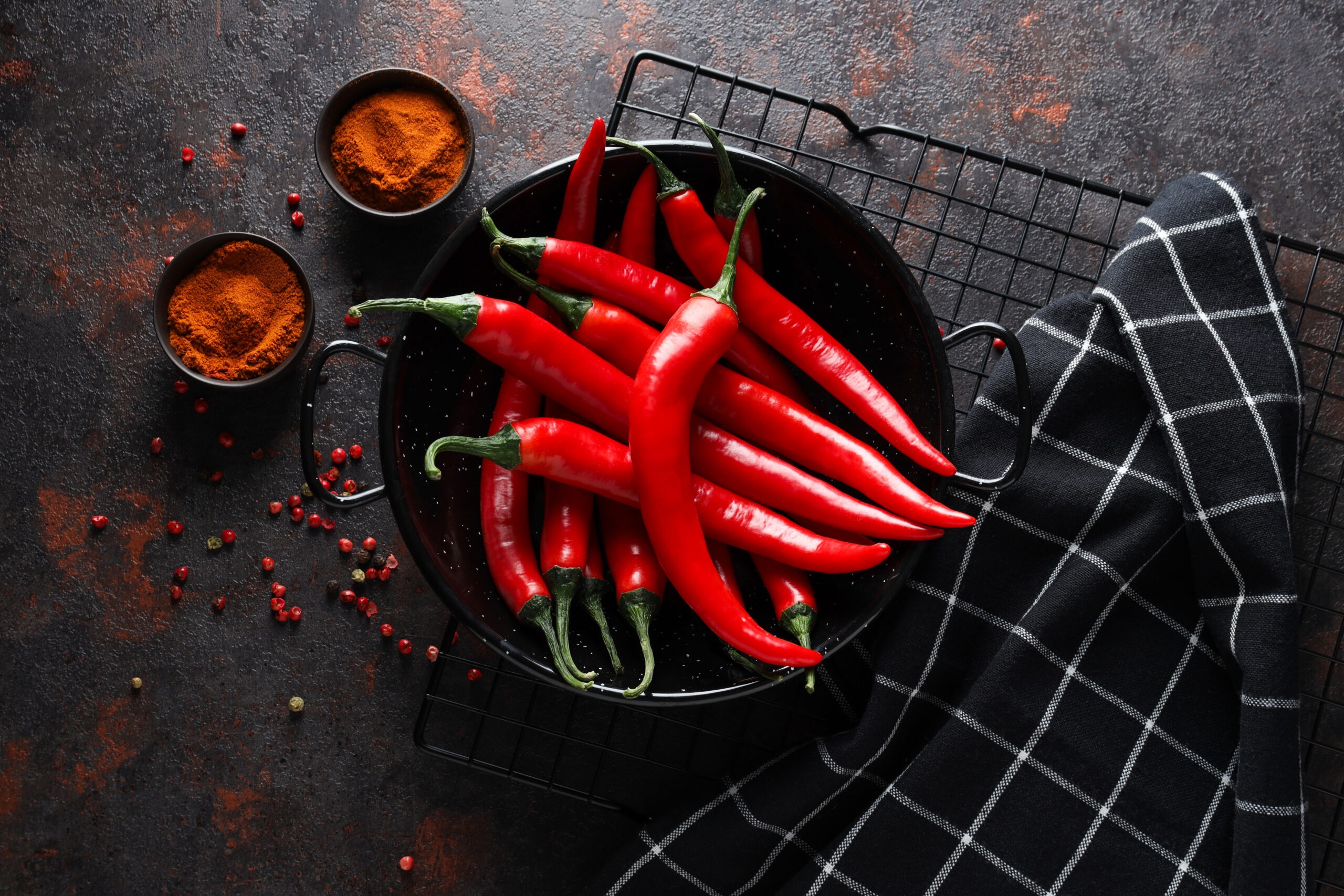
Few plants are as satisfying to grow as chillies.
Start with a tiny seed in the middle of winter and, several months later, you could have a plant covered in colourful fruits ranging from mild and sweet to genuinely eye-watering.
Chillies are also ideal for gardeners without much outdoor space. They grow extremely well in pots, can be kept on a sunny patio, raised in a greenhouse or even grown indoors on a bright windowsill.
The main thing to understand is that chillies like warmth and they take their time.
Unlike quick crops such as radishes or lettuce, chillies benefit from being started early in the year so they have enough time to grow, flower and ripen before autumn arrives.
In this beginner’s guide, we’ll cover when to sow chilli seeds in the UK, how to germinate them, where to grow chilli plants, watering, feeding, pollination, harvesting and how to deal with common problems.
Chillies at a Glance
| Sow | January–March |
| Plant outside | Late May–June, once conditions are warm |
| Harvest | July–October |
| Position | Warm, sunny and sheltered |
| Difficulty | Easy–moderate |
| Spacing | Around 30–45cm |
| Containers | Excellent |
| Greenhouse | Excellent |
| Indoors | Possible in a bright position |
| Watering | Regular but don’t waterlog |
| Growing season | Long — start early |
When to Sow Chilli Seeds in the UK
Chillies have a long growing season.
For most UK gardeners, I’d recommend sowing between:
January and March.
Hotter varieties often benefit from being started particularly early.
January
Excellent for very hot varieties and gardeners with heated propagators or grow lights.
February
Probably the best all-round month for sowing chillies in the UK.
March
Still perfectly reasonable, particularly for faster-growing varieties.
April onwards
Possible, but the plants have less time to mature and ripen their fruit before temperatures fall again.
The earlier you sow, however, the more important good light becomes.
A chilli seedling growing on a gloomy January windowsill can become tall, pale and weak.
If you don’t have additional lighting, waiting until February or March can sometimes produce better plants.
How Hot Do Chilli Seeds Need to Be?
Warmth is one of the keys to successful germination.
Chilli seeds generally germinate best in warm conditions, roughly around:
21–27°C
depending on the variety.
That’s considerably warmer than the average UK windowsill in February.
This is why a heated propagator can be one of the most useful pieces of equipment for chilli growers.
You don’t need an expensive setup.
Even a small propagator maintaining consistent warmth can make germination considerably more reliable.
[See Our Recommended Heated Propagators →]
How to Sow Chilli Seeds
Fill small pots or seed modules with a good-quality seed compost.
Make a small hole approximately:
5mm deep.
Place one seed into each module or pot and lightly cover it with compost.
Water gently.
You want the compost moist, not soaking wet.
Place the pots somewhere warm.
A propagator lid or clear cover can help maintain humidity while the seeds germinate.
Once the seedlings emerge, however, light becomes extremely important.
Move them into the brightest suitable position you have.
How Long Do Chilli Seeds Take to Germinate?
Patience.
Some chilli varieties germinate quickly.
Others take their time.
Under good conditions, you might see seedlings appear within:
7–14 days.
But some varieties — particularly hotter types — can take several weeks.
Don’t dig the seeds up after six days because nothing has happened.
Maintain warmth and moisture and give them time.
What to Do Once Chilli Seedlings Appear
As soon as the seedlings emerge, give them plenty of light.
Without sufficient light, chilli seedlings become:
- Tall
- Thin
- Weak
- Leggy
Turn windowsill plants regularly so they don’t lean heavily towards the glass.
If you’re growing lots of chillies early in the season, a suitable grow light can help produce much more compact plants.
Be careful with watering.
Tiny seedlings need very little water compared with mature plants.
Constantly saturated compost can cause root problems and encourage damping off.
Potting On Chilli Plants
As your seedlings grow and their roots begin filling the original container, move them into a slightly larger pot.
Don’t immediately transfer a tiny seedling into a huge 20-litre container.
Gradually increasing pot size makes watering easier to control.
A typical progression might look something like:
Seed module
↓
7–9cm pot
↓
1–2 litre pot
↓
Final pot
The final size depends on the chilli variety and how large you want the plant to become.
What Size Pot Do Chilli Plants Need?
For many common chilli varieties, a final pot around:
5–10 litres
works well.
Larger varieties may benefit from something bigger.
Smaller compact chillies can be grown successfully in smaller containers.
The size of the pot influences the ultimate size of the plant.
A larger root system generally allows a larger plant — provided light, nutrients and warmth are also available.
Make sure every container has drainage holes.
Chillies like moisture.
They do not like sitting permanently in water.
Where Should You Grow Chillies?
Chillies want:
Warmth
Sunshine
Shelter
In the UK, good locations include:
☀️ A sunny south-facing patio
🏡 A greenhouse
🌿 A polytunnel
🪟 A bright windowsill
🌞 A sheltered sunny wall
A greenhouse is excellent because it provides the warmth chillies appreciate and extends the growing season.
But you certainly don’t need one.
Plenty of chilli varieties grow very successfully outdoors during a good British summer.
When Can Chilli Plants Go Outside?
Don’t rush this.
Chillies are frost-tender.
Plants raised indoors should only move outside permanently once the risk of frost has passed and nighttime temperatures are consistently reasonable.
For much of the UK, that often means:
late May into June.
In colder northern areas, you may need to wait longer.
Before leaving plants outside permanently, harden them off.
Gradually introduce them to outdoor conditions over roughly a week or two.
A warm indoor chilli plant suddenly moved into cold wind and bright direct sunlight can suffer significant stress.
Growing Chillies in a Greenhouse
If you have a greenhouse, chillies are one of the best crops to grow in it.
The additional warmth helps:
- Plant growth
- Flower production
- Fruit development
- Ripening
Greenhouse-grown plants can also remain productive later into autumn.
However, don’t assume hotter is always better.
During very warm summer weather, ventilate the greenhouse properly.
Extreme temperatures can cause flowers to drop and reduce fruit set.
Growing Chillies Indoors
Yes, you can grow chillies indoors.
A bright windowsill can work particularly well for compact varieties.
The biggest limitation is usually light.
Choose the brightest location possible.
Indoor plants may also need a little help with pollination because there’s less wind and fewer insects moving between the flowers.
More on that shortly.
How Often Should You Water Chilli Plants?
This is one of the easiest areas to get wrong.
Chillies don’t want to be permanently saturated.
Allow the upper layer of compost to begin drying before watering again.
Then water thoroughly and allow excess water to drain.
During hot summer weather, container plants may require frequent watering.
During cool conditions, they’ll need considerably less.
Rather than watering according to a rigid schedule, check the compost.
Signs a chilli needs water
The pot feels light.
The surface compost is dry.
The leaves may begin drooping slightly.
Don’t repeatedly allow the plant to wilt badly, though.
Consistent care generally produces healthier growth.
Don’t Overwater Chillies
Overwatering is probably more common among enthusiastic beginners than underwatering.
Constantly wet compost limits oxygen around the roots and can contribute to root problems.
Possible signs include:
- Yellow leaves
- Drooping despite wet soil
- Slow growth
- Persistent soggy compost
Always use pots with drainage holes.
And don’t leave containers permanently sitting in trays full of water.
Does Chilli Need Feeding?
Eventually, yes.
Young plants growing in fresh compost contain enough nutrients initially.
Once plants become established and start flowering, feeding becomes more useful.
A high-potassium tomato fertiliser is commonly used for chilli plants once flowering begins.
Feed according to the manufacturer’s instructions.
You don’t need to pour fertiliser onto the plant every time you see a flower.
Regular, sensible feeding is better than excessive feeding.
[See Our Recommended Chilli & Tomato Feeds →]
Should You Pinch Out Chilli Plants?
You’ll often see conflicting advice about pinching out the growing tip of a young chilli plant.
Pinching can encourage branching and create a bushier plant.
But it isn’t compulsory.
Some varieties naturally branch well without intervention.
If your plant becomes tall with very little side growth, pinching the main growing tip above a set of leaves can encourage additional branches.
For a complete beginner, however, I’d concentrate first on:
Light + warmth + correct watering + feeding.
Those factors matter much more.
Do Chilli Flowers Need Pollinating?
Chilli flowers are self-fertile, meaning an individual flower contains what it needs to produce fruit.
But pollen still needs to move within the flower.
Outdoors, wind and insects generally take care of this.
Inside a greenhouse or house, you can help.
Easy hand pollination
Gently shake the plant.
Or tap the flower stems.
You can also use a soft artist’s brush to gently move pollen between flowers.
You don’t need to perform complicated botanical surgery.
A gentle shake every so often is usually enough.
Why Are My Chilli Flowers Falling Off?
Flower drop can happen for several reasons.
Extreme heat
Very high temperatures can interfere with fruit set.
Cold conditions
Chillies dislike low temperatures.
Water stress
Both severe dryness and excessive watering can cause problems.
Too much nitrogen
Large amounts of nitrogen can encourage lots of leaves instead of fruit.
Poor pollination
Particularly with indoor plants.
A few dropped flowers are completely normal.
If nearly every flower falls, investigate the growing conditions.
When Do Chillies Start Producing Fruit?
Once flowers are successfully pollinated, you’ll see tiny chillies beginning to form behind them.
Initially, growth may seem slow.
Then during warm weather, the fruits can develop surprisingly quickly.
Depending on when you sowed, your first chillies may start appearing during:
June or July
with harvesting continuing into autumn.
Earlier greenhouse plants may produce sooner.
Does Picking Chillies Encourage More Fruit?
Yes.
Regularly harvesting mature fruits can encourage the plant to continue producing.
If you’re waiting for every chilli to become fully ripe, that’s perfectly fine.
But don’t leave mature fruit on the plant indefinitely if you’re trying to maximise your overall harvest.
How Hot Will My Chillies Be?
Chilli heat is measured using the Scoville Heat Unit scale — SHU.
Very roughly:
| Chilli | Approximate heat |
|---|---|
| Sweet pepper | 0 SHU |
| Poblano | 1,000–2,000 SHU |
| Jalapeño | 2,500–8,000 SHU |
| Serrano | 10,000–25,000 SHU |
| Cayenne | 30,000–50,000 SHU |
| Habanero | 100,000–350,000 SHU |
| Superhot varieties | 1,000,000+ SHU |
Actual heat varies according to the variety and growing conditions.
And don’t treat Scoville ratings as a competition.
For cooking, a flavourful chilli you’ll actually use can be much more valuable than growing something ridiculously hot purely because you can.
Best Chilli Varieties for Beginners
Jalapeño
A brilliant beginner chilli.
Moderately hot, productive and extremely versatile in the kitchen.
Harvest them green or allow them to ripen red.
Good for: First-time chilli growers.
Cayenne
Produces long, relatively thin fruits with a useful level of heat.
Excellent for drying.
Good for: Chilli flakes and powders.
Apache
A compact variety that’s well suited to containers and smaller spaces.
Produces lots of relatively hot fruits.
Good for: Patios and windowsills.
Hungarian Hot Wax
Produces larger fruits with moderate heat.
Can be harvested at different stages of ripeness.
Good for: Cooking and pickling.
Habanero
For gardeners wanting something hotter.
Habaneros have distinctive fruity flavours as well as substantial heat.
They appreciate a long, warm growing season.
Good for: More adventurous growers.
Scotch Bonnet
Famous for its combination of intense heat and fruity flavour.
Particularly important in Caribbean cooking.
Good for: Hot sauces and Caribbean dishes.
Can You Grow Superhot Chillies in the UK?
Yes.
Varieties such as extremely hot Capsicum chinense chillies can be grown successfully in Britain.
But they generally benefit from:
- Very early sowing
- Consistent warmth
- Good light
- Greenhouse growing
- A long season
For your first year, I’d recommend growing at least one easier variety alongside them.
That way, if your superhot chilli decides to take eight months to produce three fruits, you’ve still got something to harvest.
Common Chilli Pests
Chilli plants don’t suffer the same level of outdoor pest attention as brassicas, but problems still occur.
Aphids
Aphids are one of the most common chilli pests.
Look around:
- Growing tips
- Young leaves
- Flower buds
- Leaf undersides
Small populations can often be removed by hand or washed from the plant.
Regular inspection makes outbreaks much easier to control.
Red Spider Mite
Red spider mites can become troublesome in warm, dry greenhouse or indoor conditions.
Signs include:
- Speckled leaves
- Yellowing
- Fine webbing in severe infestations
Maintaining good plant health and inspecting regularly helps you catch problems early.
Whitefly
Whitefly can attack greenhouse chillies.
You may notice tiny white insects flying up when the plant is disturbed.
Check leaf undersides regularly.
Again, catching a problem early is much easier than dealing with a major infestation.
Why Are My Chilli Leaves Turning Yellow?
Several things can cause yellow leaves.
Common possibilities include:
Overwatering
Probably one of the first things to check.
Nutrient deficiency
Particularly with plants that have been in the same compost for months.
Cold temperatures
Chillies don’t appreciate cold conditions.
Natural ageing
Older lower leaves eventually yellow and fall.
One yellow leaf doesn’t mean the plant is dying.
Look at the overall plant and growing conditions.
Why Are My Chilli Leaves Curling?
Leaf curl can be caused by:
- Heat stress
- Watering problems
- Aphids
- Mites
- Rapid environmental changes
Inspect the leaves carefully before assuming the plant needs fertiliser.
Often the culprit is hiding underneath.
Why Aren’t My Chillies Ripening?
This is a very common UK problem towards the end of summer.
The main issue is often simply:
not enough warmth and time.
To encourage ripening:
- Give plants maximum sunlight
- Keep greenhouse plants warm
- Harvest mature fruit regularly
- Avoid excessive nitrogen feeding late in the season
- Remove very late flowers that have little chance of producing mature fruit
As autumn approaches, you can move container plants into a greenhouse or bright indoor location.
Can You Ripen Green Chillies Indoors?
Some chillies will continue changing colour after picking, particularly if they were already mature.
But for the best flavour, allowing them to ripen on the plant is generally preferable.
Towards the end of the season, however, harvesting green fruit is better than losing it to cold weather.
Green chillies are perfectly edible.
How to Harvest Chillies
Don’t aggressively pull chillies from the plant.
Branches can be surprisingly brittle.
Use:
✂️ Scissors
or
🌿 Secateurs
and cut the fruit with a small section of stalk attached.
This reduces the chance of damaging the plant.
Wear gloves when harvesting and processing extremely hot varieties.
And definitely don’t rub your eyes afterwards.
How to Store Chillies
Fresh chillies can be kept in the fridge for a limited period.
For longer storage, there are several excellent options.
Freeze them
Whole chillies freeze surprisingly well for cooking.
Dry them
Thin-walled varieties such as cayenne are particularly suitable.
Make chilli flakes
Dry completely, then crush.
Make chilli powder
Grind thoroughly dried fruits.
Pickle them
Excellent for jalapeños and similar varieties.
Make hot sauce
Once you start growing lots of chillies, homemade hot sauce becomes almost inevitable.
Can You Overwinter Chilli Plants?
Yes — and many beginners don’t realise this.
Chilli plants are technically perennial in suitable conditions.
Our UK winters simply aren’t warm enough for them outdoors.
Instead of throwing healthy plants away at the end of autumn, you can try overwintering them.
Move the plant somewhere:
- Frost-free
- Bright
- Cool to moderately warm
Reduce watering significantly because growth slows during winter.
Some growers also prune their plants back.
When spring returns and temperatures increase, the plant can begin growing again.
An overwintered chilli has a major advantage:
it already has an established root system.
That can mean earlier growth and fruit the following season.
Growing Chillies Month by Month
| Month | What to do |
|---|---|
| January | Sow slow-growing and superhot varieties |
| February | Main sowing period |
| March | Continue sowing and pot up seedlings |
| April | Pot on and provide plenty of light |
| May | Harden off plants towards the end of the month |
| June | Move outside when warm; flowering begins |
| July | Water, feed and harvest early chillies |
| August | Main fruiting and harvesting period |
| September | Continue harvesting and encourage ripening |
| October | Protect plants from cold and harvest remaining fruit |
| November | Begin overwintering selected plants |
| December | Keep overwintered plants frost-free |
What You’ll Need to Grow Chillies
Growing chillies doesn’t require much equipment.
I’d start with:
🌱 Chilli seeds
🪴 Seed modules or small pots
🌿 Seed compost
🌡️ Heated propagator
🪴 Larger pots for potting on
🌱 Good-quality multipurpose compost
🍅 Tomato/chilli feed
🏷️ Plant labels
✂️ Small scissors or secateurs
A heated propagator is probably the most worthwhile chilli-specific purchase if you plan to sow early each year.
[See Our Recommended Heated Propagators →]
[See Our Recommended Chilli Feeds →]
[Essential Equipment Every Gardener Needs →]
Chilli Growing FAQs
Are chillies easy to grow?
Yes. Once you understand that they need warmth, good light and careful watering, chillies are relatively straightforward.
I’d rate them easy to moderate for beginners.
When should I sow chilli seeds in the UK?
January through March is ideal for most varieties, with February being an excellent general-purpose sowing month.
Can chillies grow outside in the UK?
Yes. Choose a warm, sunny and sheltered position and only move plants outside once the risk of frost has passed.
Do chillies grow better in pots?
Chillies grow extremely well in containers because pots warm relatively quickly and can easily be moved into sheltered or protected positions.
Do I need a greenhouse to grow chillies?
No. A greenhouse helps, but plenty of varieties can grow successfully on a sunny patio or windowsill.
How often should I water chillies?
Water when the upper layer of compost begins drying rather than following a rigid timetable. Avoid keeping the roots permanently saturated.
What should I feed chilli plants?
Once flowering begins, a suitable high-potassium tomato or chilli feed is commonly used.
Why is my chilli plant flowering but producing no fruit?
Poor pollination, extreme temperatures or water stress may be responsible. Gently shaking indoor plants can help pollination.
Do green chillies turn red?
Many varieties do, although ripe colour varies. Depending on the variety, chillies may mature to red, yellow, orange, purple or brown.
Can chilli plants survive winter?
They won’t normally survive outdoors through a UK winter, but healthy plants can potentially be overwintered somewhere frost-free.
Final Thoughts
If you’ve never grown chillies before, I’d strongly recommend giving them a try.
They’re compact enough for a small patio, productive enough to make growing them worthwhile and varied enough that there’s always another variety to experiment with.
The biggest mistake beginners make is probably starting too late.
Chillies need time.
Sow them in late winter or early spring, keep the seedlings warm and bright, gradually increase their pot size and don’t move them outside until conditions are genuinely suitable.
For a first attempt, grow something forgiving such as Jalapeño, Apache or Cayenne.
Once you’ve successfully produced your first crop, that’s when the obsession can begin.
Next year you might have six varieties.
Then twelve.
Then suddenly there’s a heated propagator on every windowsill and you’re explaining to people why one particular chilli needs to be handled with gloves.
That’s part of the fun.
And nothing quite beats walking outside, picking a fresh chilli from a plant you’ve grown from seed and taking it straight into the kitchen.
Continue Your Grow Your Own Journey
[A Beginner’s Guide to Growing Beetroot →]
🥦 [A Beginner’s Guide to Growing Broccoli →]
🥬 [A Beginner’s Guide to Growing Cabbage →]
🥦 [A Beginner’s Guide to Growing Cauliflower →]
🥕 [A Beginner’s Guide to Growing Carrots →]
🍅 [A Beginner’s Guide to Growing Tomatoes →]
🥔 [A Beginner’s Guide to Growing Potatoes →]
🌿 [A Beginner’s Guide to Growing Herbs →]
🌱 [Explore the Grow Your Own Encyclopedia →]