Gardeners Guide · Grow your own
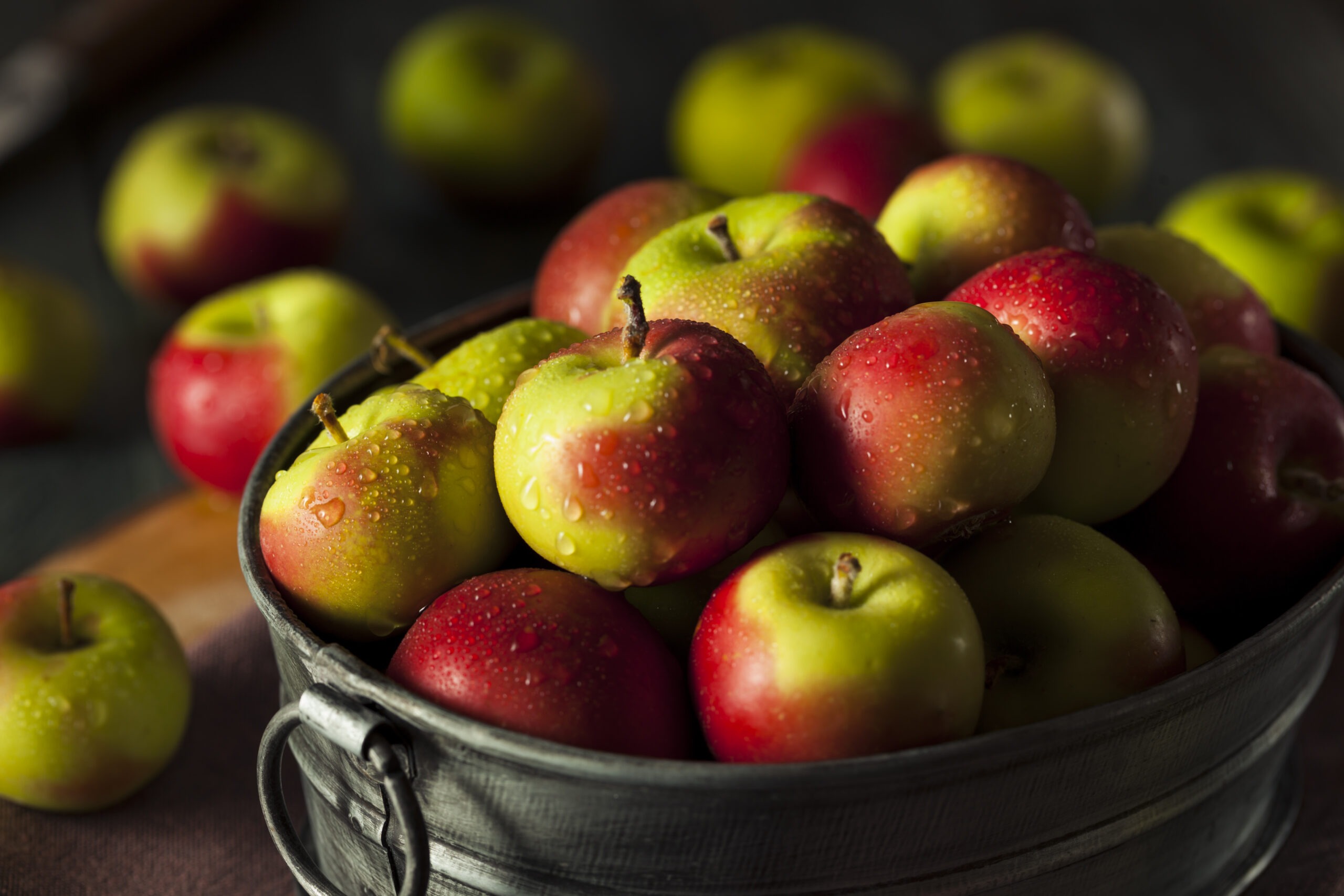
If you have room for only one fruit tree in your garden, an apple tree is difficult to beat.
Apples grow extremely well across much of the UK, and once established, a healthy tree can provide fruit for many years.
You don’t need an enormous garden either.
Modern apple trees are available on different rootstocks, which determine how large the tree eventually becomes. Choose the right one and you can grow apples in a small garden, against a wall, in a large container or even as a compact patio tree.
The biggest difference between growing apples and growing vegetables is patience.
You aren’t sowing something in spring and harvesting it a few months later. You’re planting a tree that could potentially become part of your garden for decades.
Get the variety, rootstock and planting position right at the beginning and most of the difficult work is already done.
In this beginner’s guide, we’ll cover how to grow apple trees in the UK, choosing varieties and rootstocks, pollination, planting, growing apples in containers, watering, feeding, pruning, common problems and harvesting your apples.
Apples at a Glance
| Plant bare-root trees | November–March |
| Plant container-grown trees | Most of the year |
| Flowering | April–May |
| Harvest | August–November |
| Position | Sunny and sheltered |
| Difficulty | Easy–moderate |
| Soil | Fertile and well drained |
| Containers | Yes, with suitable rootstock |
| Watering | Important while establishing |
| Feeding | Usually annually |
| Pruning | Mainly winter |
| Time to first crop | Often 2–4 years depending on tree |
| Lifespan | Potentially decades |
Why Grow Your Own Apples?
There is something particularly satisfying about picking an apple directly from your own tree.
Unlike many supermarket apples, home-grown fruit can be harvested at exactly the right stage of ripeness.
Growing your own also gives you access to an enormous range of varieties that you’ll rarely find in supermarkets.
Depending on the variety, apples can be:
- Sweet
- Sharp
- Aromatic
- Crisp
- Soft
- Juicy
- Excellent for cooking
- Excellent for storing
- Ideal for cider
A single mature tree can potentially produce a substantial crop every year.
And unlike an annual vegetable, you don’t need to replant it every spring.
Choosing an Apple Tree
Before buying an apple tree, there are three things you need to consider:
Variety
Rootstock
Pollination
Beginners often concentrate entirely on the variety.
They see ‘Gala’ or ‘Braeburn’ and buy it.
But the rootstock can be just as important because it determines how large the tree will eventually become.
Understanding Apple Rootstocks
Most apple trees aren’t grown on their own roots.
Instead, the desired apple variety is grafted onto another apple root system called a:
rootstock.
The rootstock controls characteristics such as:
- Tree size
- Vigour
- How quickly it begins fruiting
- Suitability for containers
- Support requirements
Choosing the correct rootstock is one of the most important decisions you’ll make.
Common Apple Rootstocks
M27
Produces a very small tree.
Typical eventual height is around:
1.5–2m
depending on conditions and training.
Good for: Patio gardens and large containers.
It generally requires permanent support and good growing conditions.
M9
Produces a dwarf tree, often around:
2–2.5m.
It crops relatively young but usually requires permanent staking.
Good for: Small gardens.
M26
One of the most useful rootstocks for ordinary gardens.
Trees often reach around:
2.5–3.5m.
Good for: Small to medium gardens.
It offers a useful balance between manageable size and productivity.
MM106
Produces a larger semi-vigorous tree, often around:
3.5–4.5m
depending on conditions and pruning.
Good for: Medium to large gardens.
It needs considerably more space than M26.
M25
Produces a large, vigorous apple tree.
Trees can potentially reach:
5m or more.
Good for: Large gardens and traditional orchards.
Not the rootstock I’d choose for a small suburban garden.
Which Rootstock Should a Beginner Choose?
For many ordinary UK gardens, I’d look at:
M26
for a manageable free-standing tree.
If space is very limited:
M9
may be more suitable.
For containers, look at dwarfing rootstocks such as:
M27 or M9.
Don’t simply buy the smallest tree in the garden centre.
A young tree might only be 1.5 metres tall today but could eventually become enormous depending on its rootstock.
Best Position for an Apple Tree
Apple trees perform best somewhere:
sunny and reasonably sheltered.
Good sunlight helps:
- Fruit ripen
- Sugar develop
- Flower buds form
- Trees remain productive
Avoid severe frost pockets where possible.
Cold air tends to collect in low areas, and late spring frost can damage apple blossom.
A sheltered position is particularly useful in colder or exposed gardens.
What Soil Do Apple Trees Need?
Apple trees tolerate a reasonably wide range of soils.
The ideal soil is:
- Fertile
- Moisture-retentive
- Well drained
- Rich in organic matter
The main thing to avoid is ground that remains permanently waterlogged.
Apple roots need oxygen.
Heavy clay can still grow excellent apple trees if drainage is reasonable.
Very sandy soil may require more organic matter and regular watering.
When to Plant Apple Trees in the UK
There are two main types of apple tree available.
Bare-Root Apple Trees
These are supplied without a pot while dormant.
Plant between roughly:
November and March
while the tree isn’t actively growing.
Avoid planting when the soil is:
- Frozen
- Waterlogged
- Extremely dry
Bare-root trees are often excellent value.
Container-Grown Apple Trees
These can theoretically be planted throughout much of the year.
However, autumn and early spring are still excellent planting periods.
If you plant during summer, you’ll need to pay much closer attention to watering.
How to Plant an Apple Tree
Take your time with planting.
This tree could remain in the same position for decades.
Start by digging a hole:
wider than the root system but not unnecessarily deep.
Loosen the surrounding soil.
Place the tree into the hole and spread the roots naturally.
The graft union — the swollen area where the variety joins the rootstock — should remain:
above soil level.
Don’t bury it.
Backfill with soil.
Firm gently.
Water thoroughly.
Why You Shouldn’t Bury the Graft Union
This is important.
If the graft union is buried, the apple variety above it may produce its own roots.
If that happens, you can lose the dwarfing effect of the rootstock.
Your supposedly compact apple tree may become considerably more vigorous than expected.
Keep the graft union clearly above the final soil level.
Should You Add Compost to the Planting Hole?
Improve the wider planting area rather than creating a tiny pocket filled entirely with rich compost.
Mixing some well-rotted organic matter into the surrounding soil can help.
But don’t plant the tree into what is effectively a pot of compost buried in the ground.
The aim is to encourage roots to spread into the surrounding soil.
Staking an Apple Tree
Many young apple trees benefit from staking.
Dwarf rootstocks may require:
permanent support.
More vigorous trees may only need staking while establishing.
Use:
- A strong tree stake
- A proper tree tie
The tie should hold the tree securely without cutting into the bark.
Check ties every year.
As the trunk thickens, a forgotten tight tie can cause serious damage.
Apple Tree Pollination
Pollination can sound complicated, but the basic idea is straightforward.
Apple blossom generally needs pollen from another compatible apple variety for good fruit production.
Bees and other insects transfer the pollen between flowers.
This means you need:
another compatible apple tree flowering at roughly the same time.
Fortunately, that tree doesn’t necessarily need to be in your garden.
A neighbour’s apple or crab apple may provide suitable pollen.
Apple Pollination Groups
Apple varieties are grouped according to when they flower.
You may see them described as:
- Group 1
- Group 2
- Group 3
- Group 4
- Group 5
or using letters such as:
- A
- B
- C
- D
You generally want another compatible variety flowering at approximately the same time.
Neighbouring groups often overlap.
For example, a Group 3 apple may pollinate successfully with another Group 3 and often varieties in Groups 2 or 4.
Check the specific variety before buying.
Are Apple Trees Self-Fertile?
Some varieties are described as:
self-fertile.
These can produce fruit without another apple variety nearby.
However, even many self-fertile apples can crop better when cross-pollinated by another compatible tree.
If you only have space for one tree, choosing a self-fertile variety can make things easier.
What Is a Family Apple Tree?
A family apple tree has:
several different apple varieties grafted onto one rootstock.
This means a single tree can potentially produce multiple varieties.
It also helps with pollination because compatible varieties can flower on the same tree.
Family trees can be excellent for small gardens.
However, different grafted varieties may grow at different rates, so pruning needs a little more attention to keep the tree balanced.
Growing Apple Trees in Containers
Yes, apples can grow successfully in containers.
The key is choosing the right tree.
Look for:
dwarfing rootstocks such as M27 or M9.
Use a large, heavy container with excellent drainage.
I’d generally choose something at least:
45–50cm wide
and preferably larger for long-term growing.
Use a suitable soil-based compost rather than very lightweight multipurpose compost alone.
Container trees need considerably more attention than trees planted in the ground.
Watering Container-Grown Apple Trees
Container apples can dry out quickly.
During warm summer weather, they may need watering:
daily.
Never assume rainfall has watered the pot properly.
A dense canopy can divert rain away from the compost.
Check the moisture with your finger.
Consistent watering is particularly important while fruit is developing.
Can You Grow Apples Against a Wall?
Absolutely.
Apples are excellent for training as:
- Espaliers
- Cordons
- Fans
- Stepovers
This allows you to grow fruit in surprisingly small spaces.
An espalier apple can be trained almost flat against:
- A wall
- Fence
- Wire framework
This is one of the best ways to combine fruit production with an attractive garden feature.
What Is an Espalier Apple Tree?
An espalier has a central vertical stem with horizontal branches trained out on either side.
It creates a distinctive tiered shape.
Espaliers are excellent for:
- Walls
- Fences
- Dividing areas of the garden
- Small spaces
They require regular pruning and training, but the result can be both beautiful and productive.
What Is a Cordoned Apple Tree?
A cordon is essentially a single main stem trained at an angle or vertically.
Short fruiting spurs develop along it.
Because cordons take up very little horizontal space, you can potentially grow several different apple varieties along one fence.
They’re particularly useful when you want:
variety rather than enormous quantities of one apple.
How Often Should You Water an Apple Tree?
Newly planted trees need regular watering.
During their first couple of growing seasons, don’t allow the root zone to become severely dry.
Give the tree:
a deep watering
rather than repeatedly wetting only the soil surface.
Established trees usually need much less attention, although prolonged drought during fruit development can still affect the crop.
Mulching Apple Trees
Mulching is extremely useful.
Apply a layer of:
well-rotted compost or other suitable organic mulch
around the tree in spring.
This helps:
- Retain moisture
- Suppress weeds
- Improve soil
- Add organic matter
Keep mulch away from direct contact with the trunk.
Don’t build a mound of mulch around the bark.
Feeding Apple Trees
Apple trees generally benefit from feeding in spring.
A suitable general fruit-tree fertiliser can be applied according to the manufacturer’s instructions.
Trees growing in containers require more regular feeding because nutrients are gradually washed from the compost.
Avoid excessive nitrogen.
Too much nitrogen can produce lots of soft leafy growth at the expense of fruit.
When Do Apple Trees Flower?
Most apple trees flower during:
April and May.
The exact timing depends on:
- Variety
- Location
- Weather
- Local climate
Apple blossom is one of the highlights of the spring garden.
It’s also a critical period for the year’s crop.
Protecting Apple Blossom from Frost
Late frost can damage flowers and reduce fruit production.
Smaller trees can potentially be protected using horticultural fleece when frost is forecast.
Avoid placing heavy material directly onto delicate flowers.
If growing against a wall, the warmer microclimate can provide some additional protection.
This can be particularly useful in colder regions.
When Do Apple Trees Start Producing Fruit?
This depends on:
- Rootstock
- Age when purchased
- Variety
- Growing conditions
Dwarfing apple trees can sometimes begin producing small crops relatively young.
A newly planted tree may produce some apples within:
two to four years.
More vigorous rootstocks can take longer to reach full productivity.
Don’t worry if your newly planted tree doesn’t immediately produce a basket full of apples.
Establishing a healthy root system is more important.
Should You Remove Apples from a Young Tree?
Sometimes, yes.
If a newly planted tree produces lots of fruit immediately, removing some or all of it can allow the tree to concentrate on:
establishing roots and branches.
This is particularly useful during the first year after planting.
It can feel painful removing perfectly good baby apples.
But you’re investing in the long-term health of the tree.
Why Do Apple Trees Drop Small Fruits in June?
Apple trees naturally shed some developing fruit.
This is commonly called:
June drop.
The tree often sets more fruit than it can successfully mature.
It then sheds some of the smaller fruits naturally.
This is usually nothing to worry about.
You may still need to thin the remaining crop afterwards.
Should You Thin Apples?
Yes, particularly if the tree has produced a very heavy crop.
After the natural June drop, thin overcrowded fruit clusters.
For dessert apples, you might leave:
one or two good fruits per cluster
with reasonable space between them.
Remove:
- Damaged fruits
- Misshapen fruits
- Very small fruits
Thinning can improve fruit size and reduce the strain on branches.
Why Apple Trees Sometimes Crop Every Other Year
Some apple trees can fall into a pattern known as:
biennial bearing.
They produce an enormous crop one year and very little the next.
One reason is that a huge crop uses so much of the tree’s energy that fewer flower buds are formed for the following year.
Thinning an excessively heavy crop can help reduce this tendency.
Some varieties are naturally more prone to biennial bearing than others.
When Should You Prune Apple Trees?
Traditional free-standing apple trees are mainly pruned during:
winter.
Usually when the tree is dormant between leaf fall and early spring.
Trained forms such as cordons and espaliers also require:
summer pruning.
The purpose differs slightly.
Winter pruning encourages and shapes growth.
Summer pruning helps control vigorous growth and encourages fruiting.
How to Prune a Young Apple Tree
The goal with a young tree is to create a strong framework.
You generally want:
- A clear structure
- Well-spaced branches
- An open centre
- No crossing branches
- No badly damaged wood
Don’t become obsessed with pruning.
One of the biggest beginner mistakes is removing far too much.
Think about the shape you want before making each cut.
The Three Ds of Apple Pruning
A useful starting rule is to remove:
Dead
Diseased
Damaged
wood.
Then look for branches that:
- Cross
- Rub
- Grow awkwardly inward
- Create severe congestion
This immediately improves the tree without requiring advanced pruning knowledge.
Don’t Over-Prune Apple Trees
Heavy pruning can trigger:
vigorous leafy regrowth.
You may see lots of vertical shoots known as water shoots.
If an old tree needs major renovation, spread the work over several years rather than removing half the canopy in one winter.
For beginners:
less is often more.
Pruning Trained Apple Trees
Espaliers and cordons are generally summer-pruned to control their size and encourage fruiting spurs.
The exact technique depends on how the tree has been trained.
If you’re buying an espalier or cordon, it’s worth learning the pruning system specifically for that shape.
Treating it exactly like a normal free-standing apple tree can ruin the structure you’ve spent years creating.
Common Apple Tree Problems
Apple trees are generally reliable, but there are several pests and diseases you’re likely to encounter.
Apple Scab
Apple scab is a common fungal disease.
Symptoms can include:
- Dark patches on leaves
- Scabby marks on fruit
- Cracking
- Premature leaf fall
Some varieties are naturally more resistant.
Remove badly affected fallen leaves and fruit.
Good airflow through the tree can also help.
Slightly scabby apples are often still perfectly usable once damaged areas are removed.
Apple Canker
Canker causes areas of bark to become:
- Sunken
- Cracked
- Dead
Branches beyond severe infections can die.
Prune affected wood back into healthy tissue.
Sterilise tools where appropriate and avoid leaving poor pruning cuts.
Trees stressed by waterlogged conditions may be more vulnerable.
Powdery Mildew
Powdery mildew appears as:
white powdery growth
on shoots and leaves.
Remove badly affected shoots.
Good airflow and healthy growing conditions help reduce problems.
Some apple varieties are more susceptible than others.
Codling Moth
Codling moth larvae are responsible for the classic:
maggot inside the apple.
The larvae tunnel into developing fruit.
Pheromone traps can be used to monitor moth activity.
Remove badly damaged fruit.
Encouraging a diverse garden ecosystem can also support natural predators.
Apple Sawfly
Apple sawfly larvae can tunnel into young fruits.
You may see:
- Scarring
- Holes
- Damaged fruitlets
Removing affected young fruit can help reduce the number of larvae completing their lifecycle.
Aphids
Aphids often gather on young shoots.
They can cause:
- Curled leaves
- Distorted growth
- Sticky honeydew
Natural predators such as:
- Ladybirds
- Hoverfly larvae
- Lacewings
can provide significant control.
Avoid automatically reaching for insecticide whenever you see a few aphids.
Why Are My Apple Leaves Curling?
Aphids are one of the most common causes.
Unroll a damaged leaf and check underneath.
Other possible causes include:
- Drought stress
- Disease
- Environmental damage
Look for insects before deciding how to treat the problem.
Why Are Apples Falling Off the Tree Early?
Some fruit drop is completely natural.
Possible causes include:
- June drop
- Heavy crop load
- Drought
- Pest damage
- Disease
- Wind
If the tree is otherwise healthy and only some fruit is falling, there may be no serious problem.
Why Is My Apple Tree Not Producing Apples?
There are several possibilities.
The tree is too young
Give it time.
Poor pollination
There may not be a compatible apple nearby.
Frost damaged the blossom
A late frost can destroy flowers.
Excessive pruning
Heavy winter pruning can encourage leafy growth.
Biennial bearing
The tree may have cropped heavily the previous year.
Lack of sunlight
Heavy shade reduces productivity.
Work through the likely causes rather than assuming the tree is unhealthy.
Best Apple Varieties for Beginners
There are hundreds of varieties available.
These are some useful names to consider.
Discovery
An early-season dessert apple producing attractive red fruit.
Sweet, aromatic and best eaten relatively soon after harvesting.
Good for: Early apples.
James Grieve
A traditional variety originally raised in Scotland.
Produces juicy fruit that can be eaten fresh or used for cooking.
Good for: Cooler UK gardens.
Falstaff
Produces crisp, juicy apples with good flavour.
It can be a reliable garden variety.
Good for: Dessert apples.
Fiesta
Also known as Red Pippin.
Produces aromatic dessert apples with Cox-style flavour.
Good for: Flavour.
Bramley’s Seedling
The classic British cooking apple.
Produces large, sharp fruit excellent for pies, crumbles and sauces.
Good for: Cooking.
Bramley has unusual pollination requirements, so check compatibility carefully when choosing companion trees.
Egremont Russet
A distinctive traditional dessert apple with russeted skin and a rich, nutty flavour.
Good for: Traditional apple flavour.
Best Apple Trees for Scotland
Apples can grow extremely well in Scotland, but variety choice matters.
Look for varieties known to perform well in:
- Cooler climates
- Shorter growing seasons
- More exposed conditions
Good candidates can include:
James Grieve
Discovery
Katy
Falstaff
Red Windsor
Local nurseries are particularly useful because they’ll know which varieties perform well in your specific area.
Can You Grow Apples in Northern UK Gardens?
Yes.
Apples are among the most suitable tree fruits for cooler parts of Britain.
Choose:
- Hardy varieties
- Earlier-ripening varieties
- Sheltered positions
A south- or west-facing position can help fruit ripen.
Avoid very late varieties if your growing season is particularly short or exposed.
When Are Apples Ready to Pick?
Depending on variety, apples can ripen from:
August through November.
Don’t judge ripeness purely by colour.
A simple test is to:
- Cup the apple gently in your hand.
- Lift slightly.
- Twist.
If the apple comes away easily with its stalk attached, it’s often ready.
If you need to pull hard, give it more time.
Early, Mid-Season and Late Apples
Apple varieties ripen at different times.
Early Apples
Harvest around:
August–September.
They’re often best eaten quickly.
Mid-Season Apples
Harvest around:
September–October.
Some store reasonably well.
Late Apples
Harvest around:
October–November.
Many late varieties improve during storage and can keep for months.
Growing varieties from different seasons can dramatically extend your harvest.
How to Pick Apples
Handle apples gently.
Bruising dramatically reduces storage life.
Cup the fruit in your hand and lift it slightly while twisting.
Don’t yank it downwards.
Ideally, the apple should separate with its stalk still attached.
Place fruit gently into a container.
Don’t throw apples into a bucket.
A bruise that looks insignificant today can become a rotten patch during storage.
How to Store Apples
Only store fruit that is:
- Healthy
- Undamaged
- Unbruised
- Free from serious pest damage
Don’t wash apples before long-term storage.
Place them somewhere:
cool, dark, frost-free and well ventilated.
You can wrap individual apples loosely in paper to reduce contact between fruits.
Check them regularly.
Remove any apple that begins to rot.
One bad apple really can spoil its neighbours.
How Long Do Apples Keep?
It depends heavily on variety.
Early apples may only remain at their best for:
days or weeks.
Late storage varieties can potentially keep for:
several months
under good conditions.
If storage is important, choose the variety specifically for that purpose.
Can You Grow an Apple Tree from a Pip?
Yes.
But there’s a catch.
An apple tree grown from seed will not normally produce apples identical to the fruit the seed came from.
Every seed contains a new genetic combination.
Plant a pip from a fantastic supermarket apple and the resulting tree could eventually produce completely different fruit.
It may also become enormous because it isn’t growing on a controlled dwarfing rootstock.
Growing apples from seed is an interesting experiment.
It’s not the best method if you want predictable fruit.
Can You Save Apple Seeds?
You can, but it’s mainly useful as an experiment.
Commercial and nursery apple trees are propagated through:
grafting
rather than seed.
Grafting allows growers to reproduce a known variety while controlling tree size using a chosen rootstock.
That’s why buying a grafted tree is the best option for almost every beginner.
Companion Planting Around Apple Trees
You can grow other plants around established apple trees, provided they don’t compete too aggressively.
Potential companions include:
- Chives
- Thyme
- Oregano
- Strawberries
- Spring bulbs
- Pollinator-friendly flowers
Flowers that attract bees and other beneficial insects can be particularly useful.
Keep the immediate area around a newly planted tree relatively clear while it establishes.
Growing Wildflowers Around Apple Trees
Wildflowers can work beautifully beneath established apple trees.
They attract:
- Bees
- Hoverflies
- Butterflies
- Other beneficial insects
However, avoid allowing dense grass and weeds to grow right up against a young tree.
Grass is surprisingly competitive for water and nutrients.
Keep a clear mulched circle around newly planted trees.
Apple Trees and Wildlife
Apple trees can become valuable wildlife features.
Their blossom provides food for pollinating insects.
The tree itself provides habitat.
Fallen or leftover fruit can attract wildlife.
Older trees may develop cavities used by insects and birds.
An apple tree isn’t simply a food crop.
Over time, it can become part of the wider garden ecosystem.
Growing Apples Month by Month
| Month | What to do |
|---|---|
| January | Winter prune established free-standing trees |
| February | Continue pruning and plant bare-root trees |
| March | Finish bare-root planting and apply mulch |
| April | Watch blossom and protect from severe late frost |
| May | Water young trees and monitor pests |
| June | Watch June drop and thin heavy crops |
| July | Water during drought and monitor developing fruit |
| August | Harvest early varieties and summer-prune trained trees |
| September | Harvest early and mid-season apples |
| October | Main harvest for many varieties |
| November | Harvest late apples and begin bare-root planting |
| December | Plant while dormant and begin winter pruning |
What You’ll Need to Grow Apples
You don’t need a huge amount of equipment.
I’d recommend:
A suitable grafted apple tree
Tree stake
Tree ties
Spade
Well-rotted compost
Organic mulch
Watering can or garden hose
Bypass secateurs
Pruning saw for mature trees
Fruit-tree fertiliser
Horticultural fleece if frost protection is required
For a beginner, the most important purchase isn’t the most expensive pair of secateurs.
It’s buying:
the right tree in the first place.
Choose the right rootstock, variety and pollination partner and you’ll avoid many problems later.
[See Our Recommended Secateurs →]
[See Our Recommended Tree Stakes & Ties →]
[See Our Recommended Garden Hoses →]
[Essential Equipment Every Gardener Needs →]
Apple Growing FAQs
Are apple trees easy to grow?
Yes. Once established, apple trees are relatively straightforward provided they’re planted in a suitable position and pruned appropriately.
When should I plant an apple tree in the UK?
Bare-root trees are usually planted between November and March while dormant. Container-grown trees can be planted over a much longer period.
How long does an apple tree take to produce fruit?
Many grafted garden trees begin producing some fruit within roughly two to four years, although this varies considerably.
Do I need two apple trees?
Not always. Some varieties are self-fertile, and neighbouring apple or crab apple trees may provide pollen. However, many varieties crop better with a compatible pollination partner.
What is an apple rootstock?
The rootstock is the root system onto which the chosen apple variety is grafted. It has a major influence on the eventual size and vigour of the tree.
What is the best apple rootstock for a small garden?
M9 and M26 are commonly used for smaller trees, while very dwarfing M27 can be suitable for particularly restricted spaces and containers.
Can apple trees grow in pots?
Yes. Choose a suitable dwarfing rootstock and use a large container.
Do apple trees need full sun?
A sunny position generally produces the best flowering, ripening and fruit quality.
When should apple trees be pruned?
Traditional free-standing apple trees are mainly pruned during winter. Trained forms such as cordons and espaliers also require summer pruning.
Why isn’t my apple tree producing fruit?
Possible reasons include age, poor pollination, frost damage, excessive pruning, biennial bearing and lack of sunlight.
Why are small apples falling from my tree?
Some early fruit drop is natural and is commonly called June drop.
Should I thin apples?
Yes, if the crop is extremely heavy. Thinning can improve fruit size and reduce strain on branches.
When are apples ready to harvest?
Depending on variety, UK apples can be ready from August through November.
Can apple trees grow in Scotland?
Yes. Apples can grow extremely well in Scotland. Choose hardy varieties suited to cooler conditions and give them a sunny, sheltered position.
Can I grow an apple tree from a supermarket apple seed?
Yes, but the resulting tree won’t reliably produce the same variety and may grow very large.
Final Thoughts
Planting an apple tree is very different from sowing a row of radishes.
You’re making a much longer-term decision.
The tree you plant this winter could still be producing apples many years from now.
That’s why the most important stage happens before you even pick up the spade.
Choose the right:
variety
rootstock
and
pollination arrangement.
For a typical small UK garden, I’d look for a manageable tree on a rootstock such as M26, or a more dwarfing option if space is particularly limited.
If you only have room for one tree, consider a self-fertile variety or a family apple tree.
Plant it somewhere sunny.
Keep it well watered while it establishes.
Don’t bury the graft.
Don’t over-prune it.
And don’t worry if the first harvest isn’t spectacular.
An apple tree is a long-term investment in your garden.
Give it a few years and you can reach the point where late summer and autumn mean walking outside, picking an apple directly from your own tree and eating it there and then.
That’s difficult to beat.