Gardeners Guide · Grow your own
Radishes are one of the easiest and fastest vegetables you can grow.
Some varieties can go from seed to harvest in as little as four weeks, making them ideal for beginners, children and anyone who wants to see quick results from a vegetable garden.
They also need very little space.
Radishes can be grown in vegetable beds, raised beds, containers and even window boxes. Because they mature so quickly, they’re also excellent for filling temporary gaps between slower-growing vegetables.
The main trick is not to leave them in the ground for too long. Young radishes are crisp, juicy and mildly peppery. Leave them to become oversized and they can turn woody, hollow or unpleasantly hot.
In this beginner’s guide, we’ll cover when to sow radishes in the UK, how to grow them in beds and containers, watering, spacing, harvesting, successional sowing and the common problems to watch for.
Radishes at a Glance
| Radishes | |
|---|---|
| Sow | February–September, depending on variety |
| Harvest | April–October |
| Position | Full sun or partial shade |
| Difficulty | Very easy |
| Spacing | Around 2.5–5cm |
| Row spacing | Around 15cm |
| Containers | Excellent |
| Soil | Light, fertile and moisture-retentive |
| Watering | Regular and consistent |
| Time to harvest | Often around 4–8 weeks |
| Direct sowing | Recommended |
Why Grow Radishes?
Radishes are one of the best vegetables for a first-time gardener.
They’re:
- Quick to grow
- Easy to sow
- Suitable for very small spaces
- Excellent in containers
- Relatively trouble-free
- Ideal for repeated sowings
- Available in many shapes and colours
You can sow a short row and potentially be eating the results within a month or two.
That makes them very different from crops such as leeks, pumpkins or peppers, where you might wait many months before harvesting anything.
Radishes are also useful because you can grow them between slower vegetables and harvest them before the larger plants need the space.
What Are Radishes?
Radishes are root vegetables belonging to the brassica family.
That means they’re related to:
- Broccoli
- Cabbage
- Cauliflower
- Kale
- Turnips
The familiar round red radish is only one type.
Radishes can also be:
- White
- Purple
- Pink
- Red and white
- Long and cylindrical
- Round
- Large winter roots
Different types also vary enormously in flavour.
Some are mild and crisp.
Others have a much stronger peppery bite.
Spring and Summer Radishes vs Winter Radishes
Radishes can broadly be divided into two groups.
Spring and Summer Radishes
These are the familiar small, fast-growing radishes.
They’re usually harvested within a few weeks.
Examples include round red varieties and French Breakfast types.
Good for: Beginners, salads and quick crops.
Winter Radishes
Winter radishes are generally:
- Larger
- Slower growing
- More substantial
- Better for storage
Examples include black radishes and daikon-style varieties.
They’re usually sown later in the year for autumn and winter harvesting.
Good for: Larger roots and longer storage.
For your first attempt, I’d start with a quick spring or summer variety.
When to Sow Radishes in the UK
One of the best things about radishes is the long sowing season.
For many common varieties, you can sow from around:
February or March through to August or September.
Exact timing depends on the variety.
February–March
Early sowings can be made under cloches, fleece or other protection.
March–June
Excellent main sowing period.
July–August
Continue sowing, but provide some shade and plenty of water during very hot weather.
August–September
Sow suitable autumn and winter varieties.
Always check the seed packet.
The Secret to Growing Radishes: Sow Little and Often
This is probably the most useful advice I can give.
Don’t sow the whole packet at once.
Radishes mature quickly.
If you sow 100 seeds on the same day, you could end up with more radishes than you can eat becoming ready at almost exactly the same time.
Instead, sow a short row every:
1–2 weeks.
For example:
First sowing: March
Second sowing: Mid-March
Third sowing: Late March
Fourth sowing: Early April
and continue as required.
This is called successional sowing.
It gives you a steady supply rather than one enormous harvest.
How to Sow Radishes
Radishes are best sown directly where they’re going to grow.
They mature so quickly that there’s little benefit in starting them in pots and transplanting them later.
Prepare the soil and create a shallow drill approximately:
1cm deep.
Sow the seeds thinly.
Aim for a seed roughly every:
2.5cm.
Cover lightly with soil.
Water gently.
Once the seedlings appear, thin them if necessary.
How Long Do Radish Seeds Take to Germinate?
Radishes germinate quickly.
Under suitable conditions, seedlings may appear within:
5–10 days.
In cooler conditions they may take a little longer.
Keep the soil lightly moist during germination.
Because the seeds develop so quickly, you’ll soon be able to see whether the row has established successfully.
How Far Apart Should Radishes Be?
For smaller round radishes, aim for approximately:
2.5–5cm between plants.
Leave around:
15cm between rows.
Larger winter varieties need considerably more room.
Always check the packet.
If radishes are overcrowded, the roots may fail to swell properly.
You’ll end up with plenty of leaves and disappointing roots.
Thinning Radish Seedlings
If you’ve sown too thickly, thin the seedlings once they’re large enough to handle.
Remove enough plants to give the remaining radishes room to develop.
Don’t wait until they’re heavily overcrowded.
You can eat many of the young thinnings.
Radish seedlings and leaves have a mild peppery flavour and can be added to salads.
Where Should You Grow Radishes?
Radishes grow well in:
full sun or partial shade.
During spring and autumn, full sun is excellent.
During hot summer weather, some shade can actually help.
Heat and dry conditions can cause radishes to:
- Bolt
- Become excessively spicy
- Develop poor roots
That makes radishes a useful crop for areas of the vegetable garden that receive some afternoon shade.
Preparing the Soil for Radishes
Radishes prefer soil that is:
- Light
- Moisture-retentive
- Well drained
- Reasonably fertile
- Free from large stones
You don’t need exceptionally rich soil.
In fact, very high nitrogen levels can encourage lots of leafy growth without good root development.
Remove weeds and rake the surface until the soil is reasonably fine.
Large stones can cause roots to become distorted.
Do Radishes Need Manure?
Not usually.
Radishes grow quickly and don’t require extremely rich conditions.
Fresh manure isn’t recommended immediately before sowing.
If your soil needs improving, incorporate well-rotted compost beforehand.
The aim is good soil structure rather than enormous amounts of fertiliser.
Growing Radishes in Raised Beds
Raised beds are ideal for radishes.
They usually provide:
- Loose soil
- Good drainage
- Easy access
- Simple watering
- Easy weed control
Radishes are also brilliant for filling temporary gaps.
For example, you might sow them between young cabbage or broccoli plants.
The radishes will be harvested before the larger brassicas need the extra space.
Growing Radishes in Containers
Radishes are one of the best crops for pots.
For small round varieties, you only need a container around:
15cm deep.
Larger varieties require deeper containers.
Window boxes and trough planters work particularly well because they provide plenty of surface area.
Fill the container with multipurpose compost.
Sow seeds around 2.5cm apart and keep the compost consistently moist.
Growing Radishes on a Balcony
Radishes are excellent for balconies.
They:
- Don’t need deep containers
- Grow quickly
- Take up little space
- Don’t need support
- Tolerate some shade
A window box filled with radishes can provide several small harvests during spring and summer.
Just remember that exposed balcony containers can dry out quickly.
Check the compost regularly.
How Often Should You Water Radishes?
Consistent watering is important.
Radishes have small root systems and grow quickly.
Don’t allow the soil to repeatedly become bone dry.
During dry weather, water regularly.
The goal is:
evenly moist soil without waterlogging.
Inconsistent moisture can result in poor-quality roots.
Why Consistent Watering Matters
Radishes growing slowly in dry soil can become:
- Tough
- Woody
- Excessively hot
Heavy watering after a prolonged dry spell can also cause some roots to split.
Steady moisture produces the best results.
Container-grown radishes need particularly regular checking.
Do Radishes Need Feeding?
Usually not.
If the soil is reasonably fertile, radishes should grow perfectly well without additional feeding.
Because they mature so quickly, there often isn’t enough time for a feeding programme to provide much benefit.
In poor container compost, a mild balanced feed can be used.
But avoid high-nitrogen fertiliser.
Too much nitrogen encourages leaves rather than roots.
Should You Mulch Radishes?
Usually, it’s not necessary for quick spring crops.
However, a very light organic mulch between rows can help:
- Retain moisture
- Reduce weeds
- Keep soil cooler during warm weather
Don’t bury the seedlings.
For such a fast-growing crop, good watering is usually more important than heavy mulching.
Can You Grow Radishes Between Other Vegetables?
Absolutely.
Radishes are one of the best vegetables for intercropping.
Because they mature quickly, they can be grown between slower crops such as:
- Broccoli
- Cabbage
- Cauliflower
- Peas
- French beans
- Leeks
By the time the larger plants need the space, the radishes should already have been harvested.
This is an excellent way to make better use of a small vegetable garden.
Growing Radishes with Carrots
Radishes and carrots are sometimes sown together.
The idea is that radishes germinate and mature quickly, marking the row while slower carrot seedlings establish.
The radishes are then harvested before the carrots need the space.
It can work well.
However, don’t sow so many radishes that they overcrowd the carrots.
You still need to manage spacing carefully.
Can Radishes Be Used as Row Markers?
Yes.
Because radishes germinate rapidly, gardeners sometimes mix a few seeds into rows containing slower-germinating vegetables.
The radishes emerge first and show you exactly where the row is.
Later, they’re harvested before the main crop needs the space.
This is particularly useful with carrots and parsnips.
When Are Radishes Ready to Harvest?
Don’t rely only on the number of days since sowing.
Look at the root.
Many small varieties are ready once the swollen root reaches around:
2–3cm across.
You can often see the top of the radish sitting above the soil.
Check one.
If it’s a useful size, harvest it and inspect the quality.
It’s better to pick slightly early than leave radishes too long.
How Long Do Radishes Take to Grow?
Some fast varieties can be ready within:
around 4 weeks.
Others take:
6–8 weeks.
Winter radishes take considerably longer.
Weather also affects growth.
Cool spring conditions may slow development, while mild conditions can produce extremely rapid growth.
Always treat packet maturity times as a guide rather than a guarantee.
How to Harvest Radishes
Harvesting is simple.
Grip the leaves close to the root and pull gently upwards.
In loose soil, the radish should come out easily.
If the ground is compacted, loosen it first with a hand fork.
Don’t leave mature radishes sitting in the soil unnecessarily.
Once they reach a good size, harvest them.
Why Are My Radishes All Leaves and No Radish?
This is one of the most common beginner problems.
Possible causes include:
Overcrowding
Plants don’t have enough room for their roots to swell.
Too much nitrogen
This encourages leafy growth.
Not enough light
Very shaded plants may struggle.
Hot weather
High temperatures can interfere with root development.
Poor soil
Compacted ground can restrict growth.
Give plants enough space and don’t overfeed.
Why Are My Radishes Long and Thin?
Some varieties naturally produce elongated roots.
If you’re growing a round variety and get thin roots, possible causes include:
- Overcrowding
- Poor light
- Hot conditions
- Harvesting too early
Check the variety first.
You may have grown exactly what the plant was supposed to produce.
Why Are My Radishes Hollow?
Radishes can become hollow or pithy if they’re:
- Left in the ground too long
- Growing during very hot conditions
- Subjected to water stress
- Growing too slowly
The solution is usually simple:
harvest them younger.
Frequent sowings make this easier because you don’t feel the need to leave every root to become enormous.
Why Are My Radishes Too Hot?
Radishes naturally contain peppery compounds.
Some varieties are considerably hotter than others.
However, heat can become stronger when plants experience:
- Hot weather
- Dry soil
- Slow growth
- Over-maturity
Keep crops watered and harvest them young.
For a milder flavour, choose varieties known for sweetness or mildness.
Why Are My Radishes Splitting?
Splitting often follows:
dry soil followed by a sudden large amount of water.
The root swells rapidly and the skin splits.
Keep moisture more consistent.
Split radishes are usually still edible if they’re otherwise healthy, but they don’t store as well.
What Is Bolting?
Bolting is when a radish plant stops focusing on its root and begins producing a flower stalk.
This is often triggered by:
- Hot weather
- Long days
- Drought
- Plant stress
Once a radish bolts, the root quality declines.
How to Stop Radishes Bolting
You can’t prevent bolting forever.
Radishes eventually want to flower and produce seed.
But you can delay it by:
- Keeping soil moist
- Growing in partial shade during summer
- Choosing bolt-resistant varieties
- Harvesting promptly
- Avoiding overcrowding
During very hot weather, it can be easier simply to pause sowing and start again when temperatures cool.
Flea Beetles
Flea beetles are small beetles that can create lots of tiny holes in radish leaves.
The damage can make foliage look as though it’s been peppered with small holes.
Established radishes often tolerate minor damage.
Young seedlings can suffer more severely.
Fine insect mesh can help exclude adult beetles.
Keeping plants growing strongly also helps them recover.
Slugs and Snails
Slugs and snails can attack:
- Seedlings
- Leaves
- Exposed roots
Damage is usually most serious while plants are young.
Check crops regularly during damp weather.
Raised beds and containers aren’t guaranteed to prevent slug damage, but they can make monitoring easier.
Cabbage Root Fly
Because radishes are members of the brassica family, they can be affected by cabbage root fly.
The larvae feed on roots and may leave tunnels.
Fine insect mesh can help prevent the adult flies from reaching crops.
Crop rotation is also useful where root pests become a recurring problem.
Radish Leaves: Can You Eat Them?
Yes.
Healthy radish leaves are edible.
Young leaves can be added to:
- Salads
- Sandwiches
- Pesto
Larger leaves can be:
- Wilted
- Added to soups
- Stir-fried
They can be slightly coarse or peppery when mature.
Use the younger leaves for the best texture.
Can You Eat Radish Seed Pods?
Yes.
If you deliberately allow radishes to flower, they eventually produce edible seed pods.
Young pods are crisp and have a peppery flavour.
There are even radish varieties specifically grown for their pods rather than roots.
So a bolted radish doesn’t necessarily have to be completely wasted.
Best Radish Varieties for Beginners
There are plenty of excellent choices.
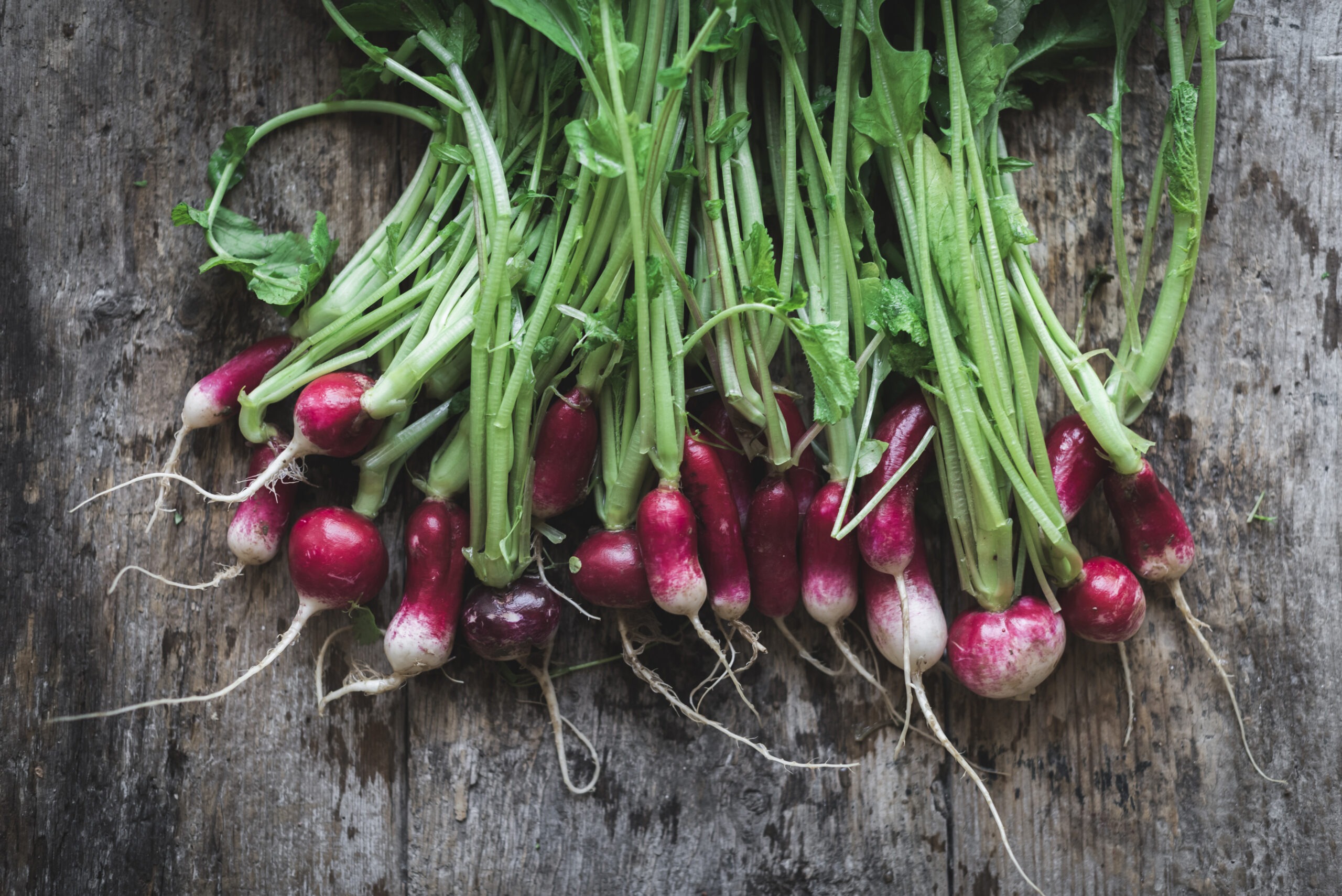
French Breakfast
A classic elongated radish with red upper skin and a white tip.
Crisp and relatively mild when harvested young.
Good for: Beginners and spring sowing.
Cherry Belle
A traditional round red radish.
Fast-growing and widely available.
Good for: Quick crops and containers.
Sparkler
Produces round red roots with distinctive white tips.
Attractive and easy to grow.
Good for: Beginners and children.
Scarlet Globe
A dependable round red radish.
Produces crisp roots when harvested young.
Good for: General-purpose growing.
Easter Egg
Usually sold as a mixture producing roots in several colours, including red, purple and white.
Good for: Colourful salads and children.
Daikon
A large white radish popular in Asian cooking.
It requires more space and a longer growing period than small salad radishes.
Good for: Larger roots and cooking.
Can Radishes Grow in Partial Shade?
Yes.
Radishes are quite tolerant of partial shade.
During summer, some shade can actually be beneficial because it keeps conditions cooler and reduces water loss.
In spring and autumn, a sunny position is ideal.
Can You Grow Radishes in Scotland?
Yes.
Radishes are very well suited to cooler UK conditions.
Scottish gardeners can produce excellent spring and summer crops.
Cooler conditions may even reduce some of the problems associated with excessive summer heat.
The main things to watch for are:
- Very wet soil
- Slug damage
- Slow early growth in cold spring conditions
Raised beds and containers can help if drainage is poor.
Can You Grow Radishes Indoors?
Yes, although good light is essential.
Small radish varieties can be grown in deep window boxes or containers near a bright window.
However, weak indoor light can encourage lots of leaves and poor roots.
For most people, a patio, balcony or outdoor windowsill is easier.
Growing Radishes with Children
Radishes are one of the best vegetables for introducing children to gardening.
The seeds are relatively easy to handle.
They germinate quickly.
Growth is visible almost every day.
And you don’t need to wait six months for the result.
Choose colourful varieties such as Easter Egg and let children pull the roots themselves once they’re ready.
Even if they don’t actually like eating radishes, growing them is still a brilliant introduction to how food develops.
What Can You Grow After Radishes?
Because radishes finish so quickly, almost anything can follow them.
Depending on the season, possibilities include:
- French beans
- Courgettes
- Leeks
- Kale
- Lettuce
- Beetroot
- Peas
- Autumn salads
You can potentially fit several radish crops into the same piece of ground over one growing season.
Crop Rotation for Radishes
Radishes belong to the brassica family.
Other brassicas include:
- Cabbage
- Broccoli
- Cauliflower
- Kale
- Brussels sprouts
In a larger vegetable garden, it’s sensible to include radishes in your brassica rotation.
However, because they grow so quickly and occupy relatively little space, crop rotation doesn’t need to become unnecessarily complicated for beginners.
If you’ve experienced recurring soil-borne brassica problems, pay more attention to where you grow them.
Growing Radishes Month by Month
| Month | What to do |
|---|---|
| January | Choose varieties and prepare containers |
| February | Make early protected sowings |
| March | Main outdoor sowing begins |
| April | Sow regularly and harvest early crops |
| May | Continue successional sowing |
| June | Sow and keep soil consistently moist |
| July | Grow in cooler or partially shaded positions |
| August | Resume or continue sowing as temperatures allow |
| September | Sow suitable autumn and winter varieties |
| October | Harvest later crops |
| November | Harvest suitable winter radishes |
| December | Plan next year’s crop |
What You’ll Need to Grow Radishes
Radishes require almost no specialist equipment.
I’d recommend:
Radish seeds
A hand trowel
A garden rake
A watering can with a fine rose
Multipurpose compost for containers
A planter or raised bed if required
Fine insect mesh if flea beetles or root fly are a problem
Plant labels
For a complete beginner, a packet of radish seed, a rectangular planter and some multipurpose compost are enough to get started.
[See Our Recommended Garden Planters →]
[See Our Recommended Raised Beds →]
[See Our Recommended Watering Cans →]
[Essential Equipment Every Gardener Needs →]
Radish Growing FAQs
Are radishes easy to grow?
Yes. Radishes are one of the easiest vegetables for beginners and can produce a crop within only a few weeks.
When should I sow radishes in the UK?
Many varieties can be sown from around February or March through late summer, with suitable autumn and winter varieties sown later.
How long do radishes take to grow?
Fast-growing salad radishes can sometimes be ready within around 4 weeks, although 4–8 weeks is common.
How deep should radish seeds be planted?
Around 1cm deep is a useful general guide.
How far apart should radishes be?
Small salad radishes usually need around 2.5–5cm between plants.
Can radishes grow in pots?
Yes. They’re one of the best root vegetables for containers.
How deep should a radish pot be?
Around 15cm deep is sufficient for many small round varieties. Long and winter radishes need deeper containers.
Do radishes need full sun?
No. They can grow in full sun or partial shade, and some shade can help during hot weather.
Why are my radishes all leaves?
Overcrowding, excessive nitrogen, poor light or hot conditions can prevent roots developing properly.
Why are my radishes woody?
They may have been left in the ground too long or grown slowly in dry or hot conditions.
Why do radishes split?
Irregular watering, particularly heavy watering after dry soil, can cause roots to split.
Can you eat radish leaves?
Yes. Young healthy leaves are edible.
Can you grow radishes all year?
With different varieties and protection, you can extend the season considerably, although spring and autumn are generally the easiest periods.
Final Thoughts
If you’re completely new to growing vegetables, radishes are one of the best places to start.
There’s no complicated pruning.
No support structure.
No months of waiting for fruit to ripen.
You simply prepare the soil, sow the seeds, keep them watered and start checking the roots a few weeks later.
The biggest mistake is actually being too patient.
Don’t leave them in the ground waiting for enormous roots.
Radishes are generally at their best when they’re young, crisp and tender.
For your first attempt, I’d grow a reliable round variety such as Cherry Belle alongside French Breakfast.
Sow perhaps a metre of row rather than the entire packet.
Then make another small sowing a week or two later.
Keep doing that through spring and you’ll have a much more useful supply than planting hundreds at once.
Radishes are also perfect for filling empty spaces around slower vegetables.
By the time your cabbage, leeks or beans really need the room, the radishes can already be on your plate.
For such a simple little vegetable, that’s remarkably efficient.