Gardeners Guide · Grow your own
Cauliflower has a reputation for being one of the more demanding vegetables to grow — and, compared with something forgiving like beetroot or courgettes, that’s probably fair.
But don’t let that put you off.
The secret to good cauliflower is steady growth. Give the plants fertile soil, plenty of space, consistent moisture and protection from pests and there’s no reason a beginner can’t produce impressive home-grown cauliflower.
What cauliflower doesn’t particularly like is stress.
Dry soil, overcrowding, poor nutrition or damaged roots can all result in disappointing plants or tiny heads.
Get the basics right, though, and cutting your first dense white cauliflower from the garden is incredibly satisfying.
In this guide, we’ll cover when to sow cauliflower in the UK, how to plant it, watering, feeding, pest protection and how to know when your cauliflower is ready to harvest.
Cauliflower at a Glance
| Sow | January–May, depending on variety |
| Plant outside | Spring–summer |
| Harvest | Summer through winter, depending on variety |
| Position | Full sun |
| Difficulty | Moderate–challenging |
| Spacing | Around 45–60cm |
| Containers | Possible, but challenging |
| Watering | Consistent moisture essential |
| Soil | Fertile, firm and moisture-retentive |
| Pest protection | Strongly recommended |
Cauliflower, Broccoli and Cabbage: What’s the Difference?
They’re closely related.
Cauliflower belongs to the brassica family, alongside:
- Broccoli
- Cabbage
- Kale
- Brussels sprouts
- Kohlrabi
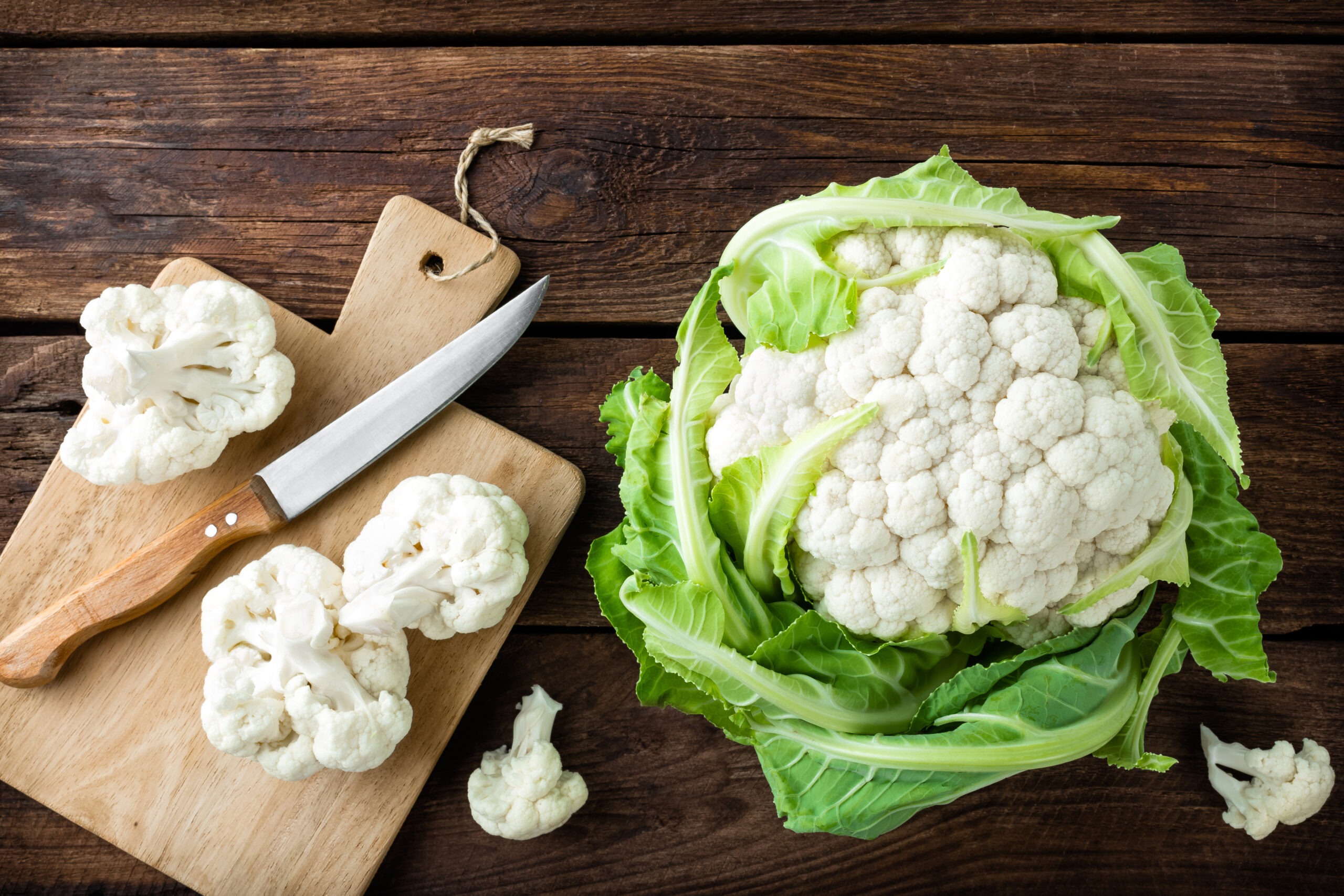
With cauliflower, the part we normally eat is the immature flowering structure — known as the curd.
That dense white head needs to develop steadily.
Stress the plant during its development and the final cauliflower can be much smaller than expected.
That’s why soil preparation and watering matter so much.
When to Sow Cauliflower in the UK
There’s no single sowing date for cauliflower because different varieties are bred to mature at different times.
Generally, sowing can begin under protection early in the year and continue into spring.
Typical UK schedule
| Type | Sow | Approximate harvest |
|---|---|---|
| Early/summer | Jan–March | Summer |
| Maincrop | March–May | Late summer/autumn |
| Autumn/winter | Spring | Autumn/winter |
| Overwintering | Late spring, depending on variety | Following spring |
Always check the seed packet.
Cauliflower varieties can have dramatically different growing schedules.
If you’re a beginner, I’d recommend starting with a variety intended to crop during summer or early autumn rather than attempting a long overwintering crop immediately.
Starting Cauliflower Under Cover
Early cauliflower can be started indoors, in a greenhouse or another protected environment.
Seed modules are particularly convenient.
Fill them with seed compost and sow approximately:
1–2cm deep.
Cover gently and water.
Keep the compost moist without leaving it saturated.
Once the seedlings emerge, give them plenty of light.
Avoid excessively warm conditions after germination.
You want compact, sturdy young plants rather than tall, weak seedlings stretching towards the nearest window.
Sowing Cauliflower Outdoors
Later sowings can be made outdoors in a prepared seedbed.
Create a shallow drill and sow the seeds thinly.
Once seedlings become established, they can be lifted carefully and transplanted to their final growing positions.
The important word is carefully.
Cauliflower doesn’t appreciate unnecessary root disturbance.
Handle seedlings gently and don’t leave them sitting around with exposed roots drying in the sun.
Where Should You Grow Cauliflower?
Choose a sunny, reasonably sheltered location.
The ideal soil is:
- Fertile
- Moisture-retentive
- Well drained
- Firm
- Rich in organic matter
Cauliflower doesn’t perform particularly well in poor, dry ground.
If your soil is extremely sandy and dries rapidly, improving its organic matter content will help it retain moisture.
Heavy soil can grow excellent brassicas provided drainage is adequate.
Preparing the Soil
Cauliflower is a hungry crop.
Ideally, prepare the growing area beforehand by incorporating well-rotted compost or manure.
Avoid adding large amounts of fresh manure immediately before planting.
Remove weeds and firm the soil before transplanting.
Like cabbage and broccoli, cauliflower prefers being securely anchored.
Loose soil can allow plants to rock in the wind, potentially damaging roots.
How to Plant Cauliflower
Once your seedlings are established and have been hardened off, they’re ready for their final positions.
Dig a hole large enough to accommodate the root ball.
Place the plant into the hole.
Fill around the roots.
Then firm the soil properly around the plant.
Water thoroughly afterwards.
Try to transplant during relatively mild conditions rather than the hottest part of a scorching day.
Reducing transplant stress gives the plant a better chance of establishing quickly.
Hardening Off Cauliflower Plants
Seedlings raised under protection need time to adjust to outdoor conditions.
This is called hardening off.
Over roughly a week or two:
- Put the plants outside in a sheltered location during the day.
- Bring them back under protection initially.
- Gradually increase their exposure.
- Eventually leave them outside once conditions are suitable.
Don’t move tender seedlings directly from a warm windowsill into cold spring weather and expect them to be happy about it.
How Far Apart Should Cauliflowers Be?
Cauliflower needs space.
For many varieties, allow approximately:
45–60cm between plants
and similar or greater spacing between rows.
Always check the seed packet.
Some compact varieties can be planted closer.
Larger varieties require considerably more room.
There’s an interesting relationship between spacing and head size.
Closer spacing can produce smaller cauliflowers, while generous spacing allows plants to develop larger heads.
For a small household, several smaller cauliflowers may actually be more useful than two enormous ones.
Growing Cauliflower in Containers
Cauliflower can be grown in containers, but it’s not the easiest use of limited container space.
Each plant requires a substantial amount of room, water and nutrients.
If you want to try, use a large pot — ideally around 40cm wide or larger for an individual plant, depending on the variety.
Make sure it has excellent drainage.
Use good-quality compost and don’t overcrowd the container.
You’ll need to monitor moisture closely.
A container can dry out surprisingly quickly during warm weather, and cauliflower dislikes interrupted growth.
For beginners with access to a vegetable bed or raised bed, I’d grow cauliflower there instead.
The Secret to Good Cauliflower: Consistent Watering
If there’s one thing I’d emphasise, it’s this:
Don’t let cauliflower repeatedly dry out.
Cauliflower grows best when it develops steadily.
Long dry periods followed by heavy watering can stress the plant.
During dry weather, give the plants a thorough watering so moisture penetrates the soil.
A mulch around established plants can help retain moisture and reduce weeds.
Container-grown cauliflower will require particularly close attention.
Does Cauliflower Need Feeding?
Usually, yes.
Cauliflower produces a substantial plant and is relatively demanding.
Starting with fertile soil is important.
Depending on your soil, additional feeding during the growing season may help maintain vigorous growth.
A suitable nitrogen-rich or balanced vegetable fertiliser can be used according to the manufacturer’s instructions.
Don’t simply keep adding fertiliser in the hope of producing a cauliflower the size of a football.
Balanced, steady growth is what you’re aiming for.
Protecting Cauliflower from Pests
Cauliflower shares most of the pest problems you’ll encounter when growing cabbage and broccoli.
I’d protect plants from the moment they’re established outdoors.
Prevention is much easier than trying to rescue heavily damaged plants.
Cabbage White Butterflies
Cabbage white butterflies lay their eggs on brassica leaves.
The resulting caterpillars can quickly strip foliage from cauliflower plants.
The simplest preventative measure is fine insect mesh.
Cover the plants completely and secure the edges.
Check leaves regularly anyway, particularly the undersides.
If you find eggs or caterpillars, remove them.
Pigeons
Pigeons can make a remarkable mess of brassicas.
Young plants are particularly vulnerable.
Use properly supported netting or mesh to prevent birds reaching them.
Don’t simply throw loose netting directly over the plants.
Support it on a frame and secure the edges.
Slugs and Snails
Slugs and snails can damage young cauliflower seedlings.
Check plants regularly, particularly during damp weather.
Keeping the growing area reasonably tidy can help reduce hiding places.
Young plants deserve the most attention because severe damage at an early stage can seriously affect development.
Cabbage Root Fly
Cabbage root fly attacks brassica roots.
The adult fly lays eggs near the base of the plant and the larvae feed below ground.
Brassica collars fitted around the base of young plants can help reduce egg laying immediately beside the stem.
Clubroot
Clubroot is a serious soil-borne brassica disease.
Affected plants may:
- Wilt
- Grow poorly
- Become stunted
- Develop swollen, distorted roots
Once established, clubroot can persist in soil for years.
Crop rotation is therefore important.
Avoid repeatedly growing cauliflower and other brassicas in exactly the same ground.
Why Is My Cauliflower Head So Small?
This is probably the most common disappointment.
You’ve spent months growing an enormous plant.
You look inside.
There’s a cauliflower the size of a golf ball.
Several things can cause small heads.
Interrupted growth
Dry conditions, transplant shock or other stress can cause problems.
Poor soil
Cauliflower needs fertile growing conditions.
Overcrowding
Plants competing for resources may produce smaller heads.
Root damage
Cauliflower dislikes significant root disturbance.
Incorrect timing
Growing a variety during unsuitable conditions can affect head formation.
The solution isn’t usually one magic fertiliser.
The goal is to keep the plant growing steadily from seedling to harvest.
Why Is My Cauliflower Turning Yellow?
Traditional white cauliflower heads can become yellowish when exposed to strong sunlight.
Some varieties naturally protect the developing curd with their leaves.
Others benefit from a little help.
Once the white head begins developing, you can gently fold some of the surrounding leaves over it.
This process is sometimes called blanching.
You can loosely secure the leaves if necessary.
Don’t wrap everything tightly — airflow still matters.
And remember: coloured cauliflower varieties are supposed to develop colour.
Don’t try to turn a purple cauliflower white!
What Is Cauliflower Blanching?
In this context, blanching doesn’t mean dropping the vegetable into boiling water.
It means shielding a white cauliflower head from sunlight.
This helps maintain a paler curd.
Simply bend a few large outer leaves over the developing head.
Some modern varieties are described as self-blanching because their leaves naturally provide good coverage.
Why Is My Cauliflower Flowering?
A cauliflower head is made up of tightly packed immature flower structures.
Leave it too long and those structures begin separating and developing.
Warm conditions can speed this process.
Harvest once the head is:
- Firm
- Compact
- Well developed
- Before the curd starts separating
Don’t wait indefinitely for it to become bigger.
A slightly smaller cauliflower harvested at the right stage is better than a huge one that’s started flowering.
What Is ‘Buttoning’ in Cauliflower?
Buttoning is when a plant produces a very small cauliflower head prematurely.
Potential causes include:
- Transplant stress
- Poor nutrition
- Cold conditions
- Over-mature seedlings
- Interrupted growth
Unfortunately, once a plant has buttoned, it isn’t usually going to transform into a huge cauliflower later.
This is why maintaining steady growth from the beginning matters.
Best Cauliflower Varieties for Beginners
Availability changes, but there are several types worth considering.
All the Year Round
A traditional and widely available variety.
Despite the optimistic name, growing conditions still matter, but it’s a versatile option.
Good for: Beginners and general growing.
Clapton
A variety bred with clubroot resistance.
This can be particularly valuable if clubroot is known to be present in your growing area.
Good for: Gardens with clubroot concerns.
Snowball
A classic type producing compact white heads.
Good for: Traditional white cauliflower.
Romanesco
Technically associated with the cauliflower family and instantly recognisable by its incredible lime-green spiral pattern.
Good for: Gardeners wanting something unusual.
Purple Cauliflower
There are several purple varieties available.
They look spectacular both in the garden and on the plate.
Good for: Something different from supermarket cauliflower.
Always check the specific variety’s sowing and harvesting instructions before planting.
Crop Rotation for Cauliflower
Cauliflower belongs to the brassica family.
That means it shares pests and diseases with:
Broccoli
Cabbage
Brussels sprouts
Kale
Kohlrabi
Try not to grow these crops in the same patch year after year.
When Is Cauliflower Ready to Harvest?
Check your plants regularly once heads begin forming.
Harvest when the head is:
Firm
Compact
A useful size
Before the individual sections begin separating
Different varieties produce different-sized heads.
Don’t assume every cauliflower should reach supermarket proportions.
How to Harvest Cauliflower
Use a sharp knife to cut through the thick stem underneath the head.
Leave some surrounding leaves attached.
Those leaves help protect the cauliflower after harvesting and can also be edible.
Unlike calabrese broccoli, cauliflower generally doesn’t produce a substantial second crop after the main head is removed.
Once harvested, the remaining plant can usually be removed and composted if healthy.
What You’ll Need to Grow Cauliflower
You don’t need much specialist equipment, but I’d recommend:
Cauliflower seeds
Seed trays or modules
Seed compost
Hand trowel Watering can
Fine insect mesh
Netting supports
Brassica collars
Plant labelsSuitable vegetable feed
If you’re growing cauliflower alongside cabbage and broccoli, consider creating a permanent brassica cage.
A simple frame covered with appropriate mesh can protect the whole bed and save you having to individually cover each crop.
[See Our Recommended Vegetable Garden Netting →]
[See Our Recommended Raised Beds →]
[Essential Equipment Every Gardener Needs →]
How to Store Cauliflower
Fresh cauliflower is best used relatively soon after harvesting.
Store it in the refrigerator if you’re not using it immediately.
For longer storage, cauliflower can be prepared, blanched in boiling water and frozen.
It’s also excellent for:
- Pickling
- Soups
- Curries
- Cauliflower cheese
- Roasting
- Cauliflower Rice
Cauliflower FAQs
Is cauliflower easy to grow?
Cauliflower is more demanding than many beginner vegetables because it dislikes interrupted growth.
I’d rate it moderately challenging, but beginners can absolutely grow it successfully.
How long does cauliflower take to grow?
This varies considerably by variety. Many take several months from sowing to harvest, while overwintering types take considerably longer.
Can you grow cauliflower in pots?
Yes, but use a large container and generally grow one plant per pot. Maintaining consistent moisture and nutrition becomes especially important.
Does cauliflower need full sun?
A sunny position is generally best, although some light shade may be tolerated.
Should cauliflower be covered with netting?
I’d strongly recommend protecting it from cabbage white butterflies and pigeons.
Why is my cauliflower tiny?
Stress, overcrowding, poor nutrition, dry soil or root disturbance can all contribute to small heads.
Should I cover the cauliflower head with leaves?
For traditional white varieties, folding leaves over the developing head can help keep it pale. Some varieties naturally cover themselves.
Can you eat cauliflower leaves?
Yes. Healthy leaves and stems are edible and can be cooked in several ways.
Does cauliflower grow back after harvesting?
Unlike calabrese broccoli, cauliflower doesn’t usually provide a worthwhile second crop after the main head has been harvested.
Final Thoughts
Cauliflower isn’t the easiest vegetable in the Grow Your Own Encyclopedia.
But that’s part of what makes successfully growing one so satisfying.
The biggest lesson is:
Keep it growing steadily.
Prepare fertile soil.
Give each plant plenty of room.
Firm it in properly.
Don’t allow it to dry out repeatedly.
Protect it from caterpillars and pigeons.
And once the cauliflower head appears, keep checking it.
For your first attempt, I’d grow four to six plants rather than twenty.
That gives you enough plants to learn from without sacrificing half the vegetable garden.
And don’t be disappointed if your first home-grown cauliflower isn’t supermarket-perfect.
A slightly wonky cauliflower you’ve raised from a tiny seed is considerably more satisfying than a perfectly symmetrical one pulled from a plastic wrapper.
Once you’ve mastered the traditional white varieties, that’s when I’d start having fun.
Try a purple one.
Grow a green Romanesco.
Experiment with different harvesting seasons.
That’s one of the real pleasures of growing your own food:
you don’t have to grow what the supermarket tells you vegetables should look like.