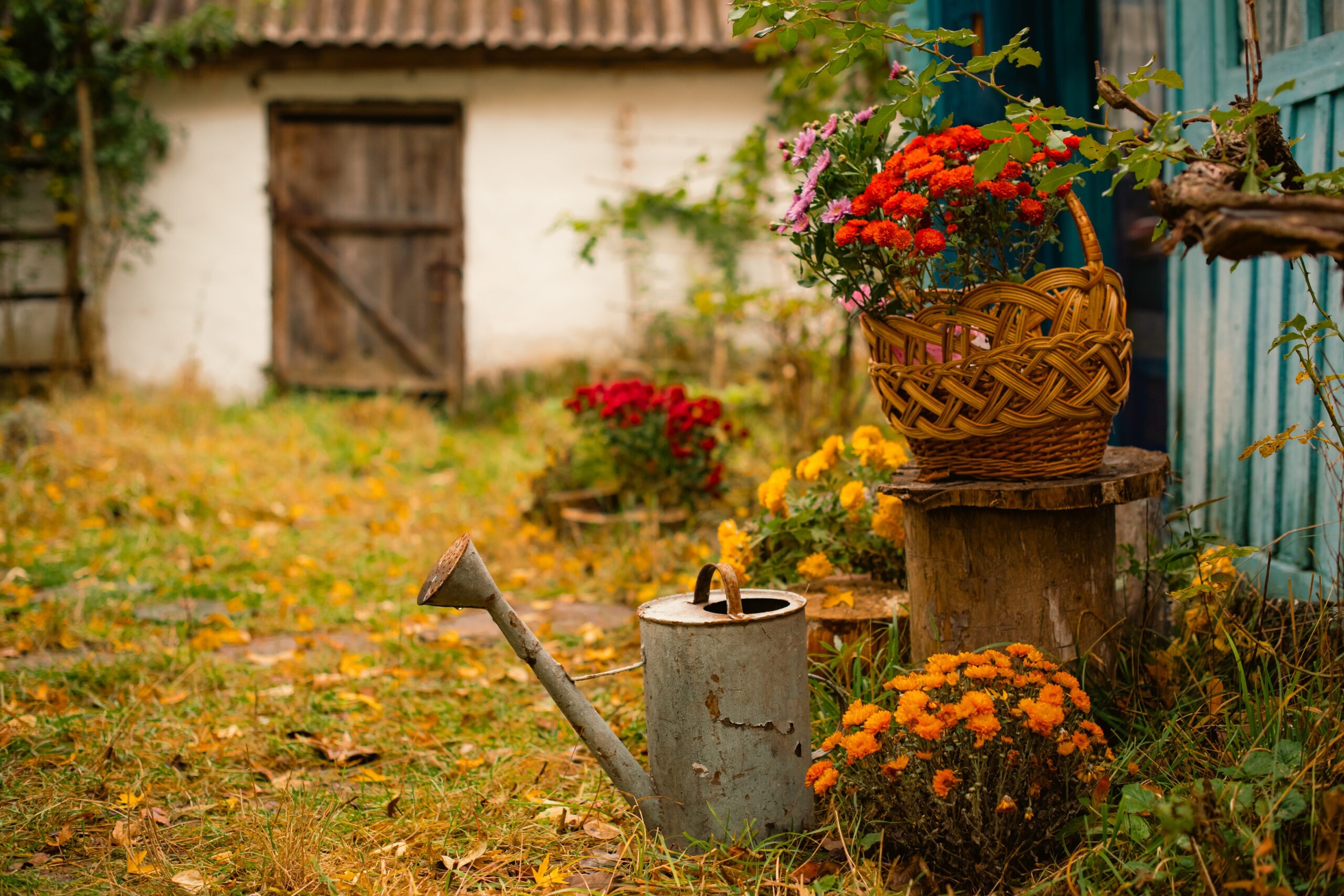

1. Clear Fallen Leaves From Your Lawn
Autumn leaves look beautiful, but a thick layer sitting on your lawn isn’t ideal.
Leaves can block light from reaching the grass and trap moisture underneath.
Rake or collect heavy accumulations regularly.
You don’t need to throw those leaves away either.
Make Your Own Compost
Fallen leaves can be turned into an excellent soil conditioner.
Collect damp leaves and place them in a leaf-mould cage or suitable bags with ventilation holes.
Then leave nature to do the work.
Over time, the leaves break down into dark, crumbly organic material that can be used around the garden.
Free garden waste becomes free soil improver.
What’s not to like?
2. Give Your Lawn a Final Tidy
Grass growth slows considerably as temperatures fall, but you may still need to mow occasionally during mild weather.
Gradually raise your mower cutting height rather than scalping the lawn.
Avoid mowing when the ground is:
- Frozen
- Waterlogged
- Covered in frost
- Extremely wet
If your lawn has suffered during summer, early autumn can also be a useful time for jobs such as scarifying, aerating and repairing bare areas.
By late autumn, however, you’re generally looking to protect the lawn rather than aggressively renovate it.
Gardeners Guide tip: Try to avoid repeatedly walking over a frozen lawn. Frozen grass blades can be damaged underfoot and may leave obvious marks afterwards.
3. Protect Tender Plants From Frost
Not every garden plant is designed to cope with a British winter.
Tender and borderline-hardy plants may need additional protection when temperatures fall.
Depending on the plant, this could involve:
- Moving containers somewhere sheltered
- Using horticultural fleece
- Adding mulch around roots
- Moving plants into a greenhouse
- Bringing particularly tender plants somewhere frost-free
Don’t automatically bring every plant into a heated house.
Some plants simply need protection from the worst frost rather than warm indoor conditions.
Check the requirements of each plant you’re growing.
4. Pay Particular Attention to Containers
Plants growing in pots can be more vulnerable to cold than the same plants growing in the ground.
Their roots are surrounded by a relatively small volume of compost, so freezing temperatures can penetrate the root area more easily.
Move vulnerable containers against a sheltered wall or into a protected area.
Grouping pots together can provide additional shelter.
You can also wrap suitable containers with insulating material during severe weather.
5. Raise Pots Off the Ground
Winter isn’t only about frost.
Waterlogging can be just as troublesome.
Make sure outdoor containers have clear drainage holes and consider raising pots slightly using pot feet.
This allows excess water to escape rather than collecting underneath the container.
It’s a particularly useful job for pots sitting on patios and other hard surfaces.
6. Mulch Your Borders
Autumn is an excellent time to add organic matter to your garden.
Apply a layer of suitable mulch around established plants.
Depending on your garden, you might use:
- Garden compost
- Well-rotted manure
- Leaf mould
- Composted bark
Mulching can help suppress weeds, improve soil structure and protect the soil surface.
Earthworms and other soil organisms gradually incorporate organic material for you.
Just avoid piling thick layers directly against plant stems and tree trunks.
7. Don’t Cut Everything Down
One of the biggest changes in modern garden maintenance is the move away from completely stripping borders bare every autumn.
There’s often no need.
Seed heads from plants can look fantastic covered in frost and may provide food for birds.
Hollow stems and old vegetation can also provide shelter for insects and other wildlife.
Remove diseased, rotten and badly collapsed material, but consider leaving healthy structural plants standing until spring.
Your winter garden will look more interesting—and local wildlife may appreciate it too.
8. Remove Diseased Plant Material
While some old growth can stay, diseased material is a different story.
Remove badly affected leaves, stems and fruit from around susceptible plants.
Leaving diseased material sitting beneath a plant can potentially allow some problems to persist into the following growing season.
Be cautious about adding heavily diseased material to your normal home compost heap.
Dispose of it appropriately instead.
9. Move Tender Bulbs and Tubers
Some tender plants won’t reliably survive freezing conditions outdoors.
Depending on what you’re growing and where you live, plants such as dahlias may need additional winter protection.
Some gardeners lift tender tubers and store them somewhere cool, dry and frost-free.
Others successfully leave certain plants in well-drained ground under a thick mulch in milder areas.
Your local climate and soil conditions make a big difference.
If you’re gardening somewhere colder or particularly wet, it’s worth taking a more cautious approach.
10. Protect Young Trees
Winter storms can put newly planted trees under considerable strain.
Check stakes and ties before severe weather arrives.
The tree should be secure enough to prevent excessive movement at the roots without being tied so tightly that the trunk is damaged.
Check ties periodically as the tree grows.
Also make sure stakes themselves remain firmly anchored.
11. Check Fences Before Winter Storms
That slightly loose fence panel might survive summer perfectly well.
A January storm is another matter.
Walk around your garden and check:
- Fence posts
- Panels
- Gates
- Trellis
- Pergolas
- Plant supports
Repair loose sections now rather than waiting until they’re lying across the neighbour’s garden.
12. Clean Paths and Patios
Wet leaves, moss and algae can make garden paths extremely slippery during winter.
Regularly sweep leaves from paths, patios and steps.
Also make sure drains and channels aren’t becoming blocked by autumn debris.
You don’t necessarily need to pressure wash everything before winter, but areas that become dangerously slippery should be dealt with.
13. Prepare Your Pond for Winter
Remove excessive fallen leaves and dead vegetation from garden ponds before they decompose in the water.
A net positioned above the pond during peak leaf fall can make this easier.
However, don’t completely sterilise your pond.
Garden ponds are valuable habitats, and wildlife needs somewhere to shelter through winter.
If your pond freezes, avoid violently smashing thick ice, particularly if fish are present.
14. Clean Out Your Greenhouse
Once summer crops have finished, take the opportunity to give your greenhouse some attention.
Remove old plant material and empty unwanted pots.
Clean the glass to maximise the limited winter sunlight and check for:
- Broken panes
- Loose clips
- Gaps
- Damaged vents
- Leaks
If you’re overwintering tender plants inside, check them periodically for pests rather than assuming everything is safe simply because it’s indoors.
15. Look After Garden Wildlife
Winter can be difficult for garden wildlife.
A winter garden doesn’t need to be immaculate.
Consider leaving:
- Some seed heads
- Undisturbed corners
- Log piles
- Dense vegetation
- Hedge cover
Bird feeders can provide supplementary food when natural supplies become scarce.
Fresh water is important too.
Check bird baths during freezing weather and provide fresh water when necessary.
16. Clean and Store Garden Tools
Once you’ve finished with certain tools for the year, don’t simply throw them into the shed covered in mud.
Clean soil from spades, forks and hoes.
Clean and sharpen secateurs and other cutting tools where appropriate.
Dry metal tools before storage and consider lightly oiling vulnerable surfaces to reduce corrosion.
A little maintenance now means they’re ready when you reach for them in spring.
17. Give Your Lawnmower Some Attention
Your mower has probably worked hard all summer.
Clean away accumulated grass and debris before storing it.
If you use a petrol mower, follow the manufacturer’s recommendations for winter storage and maintenance.
For cordless equipment, follow the manufacturer’s instructions for battery storage, particularly regarding temperature and charge level.
Winter is also a good time to arrange servicing because you’re unlikely to need the mower immediately.
18. Turn Your Compost Heap
Autumn provides an enormous amount of compostable material.
Mixing different materials generally produces better compost than creating a giant pile of wet grass or leaves.
If your compost heap has become compacted, turning it can introduce air and mix the contents.
Keep adding suitable kitchen and garden waste throughout winter.
19. Disconnect and Protect Outdoor Watering Equipment
Before severe freezing weather arrives, drain hoses and watering equipment.
Store hoses somewhere protected if possible.
Outdoor taps and exposed pipework may require frost protection depending on your setup.
If you have an automatic irrigation system, follow the manufacturer’s winterisation instructions.
Frozen water expands—and repairing damaged irrigation equipment in spring isn’t a particularly enjoyable way to begin the gardening year.
20. Plant for Spring
Preparing for winter doesn’t mean gardening stops.
Autumn is one of the most important planting periods of the year.
Depending on timing and conditions, you may still be able to plant:
- Spring-flowering bulbs
- Trees
- Shrubs
- Bare-root hedging
- Roses
- Certain hardy perennials
Every bulb disappearing into the soil is something to look forward to when winter finally ends.
Your Winter Garden Checklist
Before you retreat indoors, make sure you’ve covered the essentials:
- Clear heavy leaf fall from lawns
- Protect tender plants
- Check container drainage
- Mulch borders
- Remove diseased material
- Check tree stakes and ties
- Secure fences and structures
- Clear slippery paths
- Prepare your greenhouse
- Maintain garden tools
- Prepare watering equipment for freezing temperatures
- Provide food, water and shelter for wildlife
You don’t have to complete everything in one weekend.
Work through the list gradually during autumn as conditions change.
Don’t Make Your Garden Too Tidy
Perhaps the most important winter gardening lesson is knowing when not to do something.
A garden doesn’t need to look perfectly manicured throughout winter.
That slightly messy corner might be sheltering insects. Those old seed heads could be feeding birds. Fallen leaves beneath a hedge can create valuable habitat.
Concentrate your tidying efforts where they’re genuinely useful—lawns, paths, diseased plants and areas where decaying material could cause problems.
Let other parts of the garden remain a little wild.
A Little Autumn Work Pays Off in Spring
Preparing your garden for winter isn’t about shutting everything down.
It’s about helping your garden safely through the coldest, wettest and windiest part of the year.
Protect vulnerable plants, look after your soil, secure anything that could be damaged by storms and give wildlife somewhere to shelter.
Then you can head indoors knowing you’ve done your bit.
And when those first bulbs begin pushing through the soil next year, you’ll be glad you did.
Gardeners Guide — Grow Better. Garden Smarter.