Getting electricity to the far end of a large garden, an allotment or a remote shed isn’t always straightforward.
You could run extension cables.
You could install a permanent electrical supply.
Or you could generate and store the electricity where you actually need it.
That’s where large portable power stations such as the AFERIY 3600W Portable Power Station become interesting.
This isn’t a small battery pack designed for charging your phone while camping.
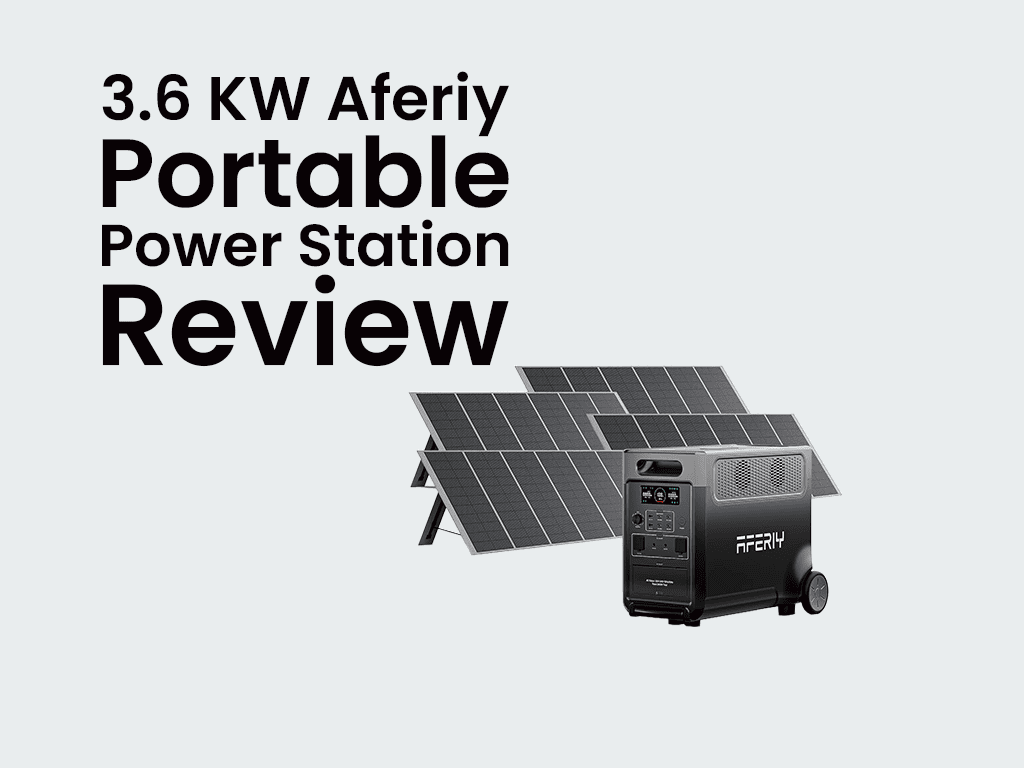
The version we’re looking at combines a 3,840Wh LiFePO4 battery with a 3,600W output and four 400W portable solar panels, giving the solar array a combined rated output of 1,600W.
For gardeners, that potentially creates a substantial off-grid power source for sheds, workshops, allotments, greenhouses and other places where mains electricity isn’t readily available.
But it’s also a considerable piece of equipment.
So who actually needs something this powerful?
Let’s take a closer look.
Affiliate disclosure: Gardeners Guide may earn a commission from qualifying purchases made through links on this page, at no additional cost to you.
AFERIY 3600W at a Glance
| Specification | AFERIY |
|---|---|
| Battery capacity | 3,840Wh |
| Battery type | LiFePO4 |
| AC output | 3,600W |
| Expandable capacity | Up to 11.5kWh |
| Solar panels included | 4 × 400W |
| Combined rated solar capacity | 1,600W |
| AC output voltage | 220–240V |
| Power waveform | Pure sine wave |
| UPS/EPS support | Yes |
| Battery management system | Yes |
| Power station weight | Approx. 41kg |
| Solar panels | Foldable |
| Solar panel protection | IP65 stated |
| Best suited to | Large gardens, sheds, allotments, workshops, camping and home backup |
Why Would a Gardener Need a Portable Power Station?
For a typical suburban garden with outdoor sockets, you might not.
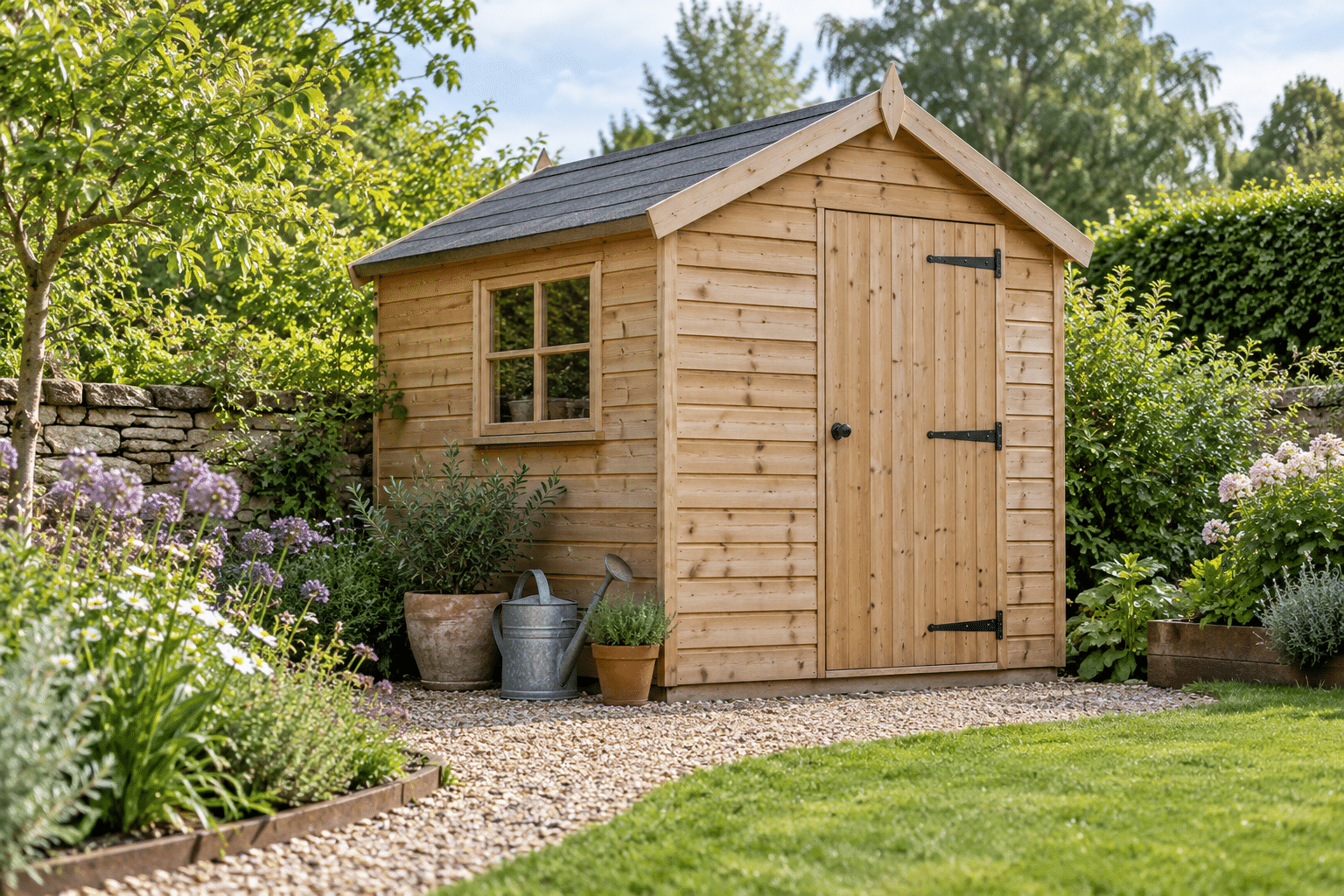
But things change considerably if you have:
- A large garden
- An allotment
- A detached garage
- A remote shed
- A greenhouse
- A garden workshop
- A smallholding
- Land without a mains electricity connection
Suddenly, access to electricity becomes extremely useful.
You may want to run lighting in a shed.
Charge cordless garden-tool batteries.
Operate greenhouse equipment.
Charge phones and laptops.
Run pumps.
Power workshop equipment.
Or simply have electricity available without installing a permanent mains supply.
That’s where a large solar generator starts to make sense.
A Huge 3,840Wh Battery
The heart of the system is its:
3,840Wh battery.
That’s a substantial amount of stored energy.
It’s important to understand the difference between watts and watt-hours.
Watts tell you how much power an appliance requires at a particular moment.
Watt-hours describe stored energy.
So a theoretical 100W appliance running for ten hours consumes approximately:
1,000Wh.
Real-world runtimes will be lower than simply dividing battery capacity by appliance wattage because of inverter losses, standby consumption and other factors.
But a 3,840Wh battery gives you considerably more flexibility than the smaller 500–1,000Wh power stations commonly sold for camping.
3,600W Output
The other big number is:
3,600W.
This determines the amount of power the station can supply to connected equipment.
And 3,600W is substantial.
It potentially opens the door to equipment that smaller portable power stations simply can’t handle.
For gardeners, that could include various:
- Power tools
- Battery chargers
- Workshop equipment
- Pumps
- Lighting
- Electrical garden equipment
However, always check the actual power requirements of whatever you’re connecting.
Some motors and tools have a significantly higher:
startup or surge requirement
than their normal running wattage.
Don’t simply assume that every appliance below 3,600W will automatically be suitable.
LiFePO4 Battery Technology
The AFERIY uses:
lithium iron phosphate — LiFePO4 — battery technology.
This chemistry has become increasingly popular in larger portable power stations.
It’s particularly attractive for applications where the battery will be repeatedly charged and discharged.
The system also incorporates a:
battery management system (BMS)
designed to monitor and protect the battery.
For something that may spend years providing power around a garden, shed or workshop, battery technology is an important consideration.
Four 400W Solar Panels
This particular bundle includes:
four 400W solar panels.
That gives a combined rated solar capacity of:
1,600W.
And that’s where the setup becomes particularly interesting for an off-grid garden.
Instead of simply charging the power station from your house and carrying it outside, you have the ability to generate electricity from sunlight.
The panels are foldable and supplied with freestanding supports.
AFERIY also lists the panels with an:
IP65 protection rating.
Don’t Expect 1,600W All Day
This is important.
A 400W solar panel doesn’t continuously produce 400W whenever it’s outside.
Solar generation depends on:
- Sunlight intensity
- Time of day
- Season
- Cloud cover
- Panel angle
- Shade
- Temperature
- Panel orientation
Four panels might have a combined rated capacity of 1,600W, but actual UK generation will vary considerably.
In summer, with good positioning and strong sunlight, you’ll obviously get much better results than on a cloudy December afternoon.
For Gardeners Guide readers in Britain, that’s something I’d keep firmly in mind.
Where Should You Position the Solar Panels?
Place them somewhere receiving:
as much unobstructed sunlight as possible.
Avoid shade from:
- Trees
- Hedges
- Sheds
- Fences
- Buildings
Even partial shading can reduce solar generation.
A large open lawn or sunny area beside an allotment shed could work well.
Because these are portable panels, you also have the ability to reposition them as conditions change.
Power for an Allotment
This is one of the applications I find particularly interesting.
Many allotments don’t have convenient mains electricity.
Yet having power available can be extremely useful.
A system like this could potentially provide electricity for:
shed lighting
cordless tool chargers
phones
cameras
laptops
small pumps
and other suitable equipment.
Instead of taking batteries home every time they need charging, you effectively create your own solar-powered electricity supply.
It’s certainly more capacity than many allotment holders need, but for a large plot, workshop or shared setup, it becomes more interesting.
Power for a Garden Shed
Modern sheds aren’t always just somewhere to keep the lawnmower.
They can become:
- Workshops
- Offices
- Potting sheds
- Hobby rooms
- Garden rooms
Running a permanent electrical cable to a detached building can involve professional installation and expense.
A portable power station offers a completely different approach.
Charge it from solar energy and use the stored electricity when required.
That doesn’t make it a replacement for a properly installed mains electrical system in every situation, but it can be a useful alternative where portability matters.
Power for a Greenhouse
Greenhouses can benefit enormously from electricity.
Depending on your setup, you might use electrical power for:
- Grow lights
- Fans
- Propagators
- Heating mats
- Monitoring equipment
- Automatic watering
- Pumps
- Charging equipment
However, greenhouse heating deserves special consideration.
Electric heaters consume enormous amounts of energy.
A 2,000W heater can quickly work through even a large battery.
Solar power stations are generally much better suited to lower-power equipment that runs efficiently for longer periods.
Charging Cordless Garden Tools
One particularly sensible application is:
charging cordless garden-tool batteries.
Modern gardeners increasingly use battery-powered:
- Lawnmowers
- Hedge trimmers
- Strimmers
- Leaf blowers
- Chainsaws
- Pressure washers
- Pruning saws
If your tools share a battery platform, having an off-grid charging station in the shed could be extremely convenient.
Instead of powering the tool directly from the AFERIY, you charge its battery using the manufacturer’s normal charger.
Could It Power a Lawnmower?
Potentially, depending on the mower’s electrical requirements.
But this isn’t necessarily the most sensible way to use it.
For a cordless mower, I’d generally use the power station to:
recharge the mower batteries.
For corded electrical equipment, check:
- Running wattage
- Startup requirements
- Manufacturer recommendations
before connecting anything.
Pure Sine Wave Output
The power station provides:
pure sine wave AC output.
That’s important when you’re using more sensitive electronic equipment.
It produces AC electricity intended to more closely resemble the waveform provided by a normal mains supply.
This makes the system useful beyond basic garden equipment.
It could also potentially supply things such as:
- Computers
- Monitors
- Cameras
- Communications equipment
That makes it particularly interesting if your garden building doubles as an office or workshop.
Expandable Battery Capacity
The standard battery capacity is already a substantial:
3.84kWh.
But the system can be expanded to approximately:
11.5kWh
with compatible additional batteries.
That’s moving well beyond occasional camping use.
At that point you’re looking at a sizeable energy-storage system.
Most gardeners probably won’t need that capacity.
But for larger off-grid setups or emergency household backup, expansion gives you room to grow.
UPS and EPS Functionality
The AFERIY also supports:
UPS/EPS functionality.
This allows the power station to provide backup when mains electricity is interrupted in compatible setups.
That’s probably less important for a normal garden shed.
But it could become useful where you’re running equipment you don’t want suddenly switching off.
For example:
- Monitoring equipment
- Computers
- Some greenhouse systems
- Communications equipment
It also broadens the product’s usefulness beyond gardening.
It’s Portable — But Not Light
There’s an important distinction here.
The power station weighs approximately:
41kg.
So while it can be transported, you’re not going to casually carry it around the garden with one hand.
Fortunately, the design incorporates a:
retractable pull handle.
Think of it more like moving a large suitcase than carrying a camping battery.
The four solar panels add further equipment to transport and store.
This is really a:
transportable power system
rather than a lightweight portable charger.
Where Would I Keep It?
I’d ideally keep the main power station somewhere:
dry, secure and protected.
For example:
- Garden workshop
- Secure shed
- Garage
- Garden room
Follow the manufacturer’s storage and operating instructions, particularly regarding moisture and temperature.
The solar panels can obviously be positioned outside when generating electricity.
Could It Replace Installing Electricity in a Shed?
Sometimes.
But not always.
If you need a permanent high-power electrical installation in a garden building, speak to a qualified electrician.
A proper mains supply gives you effectively continuous electricity rather than a finite battery.
The AFERIY becomes more attractive when:
installing mains electricity is difficult or portability is valuable.
For example, an allotment that’s nowhere near your house is a completely different situation from a shed three metres from your back door.
How Useful Is Solar Power in the UK?
More useful than some people assume.
Solar panels don’t require tropical heat.
They require:
light.
However, output varies dramatically throughout the year.
Summer days provide much greater generation potential than short, cloudy winter days.
For gardening applications, that’s actually quite convenient because electricity demand for many garden activities is highest during:
spring and summer.
That’s also when solar generation tends to be strongest.
Pros and Cons
What We Like
Huge 3,840Wh battery
Considerably more storage than small camping power stations.
3,600W AC output
Provides enough output for a broad range of suitable equipment.
Four 400W solar panels included
Creates a substantial off-grid solar setup straight from the bundle.
LiFePO4 battery
A battery chemistry well suited to repeated use.
Expandable capacity
Provides flexibility if your energy requirements increase.
Pure sine wave AC
Useful for sensitive electronics as well as general equipment.
Multiple outputs
Allows different types of equipment to be connected.
UPS/EPS functionality
Adds usefulness as an emergency backup supply.
No petrol generator
No need to run a combustion engine every time you need electricity.
Things to Consider
It’s expensive equipment
This is far beyond the requirements of someone who only wants to charge a phone in their shed.
It’s heavy
At around 41kg for the main unit, “portable” doesn’t mean lightweight.
Solar output varies
UK weather means you shouldn’t expect the panels to constantly deliver their headline rating.
Potentially excessive for small gardens
If you have outdoor mains sockets nearby, a system this large may be unnecessary.
Storage space
Four large folding solar panels plus the power station need somewhere secure to live.
Who Should Consider It?
I’d consider the AFERIY particularly interesting for:
large garden owners
allotment holders
garden workshops
off-grid sheds
smallholders
remote plots
camping and caravanning
and anyone wanting substantial household backup power as well as garden use.
Who Probably Doesn’t Need It?
If your garden is small and you already have convenient outdoor mains sockets:
this is probably overkill.
A smaller portable power station might provide everything you need for a fraction of the capacity.
Likewise, if your only requirement is charging phones and cordless-tool batteries, you probably don’t need 3,840Wh.
Buy capacity according to what you’re actually going to power.
Our Verdict
The AFERIY 3600W isn’t really a garden gadget.
It’s a substantial portable energy system that happens to have some very interesting applications for gardeners.
For an ordinary small garden, it’s difficult to justify.
But move away from the house and the proposition changes.
An allotment, large garden, detached workshop, remote greenhouse or smallholding can all create situations where electricity is extremely useful but a mains connection isn’t practical.
That’s where this system starts to make sense.
The combination of a 3,840Wh battery, 3,600W output and four 400W solar panels provides far more capability than a conventional small camping power station.
I’d particularly like the idea of using it as the heart of an:
off-grid garden workshop or allotment shed.
Lighting, charging tools, powering electronics and operating suitable pumps or equipment could all be handled from one system while the solar panels replenish the battery.
The important thing is not to buy based purely on the impressive headline numbers.
Work out how much electricity your equipment actually uses.
If your requirements are modest, buy something smaller.
But if you genuinely need substantial off-grid electricity and want a system that can also serve as emergency home backup, the AFERIY is an interesting option to investigate.
Check the Latest Price on Amazon
As an Amazon Associate, Gardeners Guide earns from qualifying purchases.
Frequently Asked Questions
How powerful is the AFERIY power station?
This version provides up to 3,600W AC output with a 3,840Wh battery capacity.
What type of battery does it use?
It uses a LiFePO4 lithium iron phosphate battery.
How many solar panels are included?
The bundle linked in this review includes four 400W portable solar panels.
Can it be charged using solar power?
Yes. The included solar panels are designed to recharge the power station using sunlight.
Can it power garden tools?
Potentially, depending on the tool’s running and startup power requirements. Always check the specifications of both the tool and power station before connecting them.
Is it suitable for an allotment?
It could be particularly useful on an allotment without mains electricity, although its large capacity may be excessive if you only need occasional low-power charging.
Could I use it in a garden shed?
Yes, a shed or garden workshop is one of the more interesting potential applications, provided the unit is used and stored according to the manufacturer’s instructions.
Can it charge cordless lawnmower batteries?
Suitable mains chargers can potentially be powered from a portable power station, provided their electrical requirements fall within the power station’s specifications.
Will the solar panels produce 1,600W in the UK?
The four panels have a combined rated capacity of 1,600W. Actual generation depends on sunlight, panel positioning, shading, weather and other conditions.
Is it easy to carry?
The main power station weighs approximately 41kg, so it’s better described as transportable than lightweight.
Final Thoughts
Solar power can be surprisingly useful in a garden.
But the real opportunity appears when your garden extends beyond easy reach of the house.
A remote shed.
An allotment.
A greenhouse.
A workshop.
Or a larger piece of land.
Suddenly, being able to generate, store and use your own electricity becomes much more appealing.
The AFERIY system sits at the powerful end of that idea.
For most gardeners, it’s more power than they’ll ever need.
For the gardener who actually has a use for several kilowatt-hours of off-grid electricity, though, it’s a very different proposition.
View the AFERIY 3600W Solar Generator on Amazon