Walk into any garden centre and you could easily come away believing you need a shed full of specialist tools before you can grow your first plant.
You don’t.
A relatively small collection of good-quality tools will handle the vast majority of everyday gardening jobs. The trick is knowing which tools are genuinely useful, which are only necessary for certain gardens, and where it’s worth spending a little more.
Whether you’re taking on your first garden, replacing old equipment or putting together a complete gardening toolkit, this guide covers the essential gardening equipment I’d recommend having available.
We’ve divided everything into Essential, Highly Recommended and Nice to Have, so you don’t need to buy everything at once.
The Essential Gardening Equipment List
If you’re starting completely from scratch, these are the tools I’d prioritise:
- Secateurs
- Gardening gloves
- Hand trowel
- Hand fork
- Garden spade
- Garden fork
- Garden rake
- Watering can
- Garden hose
- Lawn mower — if you have grass
- Garden shears
- Wheelbarrow or garden cart
- Garden kneeler
- Broom
- Bucket
With those basics, you’ll be equipped for an enormous range of everyday gardening jobs.
Let’s look at what each is actually for.
1. Secateurs
ESSENTIAL ★★★★★
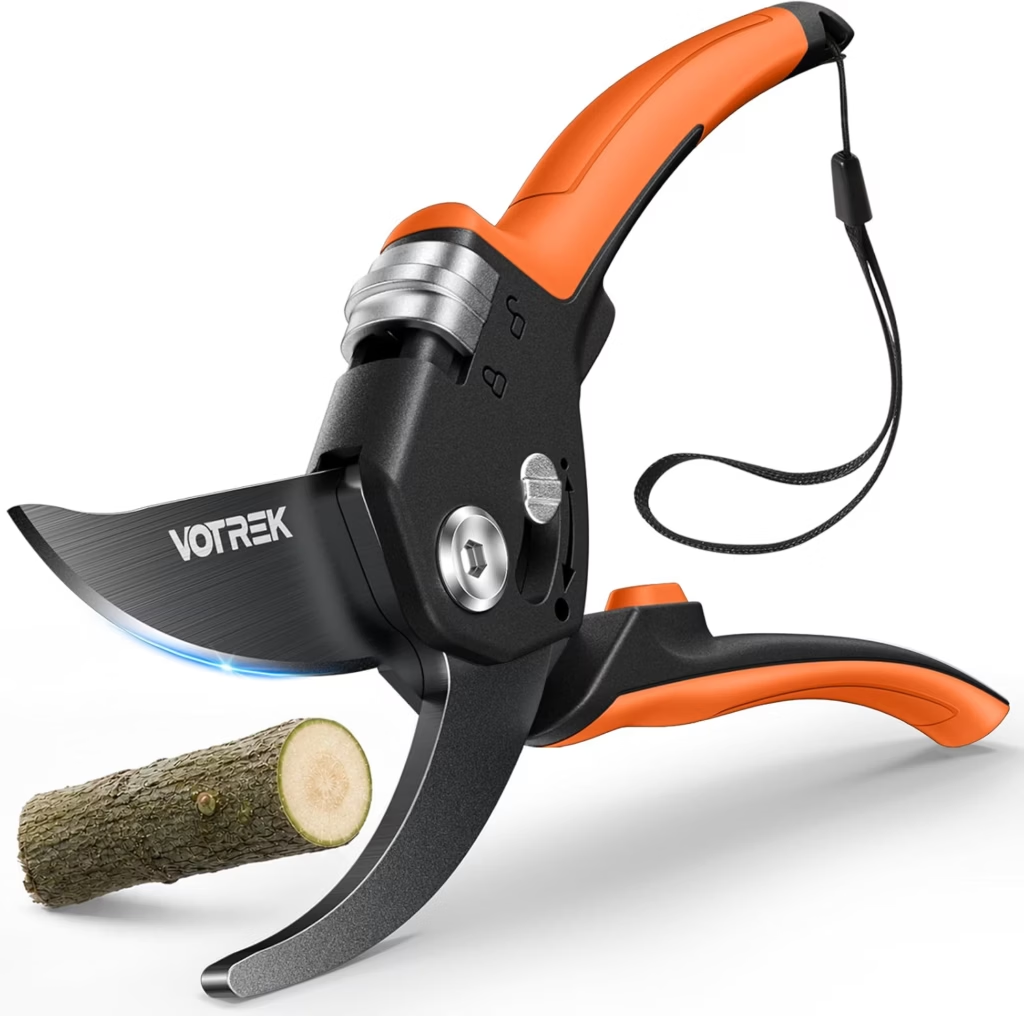
If I could keep only one hand tool in the garden, a good pair of secateurs would be very high on the list.
You’ll use them constantly for:
- Pruning plants
- Deadheading flowers
- Cutting back perennials
- Removing damaged stems
- Harvesting fruit and vegetables
- Cutting smaller branches
For most gardeners, I’d recommend bypass secateurs as the general-purpose choice.
They have two blades that pass each other like scissors, producing a cleaner cut on living stems.
Anvil secateurs are useful for tougher or dead material, but bypass secateurs are the better all-rounder.
What to look for
Look for comfortable handles, a reliable locking mechanism, replaceable or sharpenable blades and a cutting capacity suitable for the plants in your garden.
Don’t automatically buy the cheapest pair. Secateurs are one of those tools you’ll potentially use for years.
2. Gardening Gloves
ESSENTIAL ★★★★★
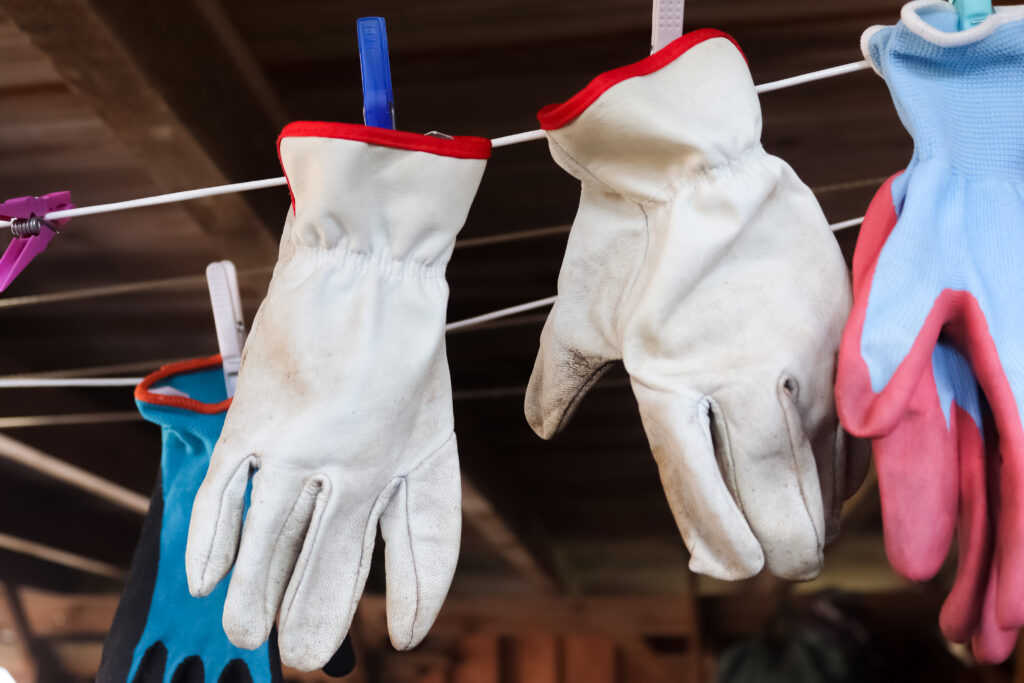
Gardening gloves aren’t just about keeping your hands clean.
They protect against:
- Thorns
- Splinters
- Rough bark
- Sharp stones
- Blisters
- Soil
- Minor cuts and scratches
For everyday gardening, I prefer relatively lightweight gloves that still allow good finger movement.
Heavy-duty gloves have their place, particularly when working with roses, brambles or rough materials, but thick gloves can make fiddly planting jobs unnecessarily difficult.
Ideally, have two pairs:
General-purpose gloves for everyday gardening.
Heavy-duty gloves for thorny plants and tougher jobs.
3. Hand Trowel
ESSENTIAL ★★★★★
A hand trowel is one of the most frequently used tools in any garden.
You’ll use it for:
- Planting bedding plants
- Planting bulbs
- Digging small holes
- Filling containers
- Removing small weeds
- Mixing compost
- Transplanting seedlings
Look for a solid construction where the handle and blade don’t flex excessively.
A comfortable grip matters more than you might expect, particularly when working in compacted soil.
Some trowels also have depth markings along the blade, which are useful when planting bulbs.
4. Hand Fork
ESSENTIAL ★★★★☆
The hand fork is the natural companion to the trowel.
It’s particularly useful for loosening soil around plants without digging up the entire bed.
Use it for:
- Breaking up compacted soil
- Removing weeds
- Mixing compost into beds
- Working around established plants
- Preparing small planting areas
I’d usually buy a good trowel and hand fork together.
5. Garden Spade
ESSENTIAL ★★★★★
Once you move beyond containers and small planting jobs, you’ll need a proper spade.
A spade is primarily designed for cutting and digging, rather than shifting large quantities of loose material.
You’ll use it for:
- Digging planting holes
- Creating borders
- Cutting turf
- Dividing plants
- Moving soil
- Edging lawns
Stainless-steel blades are particularly attractive because they’re relatively easy to clean and resist corrosion.
Pay attention to the shaft length as well. A tool that’s uncomfortable for your height becomes surprisingly tiring during a long digging session.
6. Garden Fork
ESSENTIAL ★★★★★
A garden fork looks simple, but it’s invaluable when dealing with soil.
Unlike a spade, its tines can penetrate and loosen compacted ground while causing less disruption.
It’s useful for:
- Breaking up soil
- Turning soil
- Incorporating compost
- Lifting potatoes
- Dividing perennials
- Aerating beds
If you’re starting a vegetable garden, I’d consider a good fork particularly important.
7. Garden Rake
ESSENTIAL ★★★★☆
Don’t confuse a garden rake with a leaf rake.
A traditional garden rake has short, rigid teeth and is designed primarily for working the soil.
Use it for:
- Levelling soil
- Preparing seed beds
- Removing stones
- Breaking up surface clumps
- Preparing areas for grass seed
If you’re planning a new lawn or vegetable bed, you’ll use one frequently.
8. Watering Can
ESSENTIAL ★★★★★
Even if you own a hose, keep a watering can.
It’s far more convenient for:
- Containers
- Seedlings
- Greenhouses
- Houseplants
- Liquid fertiliser
- Newly planted plants
I’d recommend one with a removable rose on the end.
The rose produces a gentler shower that’s much less likely to disturb seedlings or wash compost out of containers.
9. Garden Hose
ESSENTIAL FOR MOST GARDENS ★★★★★
Once your garden gets beyond a handful of containers, carrying watering cans backwards and forwards becomes tedious.
A decent garden hose saves an enormous amount of time.
What to look for
Consider:
- Hose length
- Kink resistance
- UV resistance
- Hose reel compatibility
- Connector quality
- Adjustable spray gun
- Storage
Measure your garden before buying.
There’s little point buying a 15m hose only to discover the furthest border is 18m from the tap.
For larger gardens, I’d strongly consider a hose reel.
10. Lawn Mower
ESSENTIAL IF YOU HAVE A LAWN ★★★★★
If you’ve got grass, the lawn mower will probably become the most frequently used powered tool in your garden.
The important thing isn’t buying the most powerful mower.
It’s buying the right mower for the size and shape of your lawn.
Small lawns
Consider:
- Corded electric
- Compact cordless
- Small robot mower
Medium lawns
I’d generally look towards:
- Cordless
- Larger electric mowers
- Petrol
Large lawns
Consider:
- Higher-capacity cordless
- Petrol
- Self-propelled
- Robot mowers
- Ride-on mowers for very large areas
If you’re unsure, use our mower finder rather than simply choosing whichever machine has the highest Amazon rating.
[Find My Perfect Lawn Mower →]
[Best Lawn Mowers UK →]
11. Garden Shears
HIGHLY RECOMMENDED ★★★★☆
Secateurs handle individual stems. Shears handle larger areas of growth.
They’re useful for:
- Trimming hedges
- Shaping shrubs
- Cutting back grasses
- Tidying lawn edges
- Cutting soft growth
For larger hedges, you’ll probably eventually want a powered hedge trimmer, but traditional shears remain extremely useful for precise work.
12. Wheelbarrow or Garden Cart
HIGHLY RECOMMENDED ★★★★★
You might think you don’t need a wheelbarrow until you start moving:
- Compost
- Soil
- Gravel
- Plants
- Logs
- Grass clippings
- Prunings
- Bags of garden waste
Then you’ll wonder why you waited so long.
For a normal domestic garden, a conventional wheelbarrow is usually sufficient.
For larger gardens or people who find balancing a traditional barrow difficult, a four-wheel garden cart can be easier to handle.
13. Garden Kneeler
HIGHLY RECOMMENDED ★★★★☆
This isn’t essential for actually growing anything, but it’s one of those inexpensive pieces of equipment that can make gardening considerably more comfortable.
A basic foam kneeling pad is perfectly adequate.
Another option is a folding garden kneeler with handles that can usually be flipped over and used as a small seat.
They’re particularly useful for:
- Weeding
- Planting
- Deadheading
- Working around borders
- Maintaining raised beds
[See our recommended garden kneelers →]
14. Garden Broom
ESSENTIAL ★★★★☆
Not exciting.
Very useful.
A stiff outdoor broom makes quick work of:
- Soil
- Leaves
- Grass clippings
- Moss
- Hedge trimmings
- General patio debris
I’d choose a stiff-bristled outdoor broom rather than trying to use an indoor brush outside.
[See our recommended garden brooms →]
15. Bucket
ESSENTIAL ★★★★★
Possibly the least glamorous recommendation in this entire guide.
Also one of the most useful.
Keep a couple of sturdy buckets around.
You’ll find yourself using them for:
- Weeds
- Compost
- Soil
- Water
- Harvesting vegetables
- Carrying tools
- Mixing feed
- Collecting stones
You don’t need anything sophisticated.